
Top Stories
Asynchronous Reprojection Set to Revolutionize Gaming Performance

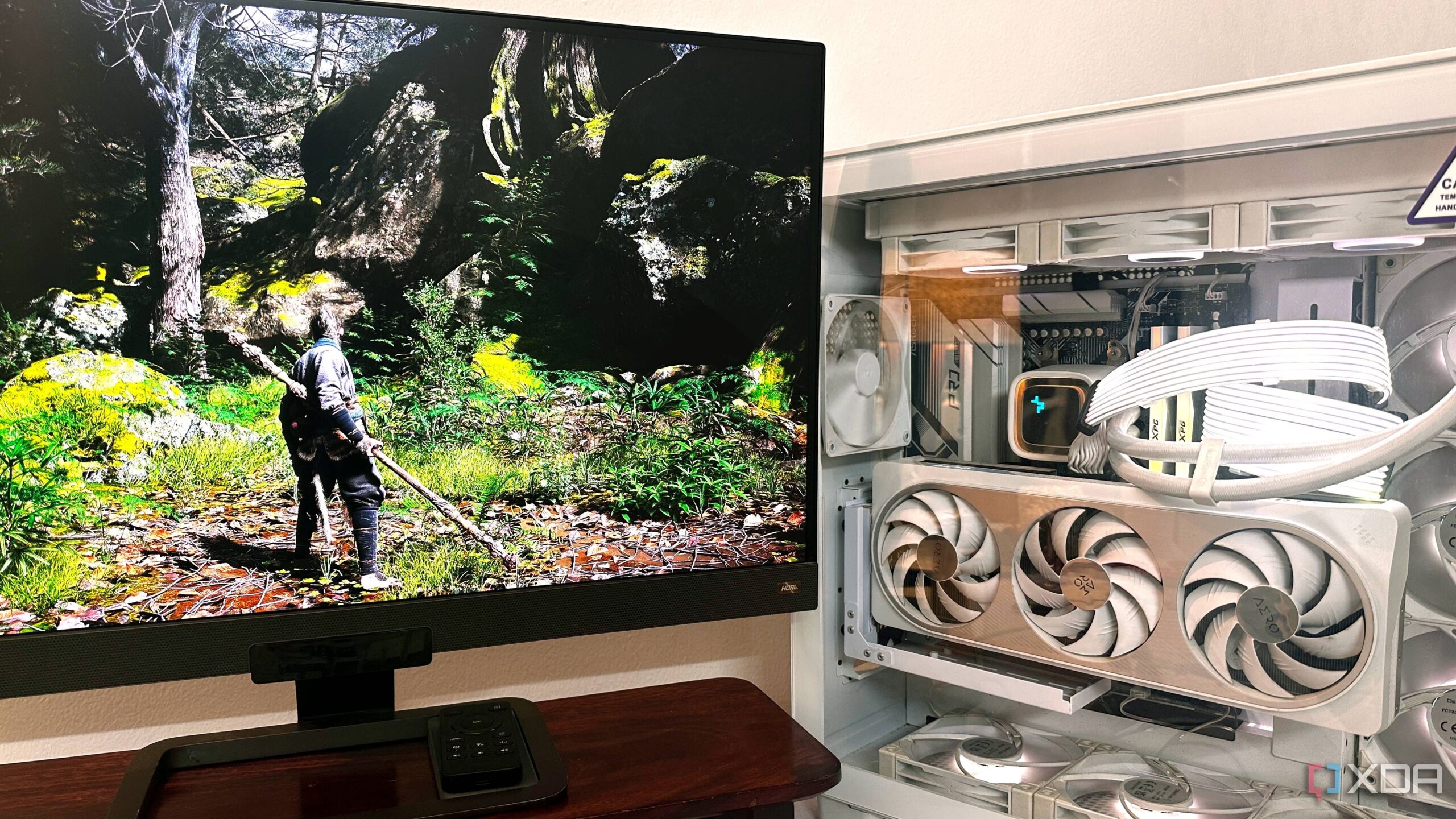
BREAKING NEWS: The gaming world is on the brink of a major transformation as experts announce that asynchronous reprojection is poised to redefine performance standards in competitive gaming. This revolutionary technology promises significantly lower latency and a smoother gaming experience, challenging the current dominance of DLSS (Deep Learning Super Sampling).
Gamers are constantly seeking methods to enhance their hardware performance, with every frame and millisecond of latency crucial in competitive scenarios. While DLSS has been a game-changer, providing extra frames at a slight reduction in visual quality, industry leaders now emphasize that the future lies in asynchronous reprojection. This technology allows for a seamless experience irrespective of frame rates, delivering a competitive edge that could change the landscape of gaming.
The rise of asynchronous reprojection could not come at a better time, as the PC gaming community demands higher performance standards. With the gaming industry expanding rapidly, the need for innovations that enhance gameplay is more critical than ever. Asynchronous reprojection addresses this need by ensuring that gamers can enjoy smooth, responsive gameplay even in the most demanding titles.
Experts highlight that this technology is not merely a theoretical concept; it is already being implemented in various gaming platforms and titles. Preliminary reports suggest that asynchronous reprojection can reduce latency by up to 30%, a significant improvement for competitive players who rely on every fraction of a second.
WHY THIS MATTERS NOW: As the gaming industry approaches a pivotal moment, the introduction of asynchronous reprojection could fundamentally alter how games are developed and played. By providing gamers with the tools to achieve higher performance levels, developers will need to adapt quickly to meet these new expectations.
The implications for gamers are profound. With smoother gameplay and reduced latency, players can expect a more immersive and competitive experience. This technology could level the playing field, allowing casual gamers to compete more effectively against seasoned professionals.
Looking ahead, industry analysts are urging developers to invest in asynchronous reprojection technology as a priority. As competitive gaming continues to grow in popularity, those who adapt early will likely gain a significant advantage in the market.
In the coming weeks, keep an eye on announcements from major gaming hardware manufacturers and software developers. Their responses to this emerging technology will shape the future landscape of gaming, impacting both casual and competitive players alike.
Stay tuned for further updates as the situation develops. The gaming community is poised for a significant shift, and those who stay informed will be best positioned to take advantage of these advancements.

Cosmic Mystery Deepens: Where Are the Universe’s Defects?

Lady Bulldogs Shine in Postseason Awards Following Final Four Run

CALV Hosts Essential Class for Local Real Estate Professionals

Urgent Alert: “Spaving” Surges as Shoppers Overspend Online

Jefferies Initiates Coverage on Insmed with “Buy” Rating

Three Dog Night to Perform with Ambrosia at Mayo Civic Center

Urgent Announcement: Charles M. Payment Passes Away at 78

Houston Education Foundation Donates $4,592 for Student Programs

Beeks Financial Cloud Shares Drop 7% Amid Increased Trading Volume

Foreign Inflows into Japan Stocks Surge to ¥1.34 Trillion

University of Hawaiʻi Joins $25.6M AI Project to Monitor Disasters

Sydney Sweeney Embraces Body Positivity Amid Hollywood Challenges

Hudson Williams Gains Popularity as Breakout Star on Heated Rivalry

Urgent Farewell: Joleen Chaney Leaves Legacy at KFOR

Boeing’s Merger with McDonnell Douglas: A Strategic Move Explained

$1.25M Grant Advances Hawaiʻi’s Real-Time Hazard Monitoring

Derrick Dove and ABAC Band Set for Free Americana Concert

BOYNEXTDOOR’s Jaehyun Faces Backlash Amid BTS-TWICE Controversy
-
Business9 months ago
Foreign Inflows into Japan Stocks Surge to ¥1.34 Trillion
-
Science9 months ago
University of Hawaiʻi Joins $25.6M AI Project to Monitor Disasters
-
 Entertainment9 months ago
Sydney Sweeney Embraces Body Positivity Amid Hollywood Challenges
-
 Entertainment8 months ago
Hudson Williams Gains Popularity as Breakout Star on Heated Rivalry
-
 Top Stories9 months ago
Urgent Farewell: Joleen Chaney Leaves Legacy at KFOR
-
 World9 months ago
Boeing’s Merger with McDonnell Douglas: A Strategic Move Explained
-
 Science8 months ago
$1.25M Grant Advances Hawaiʻi’s Real-Time Hazard Monitoring
-
 Entertainment8 months ago
Derrick Dove and ABAC Band Set for Free Americana Concert
-
 Top Stories9 months ago
BOYNEXTDOOR’s Jaehyun Faces Backlash Amid BTS-TWICE Controversy
-

 Health6 months ago
Bodybuilder Eugene Teo Transitions to Mindful Movement for Health
-

 World7 months ago
San Francisco Airport to Host 16 Nonstop Airlines to Europe in 2026
-

 Top Stories7 months ago
National Coast Guard Museum Set to Open in 2027 After Funding Secured