
Top Stories
Ants Release Chemical Signals to Seek Death When Sick

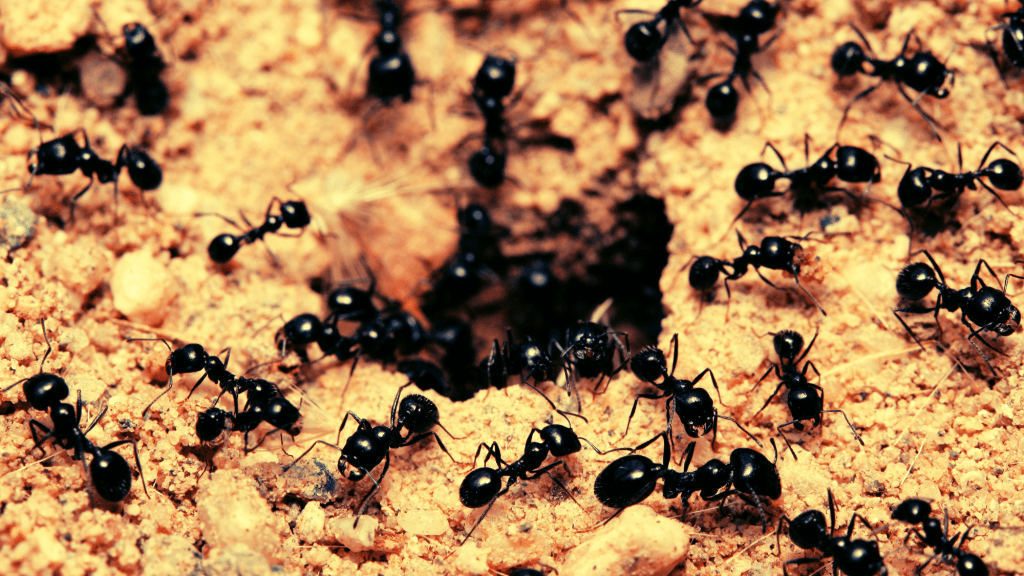
BREAKING: New research reveals that young ants, specifically the species Lasius neglectus, actively signal for their own deaths when they fall gravely ill. This unsettling behavior was documented in a study published in Nature Communications and led by a team from the Institute of Science and Technology Austria.
This discovery highlights a darker aspect of ant society, where sick young ants emit a chemical signal to alert older workers that they need to be removed from the colony. This behavior occurs before the infection can spread, showcasing a remarkable yet grim survival strategy within their tightly-knit communities.
Researchers, including behavioral ecologist Erika Dawson, found that ant colonies are particularly vulnerable to disease outbreaks due to their dense living conditions. Dawson stated, “An ant colony is a perfect place for a disease outbreak to occur because there are thousands of ants crawling over each other.”
In a stark contrast to adult workers, who leave the nest to die when infected, young ants sealed in cocoons have no means of escape. Their only option is to emit a specific odor that prompts older ants to intervene.
Previous studies had already shown sick pupae release a distinct scent, leading worker ants to rip open the cocoons and inject poison—effectively killing both the pathogen and the sick ant. Researchers sought to determine whether this scent was merely a byproduct of illness or a deliberate SOS signal.
Through experiments, they found that when healthy pupae were exposed to the scent of sick ones, they too were destroyed by the workers. This indicates a calculated self-sacrifice on the part of sick ants, signaling their impending death to prevent further spread of disease within the colony.
Interestingly, infected queen pupae do not emit this death signal, primarily due to their stronger immune defenses, allowing them to recover without the need for such drastic measures. This raises questions about the evolutionary strategies of different ant roles within the colony.
The implications of this study extend beyond ants; it offers profound insights into collective survival tactics and biological communication in social species. As colonies operate as a single entity, this behavior exemplifies the harsh realities of survival where some members willingly sacrifice themselves for the greater good.
This research not only sheds light on the complexities of ant behavior but also compels us to reconsider how we understand social cooperation and sacrifice in the animal kingdom. As scientists continue to uncover the intricacies of these tiny yet fascinating creatures, their findings could impact broader ecological studies and our understanding of social dynamics.
Stay tuned for more updates on this groundbreaking research as scientists delve deeper into the lives of these remarkable insects.

Cosmic Mystery Deepens: Where Are the Universe’s Defects?

Lady Bulldogs Shine in Postseason Awards Following Final Four Run

CALV Hosts Essential Class for Local Real Estate Professionals

Urgent Alert: “Spaving” Surges as Shoppers Overspend Online

Jefferies Initiates Coverage on Insmed with “Buy” Rating

Three Dog Night to Perform with Ambrosia at Mayo Civic Center

Urgent Announcement: Charles M. Payment Passes Away at 78

Houston Education Foundation Donates $4,592 for Student Programs

Beeks Financial Cloud Shares Drop 7% Amid Increased Trading Volume

Foreign Inflows into Japan Stocks Surge to ¥1.34 Trillion

University of Hawaiʻi Joins $25.6M AI Project to Monitor Disasters

Sydney Sweeney Embraces Body Positivity Amid Hollywood Challenges

Hudson Williams Gains Popularity as Breakout Star on Heated Rivalry

Urgent Farewell: Joleen Chaney Leaves Legacy at KFOR

Boeing’s Merger with McDonnell Douglas: A Strategic Move Explained

$1.25M Grant Advances Hawaiʻi’s Real-Time Hazard Monitoring

Derrick Dove and ABAC Band Set for Free Americana Concert

BOYNEXTDOOR’s Jaehyun Faces Backlash Amid BTS-TWICE Controversy
-
Business9 months ago
Foreign Inflows into Japan Stocks Surge to ¥1.34 Trillion
-
Science9 months ago
University of Hawaiʻi Joins $25.6M AI Project to Monitor Disasters
-
 Entertainment9 months ago
Sydney Sweeney Embraces Body Positivity Amid Hollywood Challenges
-
 Entertainment7 months ago
Hudson Williams Gains Popularity as Breakout Star on Heated Rivalry
-
 Top Stories8 months ago
Urgent Farewell: Joleen Chaney Leaves Legacy at KFOR
-
 World9 months ago
Boeing’s Merger with McDonnell Douglas: A Strategic Move Explained
-
 Science7 months ago
$1.25M Grant Advances Hawaiʻi’s Real-Time Hazard Monitoring
-
 Entertainment8 months ago
Derrick Dove and ABAC Band Set for Free Americana Concert
-
 Top Stories9 months ago
BOYNEXTDOOR’s Jaehyun Faces Backlash Amid BTS-TWICE Controversy
-

 Health6 months ago
Bodybuilder Eugene Teo Transitions to Mindful Movement for Health
-

 World6 months ago
San Francisco Airport to Host 16 Nonstop Airlines to Europe in 2026
-

 Top Stories7 months ago
National Coast Guard Museum Set to Open in 2027 After Funding Secured