
Top Stories
Adult Chinook Salmon Return to Alameda Creek After 70 Years!

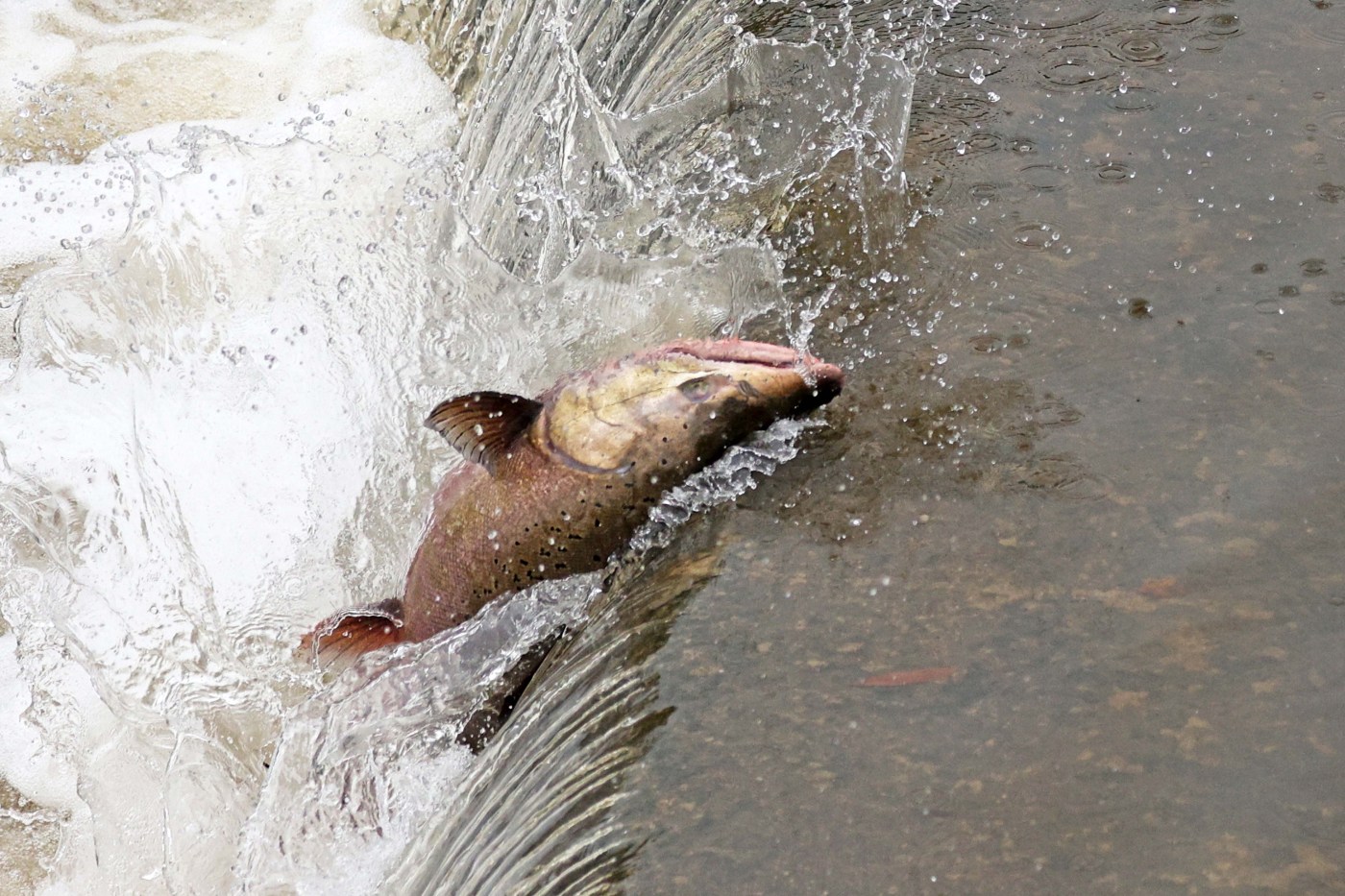
UPDATE: In a groundbreaking development, adult Chinook salmon have been spotted swimming back to Alameda Creek in lower Niles Canyon for the first time in 70 years. This remarkable return could signify a major turning point in environmental restoration efforts in the East Bay region.
This resurgence comes as volunteers from the nonprofit group Alameda Creek Alliance report nearly a dozen sightings since early November 2025. These sightings follow a $15 million project completed by PG&E and CalTrout, which successfully removed the last barrier obstructing fish migration upstream. The project included the installation of fish ladders, allowing salmon to navigate the 86 vertical feet to reach their spawning grounds.
Environmentalists are optimistic that the return of Chinook salmon, alongside endangered steelhead trout, indicates a broader ecological revival. “It’s just the beginning of this whole migration season,” said Claire Buchanan, Bay Area regional director of CalTrout. This situation could lead to the return of other wildlife, including otters, eagles, and bears, enriching the biodiversity of the Sunol Valley region.
Historically, Chinook salmon have not been recorded in Alameda Creek since the 1950s due to human intervention, including dam constructions that severed their migration paths. “Salmon are the soul of our rivers,” said Jeff Miller, executive director of the Alameda Creek Alliance, emphasizing the importance of these fish to the ecosystem.
The recent salmon run follows an atmospheric river event that has raised hopes for more fish to appear in the coming weeks. The last major barrier was removed just weeks ago, allowing these fish to finally access their historical spawning grounds.
“With so many human impacts, urban streams lost their soul,” Miller stated. The reintroduction of Chinook salmon not only revitalizes the watershed but also benefits the entire food web. As salmon spawn and die, they contribute nutrients to the ecosystem, supporting other species and enhancing the overall health of the creek.
“This run of salmon is just exhilarating,” Miller noted, reflecting on the collaborative efforts over the last two decades to restore fish populations. He added, “People get really excited when they see these fish. It connects them to the creek and helps them understand the bigger picture of the ecology.”
The excitement among local residents is palpable as they witness this natural phenomenon. The return of Chinook salmon is not just a sign of environmental healing; it embodies a community’s resilience and commitment to restoring the natural world.
As the migration season progresses, all eyes are on Alameda Creek. What happens next could further shape the future of this vital ecosystem. Could we see even more wildlife returning to a region once thought lost?
Stay tuned for updates on this developing story as experts continue to monitor the salmon’s progress and the impacts on the surrounding environment. This is a hopeful moment for conservationists and a reminder that significant ecological victories are possible with continued effort and community support.

Cosmic Mystery Deepens: Where Are the Universe’s Defects?

Lady Bulldogs Shine in Postseason Awards Following Final Four Run

CALV Hosts Essential Class for Local Real Estate Professionals

Urgent Alert: “Spaving” Surges as Shoppers Overspend Online

Jefferies Initiates Coverage on Insmed with “Buy” Rating

Three Dog Night to Perform with Ambrosia at Mayo Civic Center

Urgent Announcement: Charles M. Payment Passes Away at 78

Houston Education Foundation Donates $4,592 for Student Programs

Beeks Financial Cloud Shares Drop 7% Amid Increased Trading Volume

Foreign Inflows into Japan Stocks Surge to ¥1.34 Trillion

University of Hawaiʻi Joins $25.6M AI Project to Monitor Disasters

Sydney Sweeney Embraces Body Positivity Amid Hollywood Challenges

Hudson Williams Gains Popularity as Breakout Star on Heated Rivalry

Urgent Farewell: Joleen Chaney Leaves Legacy at KFOR

Boeing’s Merger with McDonnell Douglas: A Strategic Move Explained

$1.25M Grant Advances Hawaiʻi’s Real-Time Hazard Monitoring

Derrick Dove and ABAC Band Set for Free Americana Concert

BOYNEXTDOOR’s Jaehyun Faces Backlash Amid BTS-TWICE Controversy
-
Business9 months ago
Foreign Inflows into Japan Stocks Surge to ¥1.34 Trillion
-
Science8 months ago
University of Hawaiʻi Joins $25.6M AI Project to Monitor Disasters
-
 Entertainment9 months ago
Sydney Sweeney Embraces Body Positivity Amid Hollywood Challenges
-
 Entertainment7 months ago
Hudson Williams Gains Popularity as Breakout Star on Heated Rivalry
-
 Top Stories8 months ago
Urgent Farewell: Joleen Chaney Leaves Legacy at KFOR
-
 World9 months ago
Boeing’s Merger with McDonnell Douglas: A Strategic Move Explained
-
 Science7 months ago
$1.25M Grant Advances Hawaiʻi’s Real-Time Hazard Monitoring
-
 Entertainment8 months ago
Derrick Dove and ABAC Band Set for Free Americana Concert
-
 Top Stories9 months ago
BOYNEXTDOOR’s Jaehyun Faces Backlash Amid BTS-TWICE Controversy
-

 Health6 months ago
Bodybuilder Eugene Teo Transitions to Mindful Movement for Health
-

 World6 months ago
San Francisco Airport to Host 16 Nonstop Airlines to Europe in 2026
-

 Top Stories7 months ago
National Coast Guard Museum Set to Open in 2027 After Funding Secured