
Science
Researchers Unveil First Complete Mung Bean Genome for Breeding Advances

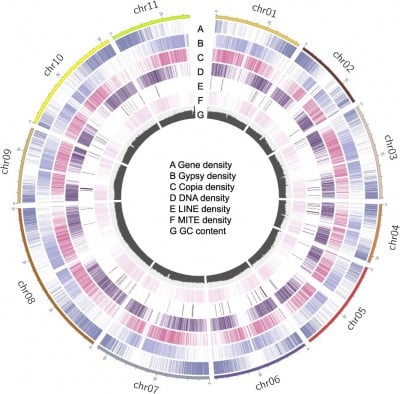
A collaborative team of researchers has successfully sequenced the first complete telomere-to-telomere (T2T) genome of the mung bean, known scientifically as Vigna radiata. This groundbreaking achievement reveals important insights into how structural variations in the plant’s genome have influenced its domestication and adaptation over time.
Utilizing a combination of advanced sequencing technologies, including PacBio HiFi, Oxford Nanopore, and Hi-C sequencing, the study identified critical genetic changes linked to various traits such as plant architecture, stress response, and metabolic pathways. The research highlights the significant role of transposable element amplification, which has reshaped gene expression in nearby areas, enhancing our understanding of how these elements contribute to plant development.
Insights into Genetic Adaptations
The comprehensive genome analysis has unveiled that genes involved in fatty acid synthesis, suberin formation, and phenylpropanoid metabolism have undergone strong selection pressures throughout the mung bean’s evolutionary history. These findings provide valuable insights into the genetic adaptations that have allowed mung beans to thrive in diverse environments.
The implications of this research extend beyond academic curiosity. By elucidating the genetic basis of important traits, the genome serves as a pivotal resource for guiding molecular breeding efforts aimed at improving yield and resilience in mung bean cultivars. As global demand for sustainable food sources rises, the ability to breed more productive and resilient crops becomes increasingly vital.
Future Directions for Breeding Initiatives
This comprehensive genome study not only contributes to the scientific community’s understanding of mung bean evolution but also lays the groundwork for potential advancements in agricultural practices. Improved breeding strategies informed by this genomic data could lead to higher yields and better adaptability of mung beans to changing climate conditions.
In conclusion, the successful generation of the first gap-free genome of Vigna radiata marks a significant milestone in plant genomics. The findings underscore the importance of structural variations in the evolution of this crucial crop and highlight the potential for future research to further enhance food security through innovative breeding techniques.

Cosmic Mystery Deepens: Where Are the Universe’s Defects?

Lady Bulldogs Shine in Postseason Awards Following Final Four Run

CALV Hosts Essential Class for Local Real Estate Professionals

Urgent Alert: “Spaving” Surges as Shoppers Overspend Online

Jefferies Initiates Coverage on Insmed with “Buy” Rating

Three Dog Night to Perform with Ambrosia at Mayo Civic Center

Urgent Announcement: Charles M. Payment Passes Away at 78

Houston Education Foundation Donates $4,592 for Student Programs

Beeks Financial Cloud Shares Drop 7% Amid Increased Trading Volume

Foreign Inflows into Japan Stocks Surge to ¥1.34 Trillion

University of Hawaiʻi Joins $25.6M AI Project to Monitor Disasters

Sydney Sweeney Embraces Body Positivity Amid Hollywood Challenges

Hudson Williams Gains Popularity as Breakout Star on Heated Rivalry

Urgent Farewell: Joleen Chaney Leaves Legacy at KFOR

Boeing’s Merger with McDonnell Douglas: A Strategic Move Explained

$1.25M Grant Advances Hawaiʻi’s Real-Time Hazard Monitoring

Derrick Dove and ABAC Band Set for Free Americana Concert

BOYNEXTDOOR’s Jaehyun Faces Backlash Amid BTS-TWICE Controversy
-
Business9 months ago
Foreign Inflows into Japan Stocks Surge to ¥1.34 Trillion
-
Science9 months ago
University of Hawaiʻi Joins $25.6M AI Project to Monitor Disasters
-
 Entertainment9 months ago
Sydney Sweeney Embraces Body Positivity Amid Hollywood Challenges
-
 Entertainment7 months ago
Hudson Williams Gains Popularity as Breakout Star on Heated Rivalry
-
 Top Stories8 months ago
Urgent Farewell: Joleen Chaney Leaves Legacy at KFOR
-
 World9 months ago
Boeing’s Merger with McDonnell Douglas: A Strategic Move Explained
-
 Science7 months ago
$1.25M Grant Advances Hawaiʻi’s Real-Time Hazard Monitoring
-
 Entertainment8 months ago
Derrick Dove and ABAC Band Set for Free Americana Concert
-
 Top Stories9 months ago
BOYNEXTDOOR’s Jaehyun Faces Backlash Amid BTS-TWICE Controversy
-

 Health6 months ago
Bodybuilder Eugene Teo Transitions to Mindful Movement for Health
-

 World6 months ago
San Francisco Airport to Host 16 Nonstop Airlines to Europe in 2026
-

 Top Stories7 months ago
National Coast Guard Museum Set to Open in 2027 After Funding Secured