
Science
Researchers Enhance Biofuel Supply Chain Resilience Amid Disruptions

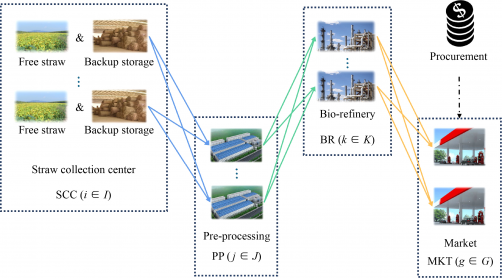
Researchers at Tianjin University have unveiled a novel approach to enhancing the resilience of biofuel supply chains. Their study, titled “Optimization Design Method for Biofuel Resilient Supply Chain Considering Node Disruption Impacts in a Two-Stage Stochastic Programming Framework,” was published in Frontiers of Chemical Science & Engineering, Volume 19, Issue 6. This research addresses a critical challenge faced by businesses as economic globalization intensifies, resulting in increasingly complex and large-scale supply chain systems.
As companies navigate rising uncertainties and the heightened risk of disruptions, the need for resilient biofuel supply chains becomes paramount. The study highlights the urgent requirement for supply chains to withstand potential disruptions while ensuring security and competitiveness. Traditional supply chain design methods have struggled to effectively quantify and evaluate disruption risks, limiting their ability to mitigate these challenges.
To tackle this issue, the researchers introduced an improved Node Disruption Impact Index, featuring adjustable parameters that reflect cost changes arising from disruptions at various nodes. This innovative index aids in identifying nodes with different risk levels, allowing businesses to evaluate the potential impact of disruptions more effectively. The adjustable parameters can be tailored to suit the specific needs of supply chain enterprises, enabling a strategic balance between economic benefits and supply chain resilience.
Application of the Two-Stage Stochastic Programming Model
In their research, the team applied the newly developed index to assess the fluctuation range of node uncertainties. They created a two-stage stochastic programming supply chain optimization model that incorporates a mechanism to address potential high disruption risks. This model was tested on a biofuel supply chain case study in Guangdong Province, demonstrating its practical applicability.
The results of the case study revealed that the proposed model significantly outperformed traditional models when high-risk nodes experienced interruptions. Specifically, it showed improved performance in terms of both cost efficiency and market delivery rates. This finding underscores the effectiveness of the proposed method in enhancing the design of resilient supply chains, thereby providing valuable insights for businesses operating within the biofuel sector.
The full research paper can be accessed for further details at: https://journal.hep.com.cn/fcse/EN/10.1007/s11705-025-2548-z.

Cosmic Mystery Deepens: Where Are the Universe’s Defects?

Lady Bulldogs Shine in Postseason Awards Following Final Four Run

CALV Hosts Essential Class for Local Real Estate Professionals

Urgent Alert: “Spaving” Surges as Shoppers Overspend Online

Jefferies Initiates Coverage on Insmed with “Buy” Rating

Three Dog Night to Perform with Ambrosia at Mayo Civic Center

Urgent Announcement: Charles M. Payment Passes Away at 78

Houston Education Foundation Donates $4,592 for Student Programs

Beeks Financial Cloud Shares Drop 7% Amid Increased Trading Volume

Foreign Inflows into Japan Stocks Surge to ¥1.34 Trillion

University of Hawaiʻi Joins $25.6M AI Project to Monitor Disasters

Sydney Sweeney Embraces Body Positivity Amid Hollywood Challenges

Hudson Williams Gains Popularity as Breakout Star on Heated Rivalry

Urgent Farewell: Joleen Chaney Leaves Legacy at KFOR

Boeing’s Merger with McDonnell Douglas: A Strategic Move Explained

$1.25M Grant Advances Hawaiʻi’s Real-Time Hazard Monitoring

Derrick Dove and ABAC Band Set for Free Americana Concert

BOYNEXTDOOR’s Jaehyun Faces Backlash Amid BTS-TWICE Controversy
-
Business9 months ago
Foreign Inflows into Japan Stocks Surge to ¥1.34 Trillion
-
Science9 months ago
University of Hawaiʻi Joins $25.6M AI Project to Monitor Disasters
-
 Entertainment9 months ago
Sydney Sweeney Embraces Body Positivity Amid Hollywood Challenges
-
 Entertainment7 months ago
Hudson Williams Gains Popularity as Breakout Star on Heated Rivalry
-
 Top Stories8 months ago
Urgent Farewell: Joleen Chaney Leaves Legacy at KFOR
-
 World9 months ago
Boeing’s Merger with McDonnell Douglas: A Strategic Move Explained
-
 Science7 months ago
$1.25M Grant Advances Hawaiʻi’s Real-Time Hazard Monitoring
-
 Entertainment8 months ago
Derrick Dove and ABAC Band Set for Free Americana Concert
-
 Top Stories9 months ago
BOYNEXTDOOR’s Jaehyun Faces Backlash Amid BTS-TWICE Controversy
-

 Health6 months ago
Bodybuilder Eugene Teo Transitions to Mindful Movement for Health
-

 World6 months ago
San Francisco Airport to Host 16 Nonstop Airlines to Europe in 2026
-

 Top Stories7 months ago
National Coast Guard Museum Set to Open in 2027 After Funding Secured