
Science
Researchers Develop Scalable Nodes Bridging Light and Matter

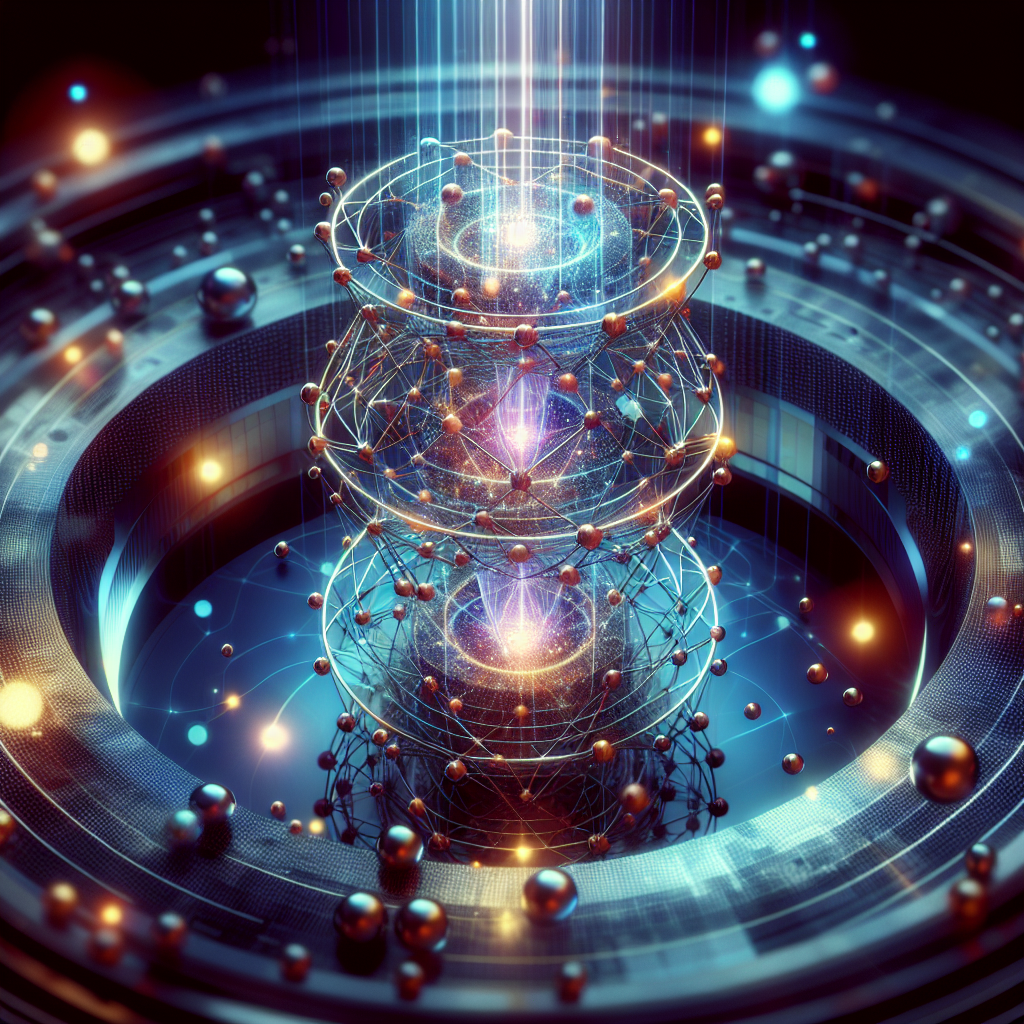
In a significant advancement for quantum technology, researchers have developed scalable nodes that effectively connect light and matter, a breakthrough that promises to enhance quantum computing and communication systems. This innovative technology allows for the efficient interface between single photons and quantum bits (qubits), paving the way for robust quantum networks capable of processing information in unprecedented ways.
Understanding the Breakthrough
Quantum technology utilizes the principles of quantum mechanics to address complex computational problems and facilitate secure communication. The phenomena of entanglement, superposition, and quantum interference are crucial to the functionality of quantum devices. However, creating practical systems that can harness these principles has long been a challenge due to the difficulties in connecting and scaling quantum components.
The recent breakthroughs emerged from a collaborative effort involving physicists, engineers, and computer scientists. They created nodes that not only interface light and matter but also serve as foundational elements in a networked quantum system, enabling communication across various quantum states.
Key Features of Scalable Nodes
The scalable nodes introduce several notable features:
- Interfacing Light and Matter: These nodes effectively link photons with matter, allowing quantum information to be transmitted over considerable distances without significant loss or decoherence.
- Enhanced Scalability: Unlike previous systems, which faced limitations in scale, these new nodes can be replicated and interconnected in a modular manner. This scalability is essential for developing larger networks capable of supporting numerous users and complex computations.
- Robustness: Designed to withstand environmental perturbations, the nodes maintain operational integrity despite noise and external interference, addressing two major concerns in quantum information processing.
- Quantum Repeaters: Integrated technology similar to quantum repeaters helps restore quantum states over long distances, a critical feature for maintaining coherence in quantum communication.
These innovations are set to have a profound impact on quantum computing and communication. The ability to link light and matter not only supports future quantum computers capable of solving problems beyond the reach of classical systems but also enhances the security of data transmission.
Quantum key distribution (QKD), which relies on the principles of quantum mechanics to secure data, stands to benefit significantly from these advancements, offering nearly tamper-proof communication channels.
Future Prospects and Challenges
The ongoing refinement of these scalable nodes opens the door to exciting possibilities, including the development of a quantum internet. This network, based on quantum signals, could revolutionize secure global communication and enable applications across diverse fields, from secure banking transactions to encrypted communications among governments.
Moreover, the foundational technology of these nodes may extend beyond computing and communication, playing a vital role in advancing quantum sensors. Such sensors could transform precision measurements across various scientific disciplines.
Despite this progress, challenges persist. The complexity of creating integrated systems that effectively manage the intricacies of quantum mechanics at scale must be addressed. Additionally, there is a pressing need for robust error correction methods and improved hardware to maintain qubit fidelity in real-world environments.
In conclusion, the development of scalable nodes that connect light and matter represents a critical advancement in realizing practical quantum technologies. As researchers continue to explore the full potential of these innovations, the future of quantum computing and communication appears promising. This milestone not only signifies a technical achievement but also reflects a fundamental shift in our understanding of information, bringing us closer to a future shaped by quantum technology.

Cosmic Mystery Deepens: Where Are the Universe’s Defects?

Lady Bulldogs Shine in Postseason Awards Following Final Four Run

CALV Hosts Essential Class for Local Real Estate Professionals

Urgent Alert: “Spaving” Surges as Shoppers Overspend Online

Jefferies Initiates Coverage on Insmed with “Buy” Rating

Three Dog Night to Perform with Ambrosia at Mayo Civic Center

Urgent Announcement: Charles M. Payment Passes Away at 78

Houston Education Foundation Donates $4,592 for Student Programs

Beeks Financial Cloud Shares Drop 7% Amid Increased Trading Volume

Foreign Inflows into Japan Stocks Surge to ¥1.34 Trillion

University of Hawaiʻi Joins $25.6M AI Project to Monitor Disasters

Sydney Sweeney Embraces Body Positivity Amid Hollywood Challenges

Hudson Williams Gains Popularity as Breakout Star on Heated Rivalry

Urgent Farewell: Joleen Chaney Leaves Legacy at KFOR

Boeing’s Merger with McDonnell Douglas: A Strategic Move Explained

$1.25M Grant Advances Hawaiʻi’s Real-Time Hazard Monitoring

Derrick Dove and ABAC Band Set for Free Americana Concert

BOYNEXTDOOR’s Jaehyun Faces Backlash Amid BTS-TWICE Controversy
-
Business9 months ago
Foreign Inflows into Japan Stocks Surge to ¥1.34 Trillion
-
Science8 months ago
University of Hawaiʻi Joins $25.6M AI Project to Monitor Disasters
-
 Entertainment9 months ago
Sydney Sweeney Embraces Body Positivity Amid Hollywood Challenges
-
 Entertainment7 months ago
Hudson Williams Gains Popularity as Breakout Star on Heated Rivalry
-
 Top Stories8 months ago
Urgent Farewell: Joleen Chaney Leaves Legacy at KFOR
-
 World9 months ago
Boeing’s Merger with McDonnell Douglas: A Strategic Move Explained
-
 Science7 months ago
$1.25M Grant Advances Hawaiʻi’s Real-Time Hazard Monitoring
-
 Entertainment8 months ago
Derrick Dove and ABAC Band Set for Free Americana Concert
-
 Top Stories9 months ago
BOYNEXTDOOR’s Jaehyun Faces Backlash Amid BTS-TWICE Controversy
-

 Health6 months ago
Bodybuilder Eugene Teo Transitions to Mindful Movement for Health
-

 World6 months ago
San Francisco Airport to Host 16 Nonstop Airlines to Europe in 2026
-

 Top Stories7 months ago
National Coast Guard Museum Set to Open in 2027 After Funding Secured