
Science
New Research Identifies Diminutive Tyrannosaur as Separate Species

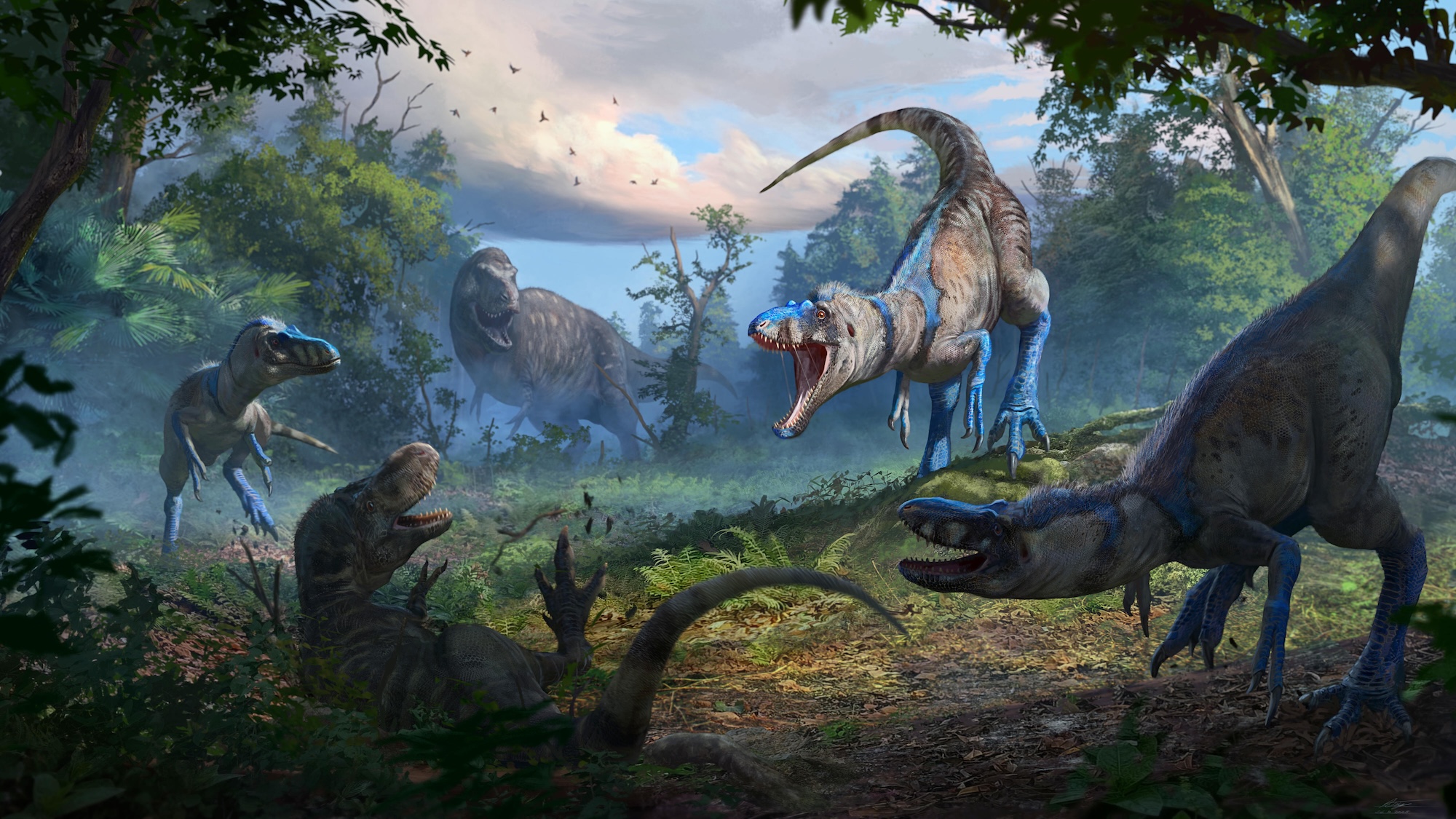
Paleontologists have settled a long-standing debate regarding a small dinosaur fossil discovered in Montana, revealing it as a distinct species closely related to the infamous Tyrannosaurus rex. Researchers from North Carolina State University and Ohio University have identified this new species as Nanotyrannus lancensis, as detailed in a study published on October 30, 2023, in the journal Nature.
The origins of this debate trace back to a skull found in 1946 at the Hell Creek Formation, a site renowned for its rich fossil deposits. Initially categorized as a species of Gorgosaurus, the specimen was later proposed to belong to a separate, smaller genus of tyrannosaurs. This sparked vigorous discussions among paleontologists, with some asserting it was simply an immature T. rex, while others argued for its classification as a new species. The implications of recognizing Nanotyrannus as a separate entity would challenge the notion that T. rex was the sole tyrannosauroid in North America during the late Cretaceous period.
New Findings Reinforce Distinct Species Classification
The research team, led by paleontologists Lindsay Zanno and Lawrence Witmer, conducted a recent expedition to the Hell Creek Formation, where they discovered an exceptionally preserved skeleton of a tyrannosauroid. After analyzing the fossil, they concluded that both this new specimen and the 1946 skull belonged to Nanotyrannus.
Key evidence supporting this classification came from the age and morphological features of the newly discovered specimen. The analysis revealed that the bones were nearly fully matured, indicating they were not juvenile remains. Further examination suggested that Nanotyrannus had unique bone-growth patterns compared to T. rex, reinforcing the argument for its status as a distinct species.
The study proposes the existence of at least two species within the Nanotyrannus genus: Nanotyrannus lancensis and a newly described Nanotyrannus lethaeus. Adult Nanotyrannus measured about 18 feet in length and weighed approximately 1,550 pounds, significantly smaller than the formidable T. rex, which could exceed 42 feet long and weigh over nine tons.
Implications for Dinosaur Diversity in the Late Cretaceous
The emergence of Nanotyrannus suggests that T. rex coexisted with at least one other tyrannosaur for approximately one million years leading up to the Cretaceous-Paleogene extinction event. This finding contributes to the understanding that dinosaurs were thriving rather than declining prior to their mass extinction.
“Our results undermine a nearly uniform consensus among theropod specialists and rectify a significant taxonomic error underpinning decades of research,” the authors stated. “The impact is beyond our ability to summarize here.” This new classification not only expands the known diversity of Cretaceous predators but also highlights the complexity of dinosaur evolution during this era.
The study of Nanotyrannus and its implications will likely prompt further research and discussion within the paleontological community, as scientists seek to understand the evolutionary relationships among these ancient giants.

Cosmic Mystery Deepens: Where Are the Universe’s Defects?

Lady Bulldogs Shine in Postseason Awards Following Final Four Run

CALV Hosts Essential Class for Local Real Estate Professionals

Urgent Alert: “Spaving” Surges as Shoppers Overspend Online

Jefferies Initiates Coverage on Insmed with “Buy” Rating

Three Dog Night to Perform with Ambrosia at Mayo Civic Center

Urgent Announcement: Charles M. Payment Passes Away at 78

Houston Education Foundation Donates $4,592 for Student Programs

Beeks Financial Cloud Shares Drop 7% Amid Increased Trading Volume

Foreign Inflows into Japan Stocks Surge to ¥1.34 Trillion

University of Hawaiʻi Joins $25.6M AI Project to Monitor Disasters

Sydney Sweeney Embraces Body Positivity Amid Hollywood Challenges

Hudson Williams Gains Popularity as Breakout Star on Heated Rivalry

Urgent Farewell: Joleen Chaney Leaves Legacy at KFOR

Boeing’s Merger with McDonnell Douglas: A Strategic Move Explained

$1.25M Grant Advances Hawaiʻi’s Real-Time Hazard Monitoring

Derrick Dove and ABAC Band Set for Free Americana Concert

BOYNEXTDOOR’s Jaehyun Faces Backlash Amid BTS-TWICE Controversy
-
Business9 months ago
Foreign Inflows into Japan Stocks Surge to ¥1.34 Trillion
-
Science9 months ago
University of Hawaiʻi Joins $25.6M AI Project to Monitor Disasters
-
 Entertainment9 months ago
Sydney Sweeney Embraces Body Positivity Amid Hollywood Challenges
-
 Entertainment7 months ago
Hudson Williams Gains Popularity as Breakout Star on Heated Rivalry
-
 Top Stories8 months ago
Urgent Farewell: Joleen Chaney Leaves Legacy at KFOR
-
 World9 months ago
Boeing’s Merger with McDonnell Douglas: A Strategic Move Explained
-
 Science7 months ago
$1.25M Grant Advances Hawaiʻi’s Real-Time Hazard Monitoring
-
 Entertainment8 months ago
Derrick Dove and ABAC Band Set for Free Americana Concert
-
 Top Stories9 months ago
BOYNEXTDOOR’s Jaehyun Faces Backlash Amid BTS-TWICE Controversy
-

 Health6 months ago
Bodybuilder Eugene Teo Transitions to Mindful Movement for Health
-

 World6 months ago
San Francisco Airport to Host 16 Nonstop Airlines to Europe in 2026
-

 Top Stories7 months ago
National Coast Guard Museum Set to Open in 2027 After Funding Secured