
Science
Indonesia Transforms Toll Roads into Emergency Runways for Jets

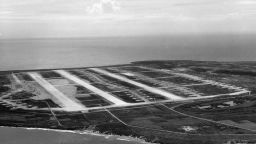
Indonesia is implementing an innovative strategy to enhance its military capabilities by repurposing toll roads as emergency runways for fighter jets. This initiative aims to provide the country with the functional equivalent of multiple aircraft carriers across its extensive archipelago, which consists of over 6,000 inhabited islands.
On March 15, 2023, during a demonstration in Lampung province, an Indonesian Air Force F-16 fighter jet and a Super Tucano attack aircraft successfully landed and took off from a toll road. The chief of staff of the Indonesian Air Force, Marshal Tonny Harjono, expressed hope that each of Indonesia’s 39 provinces will eventually have at least one section of toll road designated as an emergency runway. Although no specific timeline has been provided for this ambitious plan, the potential benefits are significant.
Deputy Defense Minister Donny Ermawan Taufanto described the successful demonstration as a critical milestone in strengthening Indonesia’s defense capabilities. He noted that utilizing toll roads as situational alternative runways will enhance the operational readiness of the Indonesian Air Force against various threats, while still maintaining their primary function as public transportation infrastructure.
This concept is not entirely new, as several countries, including the United States, Finland, and Sweden, have previously demonstrated the feasibility of using highways for military landings. Indonesia’s move reflects its strategic need to disperse its air power across its vast territory, making military assets harder to target in potential conflicts.
Analysts highlight that the plan is also a cost-effective solution for Indonesia, which, as the world’s largest archipelago, faces unique logistical challenges. Covering the extensive territory with traditional aircraft carriers would be prohibitively expensive. An aircraft carrier can cost billions of dollars to acquire and maintain, whereas utilizing existing roadways provides a more practical and economically viable option.
According to Collin Koh, a research fellow at the S. Rajaratnam School of International Studies in Singapore, having multiple toll roads designated as emergency runways reduces risk compared to maintaining a single aircraft carrier. The loss of one road would not eliminate the capability to launch air operations, as numerous other roads would remain available, providing flexibility in military operations.
The F-16 and Super Tucano used in the recent demonstration are not capable of operating from aircraft carriers. The plan is for designated roadways to feature sections that are 3,000 meters long (almost two miles), allowing military aircraft to safely land and take off.
During the demonstration, Taufanto praised the skill of the Indonesian pilots who were able to land on toll roads that are only about 24 meters (79 feet) wide—significantly narrower than typical airport runways, which measure between 45 to 60 meters. He acknowledged the inherent risks involved but emphasized that Air Force pilots are trained to handle such conditions, as reported by the government-operated Antara news agency.
Indonesia’s strategic use of toll roads as emergency runways represents a significant step in modernizing its defense infrastructure while addressing the logistical challenges posed by its unique geography.

Cosmic Mystery Deepens: Where Are the Universe’s Defects?

Lady Bulldogs Shine in Postseason Awards Following Final Four Run

CALV Hosts Essential Class for Local Real Estate Professionals

Urgent Alert: “Spaving” Surges as Shoppers Overspend Online

Jefferies Initiates Coverage on Insmed with “Buy” Rating

Three Dog Night to Perform with Ambrosia at Mayo Civic Center

Urgent Announcement: Charles M. Payment Passes Away at 78

Houston Education Foundation Donates $4,592 for Student Programs

Beeks Financial Cloud Shares Drop 7% Amid Increased Trading Volume

Foreign Inflows into Japan Stocks Surge to ¥1.34 Trillion

University of Hawaiʻi Joins $25.6M AI Project to Monitor Disasters

Sydney Sweeney Embraces Body Positivity Amid Hollywood Challenges

Hudson Williams Gains Popularity as Breakout Star on Heated Rivalry

Urgent Farewell: Joleen Chaney Leaves Legacy at KFOR

Boeing’s Merger with McDonnell Douglas: A Strategic Move Explained

$1.25M Grant Advances Hawaiʻi’s Real-Time Hazard Monitoring

Derrick Dove and ABAC Band Set for Free Americana Concert

BOYNEXTDOOR’s Jaehyun Faces Backlash Amid BTS-TWICE Controversy
-
Business9 months ago
Foreign Inflows into Japan Stocks Surge to ¥1.34 Trillion
-
Science8 months ago
University of Hawaiʻi Joins $25.6M AI Project to Monitor Disasters
-
 Entertainment9 months ago
Sydney Sweeney Embraces Body Positivity Amid Hollywood Challenges
-
 Entertainment7 months ago
Hudson Williams Gains Popularity as Breakout Star on Heated Rivalry
-
 Top Stories8 months ago
Urgent Farewell: Joleen Chaney Leaves Legacy at KFOR
-
 World9 months ago
Boeing’s Merger with McDonnell Douglas: A Strategic Move Explained
-
 Science7 months ago
$1.25M Grant Advances Hawaiʻi’s Real-Time Hazard Monitoring
-
 Entertainment8 months ago
Derrick Dove and ABAC Band Set for Free Americana Concert
-
 Top Stories9 months ago
BOYNEXTDOOR’s Jaehyun Faces Backlash Amid BTS-TWICE Controversy
-

 Health6 months ago
Bodybuilder Eugene Teo Transitions to Mindful Movement for Health
-

 World6 months ago
San Francisco Airport to Host 16 Nonstop Airlines to Europe in 2026
-

 Top Stories7 months ago
National Coast Guard Museum Set to Open in 2027 After Funding Secured