
Science
Earth’s Magnetic Field Shifts: What It Means for Life and Technology

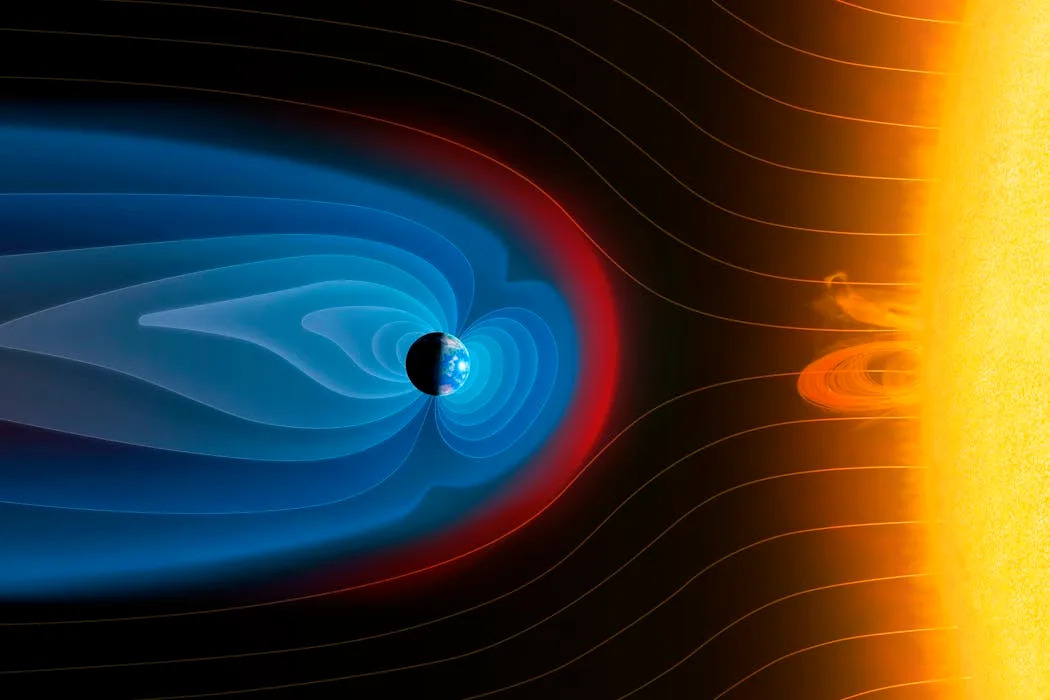
The Earth’s magnetic field, crucial for shielding life from harmful radiation and geomagnetic disturbances, is undergoing notable changes. Recent studies indicate that the north magnetic pole has shifted approximately 600 miles (965 kilometers) since the first measurements were taken in 1831. This acceleration in the pole’s movement, which has increased from 10 miles per year to 34 miles per year (16 km to 54 km), raises questions about the potential onset of a magnetic field reversal.
Understanding the Magnetic Field and Its Importance
The Earth’s magnetic field serves as a protective barrier against high-energy cosmic radiation emanating from stellar events. This magnetic field creates a “bubble” known as the magnetosphere, which shields the planet from cosmic rays and solar wind—streams of charged particles released by the Sun. During times of intense solar activity, such as coronal mass ejections, the interaction between solar wind and the magnetosphere can lead to geomagnetic storms. These storms can disrupt satellite communications and power grids, posing risks to both technology and human safety.
The relationship between the magnetic field and life on Earth is profound. The magnetosphere helps maintain the atmosphere and protects against radiation that could threaten ecosystems. Without it, the Earth would be exposed to increased radiation levels, potentially affecting climate and living organisms.
Magnetic Field Dynamics and Reversal Events
The generation of the magnetic field arises from the movement of electric charges within the Earth’s liquid iron core. As these charges move, they create magnetic fields, producing a dynamic and complex system. The Earth is not unique in this regard; other celestial bodies, such as gas giants like Jupiter, also possess magnetic fields generated by similar processes.
Historically, the Earth’s magnetic field has undergone reversals—events where the magnetic north and south poles switch places. These reversals occur over extended periods, typically ranging from 100,000 to 1,000,000 years. Geologists study volcanic rocks on the ocean floor to determine the frequency of these reversals, as these rocks capture the orientation of the magnetic field when they form.
While the changes in the magnetic field may seem gradual, they can lead to significant shifts in the planet’s magnetic orientation. A complete reversal usually unfolds over a few thousand years, exposing the Earth to higher levels of cosmic radiation during the transition. This increased radiation could alter atmospheric ozone concentrations, further impacting life on Earth.
Ofer Cohen, a physicist at UMass Lowell, emphasizes that while the movement of the north magnetic pole may not seem alarming, a full reversal could have far-reaching implications for the planet’s climate and technological systems. Current data, however, is limited, comprising less than 200 years of records, making it challenging to predict when the next reversal might occur.
Scientists continue to monitor the magnetic field’s orientation and shape using local measurements and advanced modeling techniques. As observations progress, understanding the implications of these shifts on both natural systems and human technology remains a priority.
The ongoing research underscores the importance of the Earth’s magnetic field not only as a protective shield but also as a dynamic system that interacts with various cosmic phenomena. Continuous study may provide insights into how these changes will shape the future of life on Earth and the technologies we depend on.

Cosmic Mystery Deepens: Where Are the Universe’s Defects?

Lady Bulldogs Shine in Postseason Awards Following Final Four Run

CALV Hosts Essential Class for Local Real Estate Professionals

Urgent Alert: “Spaving” Surges as Shoppers Overspend Online

Jefferies Initiates Coverage on Insmed with “Buy” Rating

Three Dog Night to Perform with Ambrosia at Mayo Civic Center

Urgent Announcement: Charles M. Payment Passes Away at 78

Houston Education Foundation Donates $4,592 for Student Programs

Beeks Financial Cloud Shares Drop 7% Amid Increased Trading Volume

Foreign Inflows into Japan Stocks Surge to ¥1.34 Trillion

University of Hawaiʻi Joins $25.6M AI Project to Monitor Disasters

Sydney Sweeney Embraces Body Positivity Amid Hollywood Challenges

Hudson Williams Gains Popularity as Breakout Star on Heated Rivalry

Urgent Farewell: Joleen Chaney Leaves Legacy at KFOR

Boeing’s Merger with McDonnell Douglas: A Strategic Move Explained

$1.25M Grant Advances Hawaiʻi’s Real-Time Hazard Monitoring

Derrick Dove and ABAC Band Set for Free Americana Concert

BOYNEXTDOOR’s Jaehyun Faces Backlash Amid BTS-TWICE Controversy
-
Business9 months ago
Foreign Inflows into Japan Stocks Surge to ¥1.34 Trillion
-
Science8 months ago
University of Hawaiʻi Joins $25.6M AI Project to Monitor Disasters
-
 Entertainment9 months ago
Sydney Sweeney Embraces Body Positivity Amid Hollywood Challenges
-
 Entertainment7 months ago
Hudson Williams Gains Popularity as Breakout Star on Heated Rivalry
-
 Top Stories8 months ago
Urgent Farewell: Joleen Chaney Leaves Legacy at KFOR
-
 World9 months ago
Boeing’s Merger with McDonnell Douglas: A Strategic Move Explained
-
 Science7 months ago
$1.25M Grant Advances Hawaiʻi’s Real-Time Hazard Monitoring
-
 Entertainment8 months ago
Derrick Dove and ABAC Band Set for Free Americana Concert
-
 Top Stories9 months ago
BOYNEXTDOOR’s Jaehyun Faces Backlash Amid BTS-TWICE Controversy
-

 Health6 months ago
Bodybuilder Eugene Teo Transitions to Mindful Movement for Health
-

 World6 months ago
San Francisco Airport to Host 16 Nonstop Airlines to Europe in 2026
-

 Top Stories7 months ago
National Coast Guard Museum Set to Open in 2027 After Funding Secured