
Science
Discoveries in Science: Neanderthal Fire, Orcas and Dolphins Unite

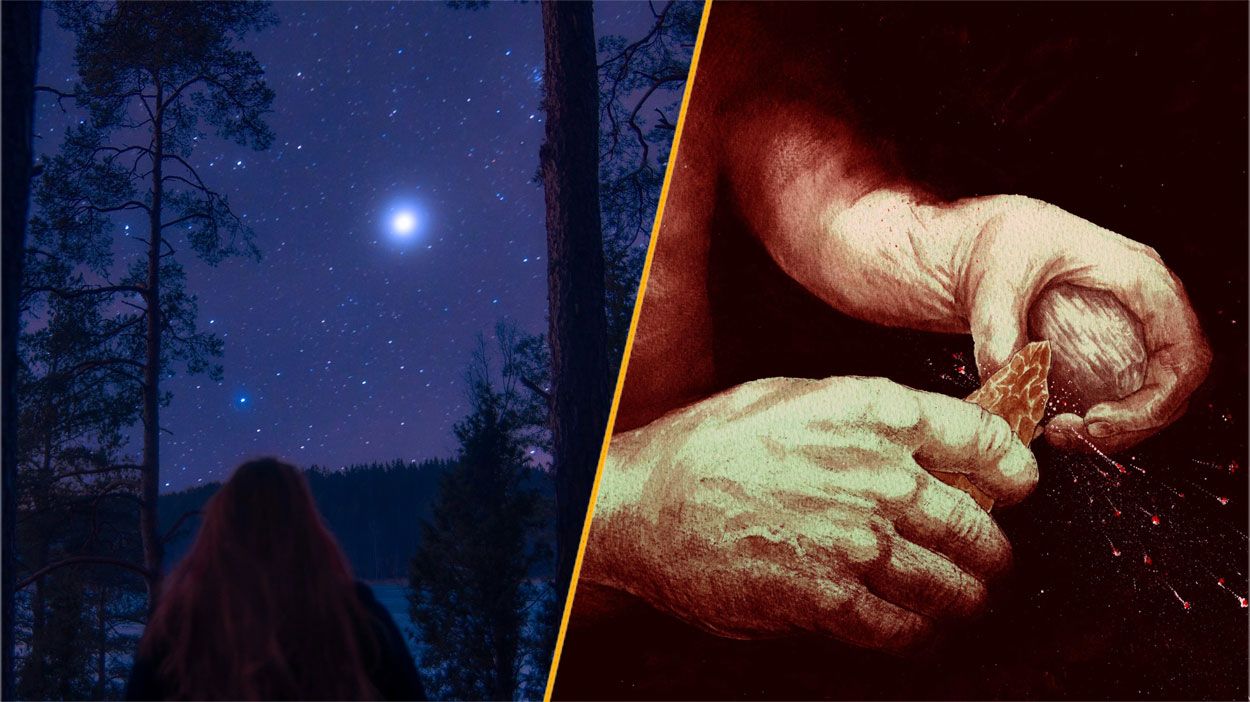
This week has brought significant advancements in the fields of archaeology and animal behavior, while also revealing fascinating discoveries in astronomy. Researchers have uncovered that Neanderthals were capable of making fire as early as 400,000 years ago in what is now England. In a separate study, orcas have been observed cooperating with dolphins during salmon hunts off the coast of British Columbia, a behavior not typically seen among these species. Additionally, astronomers are excited about the potential of the star system V Sagittae, which is set to go supernova within the next century.
Neanderthals and Their Early Use of Fire
The control of fire is a milestone in human evolution. A recent study suggests that Neanderthals mastered this skill much earlier than previously believed. Findings from an archaeological site in Suffolk, England, indicate that Neanderthals were using pyrite, a rare mineral, to produce sparks for fire-making. This research suggests that these ancient humans intentionally transported the pyrite to the site, challenging previous timelines about their ability to control fire by approximately 350,000 years.
The presence of pyrite in the archaeological record raises important questions about the social and cultural practices of Neanderthals. Understanding their relationship with fire not only sheds light on their survival strategies but also contributes to the broader discussions surrounding human evolution.
Orcas and Dolphins: A Unique Hunting Partnership
In a noteworthy development in animal behavior, researchers have documented interactions between orcas and Pacific white-sided dolphins during salmon hunts. These interactions, observed off the coast of British Columbia, show that orcas and dolphins not only hunt together but also share their catch after successful hunts. This cooperative behavior contrasts sharply with typical predator-prey dynamics, where orcas are known to hunt dolphins in other regions.
The study suggests that the absence of aggression between these two species indicates a form of mutual benefit. However, some experts caution that this collaboration could be better described as kleptoparasitism, where one species steals from another rather than an equal partnership in hunting.
Exciting Astronomical Discoveries
Turning our gaze to the cosmos, astronomers are closely monitoring the binary star system V Sagittae, which is anticipated to become exceptionally bright in the coming years. The system is producing flares that could soon be visible from Earth without the aid of telescopes. These flares are attributed to the impending supernova event expected within the next 100 years, providing a unique opportunity for skywatchers.
In another intriguing finding, researchers have detected a mysterious X-ray signal emanating from deep space, potentially linked to a star being consumed by two black holes. These discoveries not only expand our understanding of the universe but also capture the imagination of both scientists and the public alike.
Furthermore, as the festive season approaches, Jupiter will appear particularly prominent in the night sky this month, prompting discussions about its possible connection to the Star of Bethlehem mentioned in biblical texts. While the notion remains speculative, it highlights the fascination and curiosity surrounding celestial events.
Further Insights into Ancient History
Recent archaeological discoveries at Hadrian’s Wall in Britain are providing new insights into the life along the Roman Empire’s northern frontier. The site, which served as a crucial border for nearly 300 years, has revealed evidence of a vibrant community that thrived despite the military presence. Findings from the fort of Vindolanda suggest a demographic mix reflective of the wider Roman Empire, challenging previous perceptions of life at the edge of the empire.
These discoveries enrich our understanding of ancient civilizations and their interactions, illuminating the complexities of cultural exchange and community life during a time of significant historical importance.
As we continue to explore both our planet and the universe beyond, these recent findings remind us of the intricate connections between history, biology, and astronomy, each contributing to our broader understanding of the world.

Cosmic Mystery Deepens: Where Are the Universe’s Defects?

Lady Bulldogs Shine in Postseason Awards Following Final Four Run

CALV Hosts Essential Class for Local Real Estate Professionals

Urgent Alert: “Spaving” Surges as Shoppers Overspend Online

Jefferies Initiates Coverage on Insmed with “Buy” Rating

Three Dog Night to Perform with Ambrosia at Mayo Civic Center

Urgent Announcement: Charles M. Payment Passes Away at 78

Houston Education Foundation Donates $4,592 for Student Programs

Beeks Financial Cloud Shares Drop 7% Amid Increased Trading Volume

Foreign Inflows into Japan Stocks Surge to ¥1.34 Trillion

University of Hawaiʻi Joins $25.6M AI Project to Monitor Disasters

Sydney Sweeney Embraces Body Positivity Amid Hollywood Challenges

Hudson Williams Gains Popularity as Breakout Star on Heated Rivalry

Urgent Farewell: Joleen Chaney Leaves Legacy at KFOR

Boeing’s Merger with McDonnell Douglas: A Strategic Move Explained

$1.25M Grant Advances Hawaiʻi’s Real-Time Hazard Monitoring

Derrick Dove and ABAC Band Set for Free Americana Concert

Bodybuilder Eugene Teo Transitions to Mindful Movement for Health
-
Business9 months ago
Foreign Inflows into Japan Stocks Surge to ¥1.34 Trillion
-
Science9 months ago
University of Hawaiʻi Joins $25.6M AI Project to Monitor Disasters
-
 Entertainment9 months ago
Sydney Sweeney Embraces Body Positivity Amid Hollywood Challenges
-
 Entertainment8 months ago
Hudson Williams Gains Popularity as Breakout Star on Heated Rivalry
-
 Top Stories9 months ago
Urgent Farewell: Joleen Chaney Leaves Legacy at KFOR
-
 World9 months ago
Boeing’s Merger with McDonnell Douglas: A Strategic Move Explained
-
 Science8 months ago
$1.25M Grant Advances Hawaiʻi’s Real-Time Hazard Monitoring
-
 Entertainment8 months ago
Derrick Dove and ABAC Band Set for Free Americana Concert
-
 Health6 months ago
Bodybuilder Eugene Teo Transitions to Mindful Movement for Health
-

 Top Stories9 months ago
BOYNEXTDOOR’s Jaehyun Faces Backlash Amid BTS-TWICE Controversy
-

 World7 months ago
San Francisco Airport to Host 16 Nonstop Airlines to Europe in 2026
-

 Top Stories7 months ago
National Coast Guard Museum Set to Open in 2027 After Funding Secured