
Science
Discover the Waxing Gibbous Moon on March 1: View It Tonight

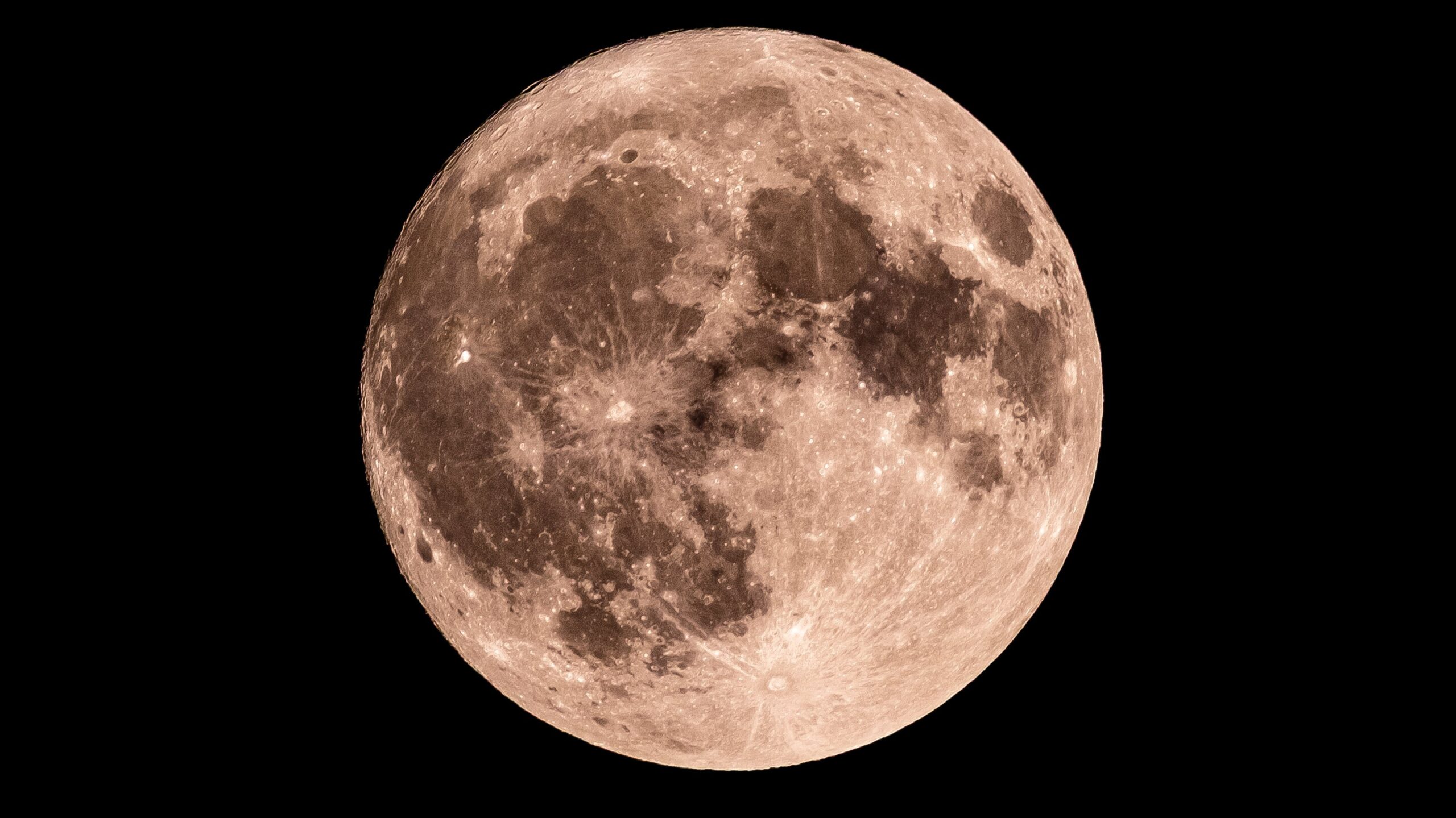
March 1, 2024, marks a significant moment for skywatchers as the Moon enters its Waxing Gibbous phase. While it may appear full, it is actually just under three days away from being completely illuminated. This phase presents a prime opportunity for enthusiasts to observe various lunar features.
According to NASA’s Daily Moon Guide, approximately 94% of the Moon’s surface will be illuminated tonight. Viewers can easily spot notable features such as the Mares Imbrium and Crisium, along with the well-known Tycho Crater using only the naked eye. For those with binoculars, a clearer view awaits, allowing for the identification of the Mares Nectaris and Frigoris, as well as the Endymion Crater.
For telescope owners, the evening promises even more excitement. Observers can look forward to detailed views of the Apollo 15 and 17 landing sites, in addition to the Schiller Crater. This rich and dynamic lunar landscape serves as a reminder of the Moon’s complex geography and its historical significance in space exploration.
Understanding Moon Phases
The Moon undergoes a consistent cycle of phases throughout its orbit around Earth, taking approximately 29.5 days to complete one revolution. As it moves, the portion illuminated by the Sun changes, resulting in the various appearances we observe from our planet. The lunar cycle consists of eight distinct phases:
– **New Moon**: The Moon is positioned between Earth and the Sun, making it invisible from our perspective.
– **Waxing Crescent**: A small crescent of light becomes visible on the right side.
– **First Quarter**: Half of the Moon is illuminated on the right, appearing as a half-Moon.
– **Waxing Gibbous**: More than half of the Moon is lit, approaching fullness.
– **Full Moon**: The Moon’s entire face is fully illuminated.
– **Waning Gibbous**: The illuminated portion begins to decrease on the right side.
– **Third Quarter (Last Quarter)**: The left side of the Moon is now illuminated, appearing as another half-Moon.
– **Waning Crescent**: A thin crescent of light remains on the left before the Moon fades to darkness again.
The next Full Moon will occur on March 3, 2024, following a previous Full Moon on February 1. This rhythmic cycle of phases not only captivates stargazers but also serves as a reminder of the intricate relationship between the Earth and its natural satellite.
As tonight’s Waxing Gibbous Moon rises, both amateur and seasoned astronomers alike are encouraged to take advantage of the clear skies and explore the wonders of our lunar neighbor. Whether with the naked eye, binoculars, or a telescope, the celestial show is one not to be missed.

Cosmic Mystery Deepens: Where Are the Universe’s Defects?

Lady Bulldogs Shine in Postseason Awards Following Final Four Run

CALV Hosts Essential Class for Local Real Estate Professionals

Urgent Alert: “Spaving” Surges as Shoppers Overspend Online

Jefferies Initiates Coverage on Insmed with “Buy” Rating

Three Dog Night to Perform with Ambrosia at Mayo Civic Center

Urgent Announcement: Charles M. Payment Passes Away at 78

Houston Education Foundation Donates $4,592 for Student Programs

Beeks Financial Cloud Shares Drop 7% Amid Increased Trading Volume

Foreign Inflows into Japan Stocks Surge to ¥1.34 Trillion

University of Hawaiʻi Joins $25.6M AI Project to Monitor Disasters

Sydney Sweeney Embraces Body Positivity Amid Hollywood Challenges

Hudson Williams Gains Popularity as Breakout Star on Heated Rivalry

Urgent Farewell: Joleen Chaney Leaves Legacy at KFOR

Boeing’s Merger with McDonnell Douglas: A Strategic Move Explained

$1.25M Grant Advances Hawaiʻi’s Real-Time Hazard Monitoring

Derrick Dove and ABAC Band Set for Free Americana Concert

BOYNEXTDOOR’s Jaehyun Faces Backlash Amid BTS-TWICE Controversy
-
Business9 months ago
Foreign Inflows into Japan Stocks Surge to ¥1.34 Trillion
-
Science8 months ago
University of Hawaiʻi Joins $25.6M AI Project to Monitor Disasters
-
 Entertainment9 months ago
Sydney Sweeney Embraces Body Positivity Amid Hollywood Challenges
-
 Entertainment7 months ago
Hudson Williams Gains Popularity as Breakout Star on Heated Rivalry
-
 Top Stories8 months ago
Urgent Farewell: Joleen Chaney Leaves Legacy at KFOR
-
 World9 months ago
Boeing’s Merger with McDonnell Douglas: A Strategic Move Explained
-
 Science7 months ago
$1.25M Grant Advances Hawaiʻi’s Real-Time Hazard Monitoring
-
 Entertainment8 months ago
Derrick Dove and ABAC Band Set for Free Americana Concert
-
 Top Stories9 months ago
BOYNEXTDOOR’s Jaehyun Faces Backlash Amid BTS-TWICE Controversy
-

 Health6 months ago
Bodybuilder Eugene Teo Transitions to Mindful Movement for Health
-

 World6 months ago
San Francisco Airport to Host 16 Nonstop Airlines to Europe in 2026
-

 Top Stories7 months ago
National Coast Guard Museum Set to Open in 2027 After Funding Secured