
Science
CIA Discontinues World Factbook, Leaving Information Void

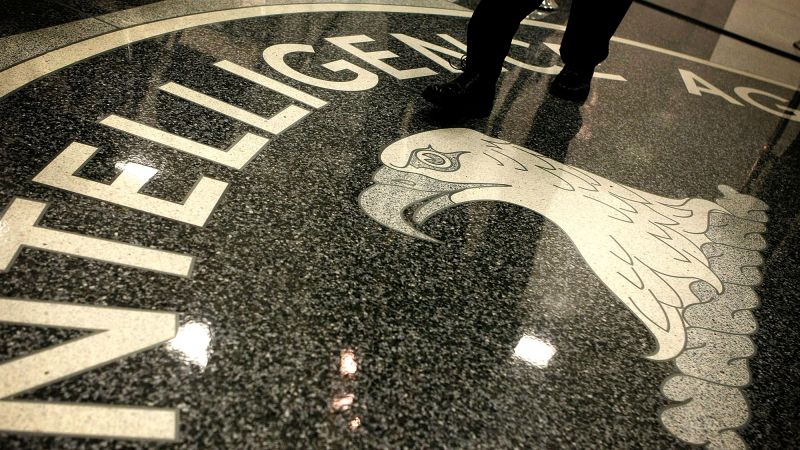
The Central Intelligence Agency (CIA) has ceased publication of its World Factbook, a widely-used resource for basic information about countries, economies, and demographics. The announcement came on February 4, 2024, without prior notice, leaving educators, researchers, and the general public in search of alternative data sources.
Taylor Hale, a sixth-grade social studies teacher in Oklahoma City, was in the midst of a geography lesson when his students discovered the Factbook’s abrupt disappearance. “It was always there, and now it’s not,” Hale remarked, emphasizing the resource’s reliability. The World Factbook had been a crucial tool for students exploring countries such as Honduras, El Salvador, and Nicaragua, often used to compare economic indicators like gross domestic product.
For decades, the World Factbook served as a fundamental reference for various demographics, offering up-to-date statistics annually. John Devine, a government information research specialist at the Boston Public Library, expressed disappointment at the loss, stating that the Factbook was “the singular best source” for accurate population statistics. “It’s a tough loss,” he added, highlighting concerns over finding reliable information on developing countries.
Originally published as a classified document in 1962, the World Factbook transitioned to an unclassified version in 1971 and became publicly available in print in 1975. In 1981, it was renamed, and by 1997, the resource was made available online. The CIA’s announcement about discontinuing the Factbook came with little explanation, and the agency did not provide further comments regarding the decision.
In a farewell message on their website, the CIA offered a brief history of the Factbook but failed to clarify the reasons for its termination or whether existing data would be archived. “Though the World Factbook is gone, in the spirit of its global reach and legacy, we hope you will stay curious about the world,” the message stated.
Simon Willison, a programmer specializing in data journalism, has since downloaded the available data and made it accessible online, although the most recent figures date back to 2020. This move follows a broader trend of diminishing access to reliable government information in the United States, particularly since the administration of former President Donald Trump, who directed changes to various government health websites and other public resources.
Hale expressed concern over the implications of the Factbook’s elimination, linking it to a perceived trend of censorship. “It feels like they want to make us a very ignorant country,” he stated, underscoring the challenges educators face in providing accurate and unbiased information to their students. The absence of a central, reliable database complicates their ability to teach essential topics effectively.
Alexi Lenington, a high school social studies teacher in Texas, echoed these sentiments, noting that the World Factbook was a trusted source of raw data, free from perceived bias. As he prepares for a schoolwide initiative on cultural exploration, Lenington has been searching for comparable resources but has found none as reliable or user-friendly.
News organizations are also reeling from the discontinuation. Lizzie Jury, director of CNN’s editorial research team, acknowledged the Factbook as the “gold standard for country statistics.” The research team had previously relied on the Factbook for information, eliminating subscriptions to other databases that offered similar data. “It just makes something that was easy to do and quick to find for everyone more difficult,” she lamented.
The sudden loss of the World Factbook has created a significant gap in available resources for educators, researchers, and the public alike. As users transition to alternative sources, questions of reliability and accuracy loom large, raising concerns about the future of accessible data on global issues.

Cosmic Mystery Deepens: Where Are the Universe’s Defects?

Lady Bulldogs Shine in Postseason Awards Following Final Four Run

CALV Hosts Essential Class for Local Real Estate Professionals

Urgent Alert: “Spaving” Surges as Shoppers Overspend Online

Jefferies Initiates Coverage on Insmed with “Buy” Rating

Three Dog Night to Perform with Ambrosia at Mayo Civic Center

Urgent Announcement: Charles M. Payment Passes Away at 78

Houston Education Foundation Donates $4,592 for Student Programs

Beeks Financial Cloud Shares Drop 7% Amid Increased Trading Volume

Foreign Inflows into Japan Stocks Surge to ¥1.34 Trillion

University of Hawaiʻi Joins $25.6M AI Project to Monitor Disasters

Sydney Sweeney Embraces Body Positivity Amid Hollywood Challenges

Hudson Williams Gains Popularity as Breakout Star on Heated Rivalry

Urgent Farewell: Joleen Chaney Leaves Legacy at KFOR

Boeing’s Merger with McDonnell Douglas: A Strategic Move Explained

$1.25M Grant Advances Hawaiʻi’s Real-Time Hazard Monitoring

Derrick Dove and ABAC Band Set for Free Americana Concert

BOYNEXTDOOR’s Jaehyun Faces Backlash Amid BTS-TWICE Controversy
-
Business9 months ago
Foreign Inflows into Japan Stocks Surge to ¥1.34 Trillion
-
Science8 months ago
University of Hawaiʻi Joins $25.6M AI Project to Monitor Disasters
-
 Entertainment9 months ago
Sydney Sweeney Embraces Body Positivity Amid Hollywood Challenges
-
 Entertainment7 months ago
Hudson Williams Gains Popularity as Breakout Star on Heated Rivalry
-
 Top Stories8 months ago
Urgent Farewell: Joleen Chaney Leaves Legacy at KFOR
-
 World9 months ago
Boeing’s Merger with McDonnell Douglas: A Strategic Move Explained
-
 Science7 months ago
$1.25M Grant Advances Hawaiʻi’s Real-Time Hazard Monitoring
-
 Entertainment8 months ago
Derrick Dove and ABAC Band Set for Free Americana Concert
-
 Top Stories9 months ago
BOYNEXTDOOR’s Jaehyun Faces Backlash Amid BTS-TWICE Controversy
-

 Health6 months ago
Bodybuilder Eugene Teo Transitions to Mindful Movement for Health
-

 World6 months ago
San Francisco Airport to Host 16 Nonstop Airlines to Europe in 2026
-

 Top Stories7 months ago
National Coast Guard Museum Set to Open in 2027 After Funding Secured