
Science
Automation Revolutionizes Welding, Painting, and Dispensing Processes

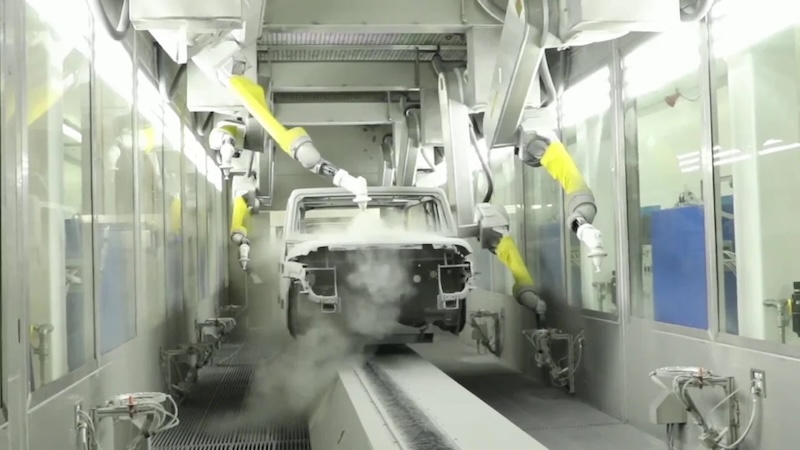
Manufacturers across various sectors are witnessing a transformative shift in crucial factory processes, including welding, painting, and dispensing. This evolution is driven by advancements in automation technology that enhance precision, efficiency, and safety. As companies face global competition, labor shortages, and rising quality expectations, the integration of smarter robotic systems is rapidly becoming commonplace. These developments promise significant improvements in process stability, faster production times, reduced waste, and enhanced workplace safety.
Robotic Welding: Enhanced Precision and Control
Robotic welding has traditionally grappled with challenges such as dimensional variability, joint misalignment, and a shortage of skilled welders. Recent advancements in technology have led to remarkable changes in this field. Innovations like laser scanners and structured-light sensors enable robots to detect joint positions in real-time, allowing for adjustments in torch angle and travel speed during welding. For instance, the Fronius TPS/i Robotics system utilizes high-speed laser seam-tracking sensors that automatically adjust weld parameters to compensate for joint variations.
Machine-learning models have also emerged, optimizing key welding parameters such as voltage and wire feed speed based on historical data. The Lincoln Electric HyperFill system exemplifies this trend by employing AI to analyze arc stability and bead formation, ensuring higher deposition rates and consistent weld quality.
Furthermore, tighter synchronization between digital welders and robotic motion controllers has reduced arc instability, enhancing overall performance. The Yaskawa WeldPlus architecture connects robots and digital welding power sources to minimize inefficiencies during the welding process. Collaborative robots, or cobots, are also making their mark, particularly in environments that require high flexibility and quick jig changes. An example is the Universal Robots UR10, which allows for rapid offline programming without halting production.
Advancements in Robotic Painting and Dispensing
The painting process is often regarded as one of the most challenging to automate due to strict regulations surrounding chemical exposure and VOC emissions. New technologies, however, are revolutionizing this sector. Modern rotary atomizers and electrostatic spray guns achieve precise droplet control, significantly enhancing transfer efficiency and reducing waste. The ABB RB1000 rotary atomizer exemplifies this evolution, offering high-precision electrostatic charging that improves finish consistency in paint applications.
Robots equipped with 3D cameras are now capable of dynamically adjusting their paths based on part geometry, ensuring optimal distance and angle during painting. For example, Fanuc’s robotic paint cells utilize vision sensors to maintain ideal gun orientation, adapting to complex shapes. Systems like Kuka’s AI-powered quality inspection platform further enhance this process by identifying defects and adjusting parameters in real-time to ensure uniform film thickness.
In the dispensing realm, precise metering of materials such as adhesives and sealants is critical. Inconsistent bead quality can lead to significant issues in various industries. Feedback-controlled metering systems, like those from Nordson EFD, maintain bead consistency even when material viscosity fluctuates. Innovative solutions, such as Atlas Copco’s EBB bead-inspection system, enable robots to adjust their flow rates and paths in real-time, ensuring high-quality applications.
The ability to mix and switch materials seamlessly is also becoming a standard. Systems like Scheugenpflug’s DosPLAST allow for accurate mixing of two-component adhesives at the nozzle, enabling flexibility in production cycles.
The integration of digital twins and offline programming is further enhancing the deployment of these technologies. Software platforms such as Omniverse and RobotStudio enable engineers to simulate robotic cells, significantly reducing commissioning time and allowing for virtual testing of new processes before implementation.
The future promises even greater advancements as AI models trained on vast datasets of welding and painting outcomes begin to optimize processes autonomously. These predictive maintenance systems are designed to analyze equipment performance, helping prevent unplanned downtime.
As automation continues to evolve, the impact on the workforce is notable. Robots are increasingly taking over hazardous tasks, allowing human roles to shift toward more skilled positions that require technical oversight. In many facilities, this transition is making jobs in welding, painting, and dispensing more appealing by minimizing physical risks and enhancing job satisfaction.
In conclusion, the integration of advanced robotic systems in welding, painting, and dispensing is ushering in a new era of manufacturing. With a focus on adaptive sensing, AI optimization, and digital simulation, these processes are becoming more efficient and safer. Manufacturers adopting these technologies are witnessing measurable improvements in quality and throughput, ultimately contributing to a more resilient and capable production landscape.

Cosmic Mystery Deepens: Where Are the Universe’s Defects?

Lady Bulldogs Shine in Postseason Awards Following Final Four Run

CALV Hosts Essential Class for Local Real Estate Professionals

Urgent Alert: “Spaving” Surges as Shoppers Overspend Online

Jefferies Initiates Coverage on Insmed with “Buy” Rating

Three Dog Night to Perform with Ambrosia at Mayo Civic Center

Urgent Announcement: Charles M. Payment Passes Away at 78

Houston Education Foundation Donates $4,592 for Student Programs

Beeks Financial Cloud Shares Drop 7% Amid Increased Trading Volume

Foreign Inflows into Japan Stocks Surge to ¥1.34 Trillion

University of Hawaiʻi Joins $25.6M AI Project to Monitor Disasters

Sydney Sweeney Embraces Body Positivity Amid Hollywood Challenges

Hudson Williams Gains Popularity as Breakout Star on Heated Rivalry

Urgent Farewell: Joleen Chaney Leaves Legacy at KFOR

Boeing’s Merger with McDonnell Douglas: A Strategic Move Explained

$1.25M Grant Advances Hawaiʻi’s Real-Time Hazard Monitoring

Derrick Dove and ABAC Band Set for Free Americana Concert

BOYNEXTDOOR’s Jaehyun Faces Backlash Amid BTS-TWICE Controversy
-
Business9 months ago
Foreign Inflows into Japan Stocks Surge to ¥1.34 Trillion
-
Science8 months ago
University of Hawaiʻi Joins $25.6M AI Project to Monitor Disasters
-
 Entertainment9 months ago
Sydney Sweeney Embraces Body Positivity Amid Hollywood Challenges
-
 Entertainment7 months ago
Hudson Williams Gains Popularity as Breakout Star on Heated Rivalry
-
 Top Stories8 months ago
Urgent Farewell: Joleen Chaney Leaves Legacy at KFOR
-
 World9 months ago
Boeing’s Merger with McDonnell Douglas: A Strategic Move Explained
-
 Science7 months ago
$1.25M Grant Advances Hawaiʻi’s Real-Time Hazard Monitoring
-
 Entertainment8 months ago
Derrick Dove and ABAC Band Set for Free Americana Concert
-
 Top Stories9 months ago
BOYNEXTDOOR’s Jaehyun Faces Backlash Amid BTS-TWICE Controversy
-

 Health6 months ago
Bodybuilder Eugene Teo Transitions to Mindful Movement for Health
-

 World6 months ago
San Francisco Airport to Host 16 Nonstop Airlines to Europe in 2026
-

 Top Stories7 months ago
National Coast Guard Museum Set to Open in 2027 After Funding Secured