
Politics
US and Iran Prepare for Nuclear Talks as Middle East Tensions Escalate

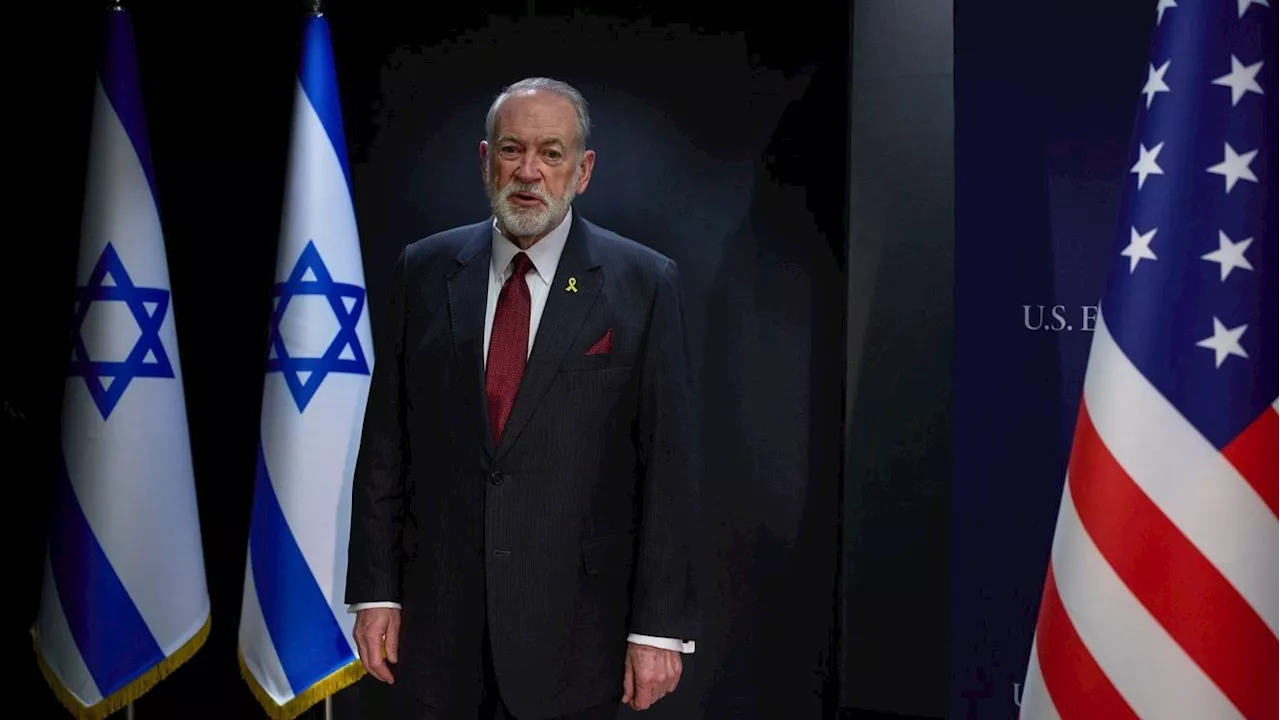
The United States and Iran are set to resume nuclear negotiations on March 15, 2025, in Geneva, facilitated by Oman. This diplomatic effort comes at a time of heightened tensions in the Middle East, exacerbated by controversial remarks from U.S. Ambassador to Israel, Mike Huckabee, regarding Israeli territorial claims.
Oman’s Foreign Minister, Badir al-Busaidi, confirmed the upcoming talks amid increasing military activities in the region. The U.S. has not publicly commented on the negotiations, though it has been bolstering its military presence as part of an effort to pressure Tehran into compliance over its nuclear program.
The situation has grown more complex following Huckabee’s comments during an interview with conservative commentator Tucker Carlson. He suggested that Israel has the right to significant portions of the Middle East, a statement that has drawn sharp rebukes from Arab and Muslim nations. Huckabee stated, “It would be fine” if Israel “took all” of the land in the Middle East, referencing biblical claims to the territory.
In response to the backlash, a spokesperson for the U.S. Embassy clarified that Huckabee’s remarks were taken out of context, asserting there has been no change in U.S. policy regarding Israel. Huckabee maintained that the comments aimed to express Israel’s right to protect its interests and its citizens.
Tensions are particularly high in Israel, where concerns over potential Iranian attacks loom large. Following warnings from President Donald Trump about possible military strikes against Iran, additional U.S. warships and aircraft have been dispatched to the region. While these deployments do not guarantee an impending attack, they signal the U.S. readiness to respond if necessary.
Israeli Prime Minister Benjamin Netanyahu has reiterated that any Iranian aggression towards Israel could provoke a response that Iran cannot predict. His warnings highlight the precarious balance of power in the region, as both countries navigate a landscape fraught with military threats and political posturing.
As the nuclear talks approach, the outcomes will be closely monitored, particularly given the rising stakes in a region already marked by conflict and instability. The dialogue between the U.S. and Iran may present a critical opportunity to de-escalate tensions, although the backdrop of heightened military readiness complicates the prospects for fruitful negotiations.
In summary, the upcoming talks in Geneva represent a significant moment in U.S.-Iran relations, occurring in a context where diplomatic efforts are increasingly intertwined with military considerations.

Cosmic Mystery Deepens: Where Are the Universe’s Defects?

Lady Bulldogs Shine in Postseason Awards Following Final Four Run

CALV Hosts Essential Class for Local Real Estate Professionals

Urgent Alert: “Spaving” Surges as Shoppers Overspend Online

Jefferies Initiates Coverage on Insmed with “Buy” Rating

Three Dog Night to Perform with Ambrosia at Mayo Civic Center

Urgent Announcement: Charles M. Payment Passes Away at 78

Houston Education Foundation Donates $4,592 for Student Programs

Beeks Financial Cloud Shares Drop 7% Amid Increased Trading Volume

Foreign Inflows into Japan Stocks Surge to ¥1.34 Trillion

University of Hawaiʻi Joins $25.6M AI Project to Monitor Disasters

Sydney Sweeney Embraces Body Positivity Amid Hollywood Challenges

Hudson Williams Gains Popularity as Breakout Star on Heated Rivalry

Urgent Farewell: Joleen Chaney Leaves Legacy at KFOR

Boeing’s Merger with McDonnell Douglas: A Strategic Move Explained

$1.25M Grant Advances Hawaiʻi’s Real-Time Hazard Monitoring

Derrick Dove and ABAC Band Set for Free Americana Concert

BOYNEXTDOOR’s Jaehyun Faces Backlash Amid BTS-TWICE Controversy
-
Business9 months ago
Foreign Inflows into Japan Stocks Surge to ¥1.34 Trillion
-
Science8 months ago
University of Hawaiʻi Joins $25.6M AI Project to Monitor Disasters
-
 Entertainment9 months ago
Sydney Sweeney Embraces Body Positivity Amid Hollywood Challenges
-
 Entertainment7 months ago
Hudson Williams Gains Popularity as Breakout Star on Heated Rivalry
-
 Top Stories8 months ago
Urgent Farewell: Joleen Chaney Leaves Legacy at KFOR
-
 World9 months ago
Boeing’s Merger with McDonnell Douglas: A Strategic Move Explained
-
 Science7 months ago
$1.25M Grant Advances Hawaiʻi’s Real-Time Hazard Monitoring
-
 Entertainment8 months ago
Derrick Dove and ABAC Band Set for Free Americana Concert
-
 Top Stories9 months ago
BOYNEXTDOOR’s Jaehyun Faces Backlash Amid BTS-TWICE Controversy
-

 Health6 months ago
Bodybuilder Eugene Teo Transitions to Mindful Movement for Health
-

 World6 months ago
San Francisco Airport to Host 16 Nonstop Airlines to Europe in 2026
-

 Top Stories7 months ago
National Coast Guard Museum Set to Open in 2027 After Funding Secured