
Politics
Trump’s Power Expansion: House Shutdown Sparks Controversy

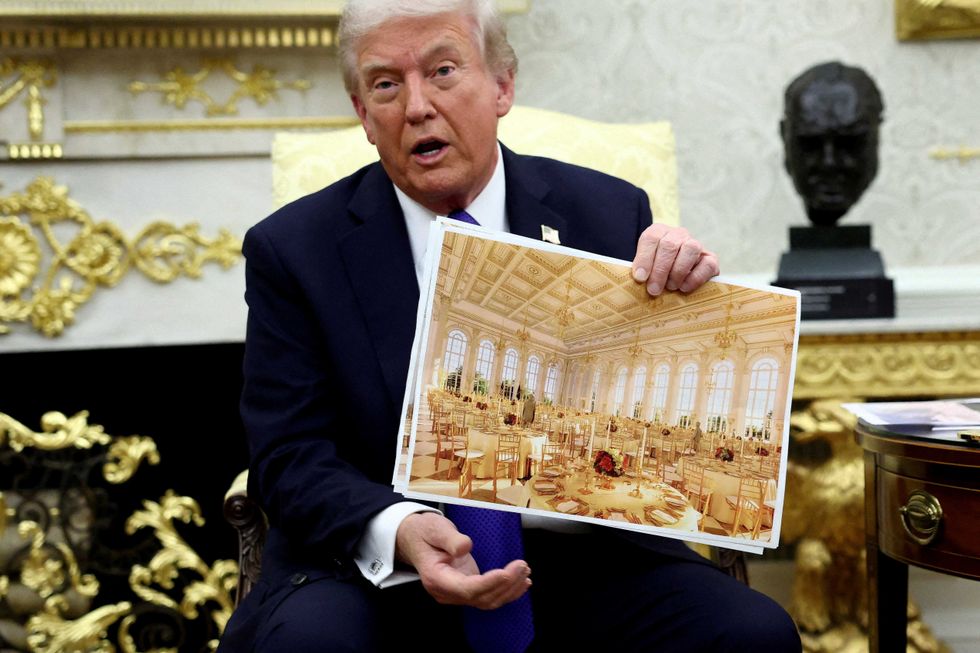
The House of Representatives, led by Speaker Mike Johnson, has remained in an unprecedented shutdown for over a month, a move many view as unconstitutional. Critics argue that this action, reportedly sanctioned by Donald Trump, effectively allows the former president to operate without congressional oversight, raising alarms about the erosion of democratic checks and balances.
James Madison and Thomas Jefferson, key figures among the Founding Fathers, emphasized the importance of separating powers within the government to prevent tyranny. Their writings highlight that a concentration of power undermines the democratic framework designed to hold leaders accountable. Yet, with the House effectively sidelined, Trump appears to be exercising unchecked authority.
The shutdown of the House has significant implications. Johnson’s decision to keep Congress in recess indefinitely has been interpreted as a maneuver to eliminate oversight over Trump’s actions. This situation is compounded by reports that Johnson is acting under Trump’s directive, a dynamic that many see as a shift towards a more autocratic governance style.
This unprecedented recess raises serious concerns about its legality. According to Article I, Section 5 of the Constitution, Congress must not recess for more than three days without a joint resolution from the Senate. Historically, Congress has remained operational even during significant crises, such as the Civil War. The current situation marks a departure from that tradition, prompting questions about the motivations behind this extended recess.
The implications of this shutdown extend beyond procedural norms. Critics argue that it enables Trump to pursue initiatives without the customary scrutiny from Congress. Reports suggest that the former president is planning significant alterations to the White House, including constructing a new ballroom, dubbed the “Epstein Ballroom,” without consulting the National Trust for Historic Preservation or following the required protocols for historic buildings.
While Congress has the authority to conduct oversight, the current recess has effectively paralyzed its ability to act. The House cannot introduce new legislation, issue subpoenas, or hold hearings, which are essential for maintaining accountability within the executive branch. This absence of checks raises the potential for Trump and his administration to implement policies and make decisions without fear of repercussions.
The stalemate also presents a risk to the integrity of the legislative process. With the House inactive, the Senate’s ability to legislate becomes severely hampered. Any legislation related to revenue or expenditures must originate in the House, according to the Constitution. This creates a scenario where Trump could operate with near-kingly power, raising concerns about the health of American democracy.
As the nation observes this unfolding political drama, the role of Congress in safeguarding democratic principles comes into sharp focus. The potential for a “procedural coup” raises questions about the future of governance in the United States. If this shutdown continues, it may usher in a new era where legislative oversight becomes a relic of the past.
In light of these developments, it remains critical for the public and other governing bodies to demand clarity and action. The implications of a prolonged congressional recess could redefine the balance of power in the U.S., prompting calls for immediate scrutiny and restoration of legislative functions. Absent proactive measures, the repercussions of this shutdown could fundamentally alter the landscape of American governance.

Cosmic Mystery Deepens: Where Are the Universe’s Defects?

Lady Bulldogs Shine in Postseason Awards Following Final Four Run

CALV Hosts Essential Class for Local Real Estate Professionals

Urgent Alert: “Spaving” Surges as Shoppers Overspend Online

Jefferies Initiates Coverage on Insmed with “Buy” Rating

Three Dog Night to Perform with Ambrosia at Mayo Civic Center

Urgent Announcement: Charles M. Payment Passes Away at 78

Houston Education Foundation Donates $4,592 for Student Programs

Beeks Financial Cloud Shares Drop 7% Amid Increased Trading Volume

Foreign Inflows into Japan Stocks Surge to ¥1.34 Trillion

University of Hawaiʻi Joins $25.6M AI Project to Monitor Disasters

Sydney Sweeney Embraces Body Positivity Amid Hollywood Challenges

Hudson Williams Gains Popularity as Breakout Star on Heated Rivalry

Urgent Farewell: Joleen Chaney Leaves Legacy at KFOR

Boeing’s Merger with McDonnell Douglas: A Strategic Move Explained

$1.25M Grant Advances Hawaiʻi’s Real-Time Hazard Monitoring

Derrick Dove and ABAC Band Set for Free Americana Concert

BOYNEXTDOOR’s Jaehyun Faces Backlash Amid BTS-TWICE Controversy
-
Business9 months ago
Foreign Inflows into Japan Stocks Surge to ¥1.34 Trillion
-
Science9 months ago
University of Hawaiʻi Joins $25.6M AI Project to Monitor Disasters
-
 Entertainment9 months ago
Sydney Sweeney Embraces Body Positivity Amid Hollywood Challenges
-
 Entertainment7 months ago
Hudson Williams Gains Popularity as Breakout Star on Heated Rivalry
-
 Top Stories8 months ago
Urgent Farewell: Joleen Chaney Leaves Legacy at KFOR
-
 World9 months ago
Boeing’s Merger with McDonnell Douglas: A Strategic Move Explained
-
 Science7 months ago
$1.25M Grant Advances Hawaiʻi’s Real-Time Hazard Monitoring
-
 Entertainment8 months ago
Derrick Dove and ABAC Band Set for Free Americana Concert
-
 Top Stories9 months ago
BOYNEXTDOOR’s Jaehyun Faces Backlash Amid BTS-TWICE Controversy
-

 Health6 months ago
Bodybuilder Eugene Teo Transitions to Mindful Movement for Health
-

 World6 months ago
San Francisco Airport to Host 16 Nonstop Airlines to Europe in 2026
-

 Top Stories7 months ago
National Coast Guard Museum Set to Open in 2027 After Funding Secured