
Politics
Trump and Putin Discuss Iran Conflict Amid Escalating Violence

U.S. President Donald Trump held a phone call with Russian President Vladimir Putin on March 4, 2024, to discuss the ongoing conflict in Iran and other pressing global issues. The Kremlin described the hour-long conversation as “frank and businesslike,” indicating that both leaders exchanged views on potential diplomatic resolutions amidst escalating violence in the region.
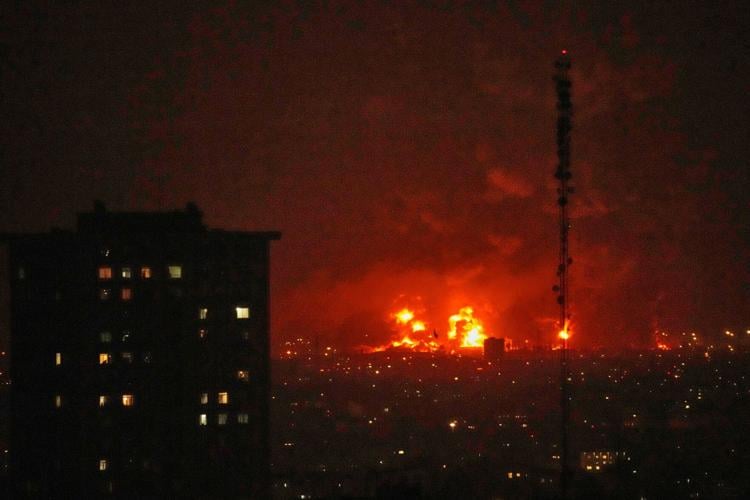
Intensifying military actions have marked the situation over the past week. U.S. and Israeli forces have conducted heavy bombardments in Iran, while Iran has retaliated with attacks aimed at Israel and Gulf states. In addition, the Israeli military has targeted Iranian-backed Hezbollah positions in Lebanon, which has led to rocket fire into Israeli territory.
According to Iranian state television, Ayatollah Mojtaba Khamenei was named the new supreme leader of Iran on March 4, following the death of his father, who was killed in the initial days of the conflict. Khamenei is viewed as a more hardline figure, now overseeing Iran’s military operations and nuclear decisions.
The impact of the war extends beyond military engagements. U.S. stock markets reacted positively, closing higher as oil prices fell from approximately $120 per barrel to below $90. This decline in oil prices comes as the conflict raises concerns over energy security and global supply chains.
During the conversation between Trump and Putin, the Russian leader expressed ideas for a rapid political and diplomatic resolution to the conflict. Putin’s foreign affairs adviser, Yuri Ushakov, noted that the discussion included the situation in Venezuela within the context of global oil markets.
Reports from the ground indicate a grim reality for civilians in Iranian cities. Many lack access to shelters or warning systems for incoming strikes, with residents improvising protection measures such as using tape on windows. The ongoing internet blackout has hindered communication, forcing the population to rely on satellite television and informal channels for war updates.
The humanitarian toll has been significant, with a recent report confirming the death of a 26-year-old U.S. Army staff sergeant from Kentucky, marking the seventh American service member killed in the conflict. The sergeant was injured during an attack on a base in Saudi Arabia on March 1.
Hezbollah’s leader, Mohammad Raad, condemned the Lebanese government for criticizing the group’s actions against Israel. In a televised statement, Raad declared a commitment to resist what he termed as “humiliating conditions” imposed by external forces.
Further complicating the situation, the International Maritime Organization reported that several sailors were injured in recent attacks on merchant vessels in the region. Arsenio Dominguez, the organization’s head, urged shipping companies to exercise caution.
As global leaders grapple with the implications of the conflict, French President Emmanuel Macron announced plans for a French-led initiative to escort oil tankers through the Strait of Hormuz once the conflict’s intensity diminishes. Macron emphasized the need for maritime security to protect global economic interests.
The situation continues to evolve, with both military and diplomatic efforts underway. As protests erupt in Tehran, citizens express their support for the new leadership, chanting slogans against the U.S. and Israel while pledging loyalty to the Khamenei legacy.
Trump is expected to address the nation later today, providing updates on the U.S. stance regarding Iran and responding to questions from the press. As concerns mount over rising oil prices and the broader implications of the war, the international community watches closely.
In this complex landscape of conflict and diplomacy, the path forward remains uncertain, with both military strategies and political negotiations shaping the future of the region.

Cosmic Mystery Deepens: Where Are the Universe’s Defects?

Lady Bulldogs Shine in Postseason Awards Following Final Four Run

CALV Hosts Essential Class for Local Real Estate Professionals

Urgent Alert: “Spaving” Surges as Shoppers Overspend Online

Jefferies Initiates Coverage on Insmed with “Buy” Rating

Three Dog Night to Perform with Ambrosia at Mayo Civic Center

Urgent Announcement: Charles M. Payment Passes Away at 78

Houston Education Foundation Donates $4,592 for Student Programs

Beeks Financial Cloud Shares Drop 7% Amid Increased Trading Volume

Foreign Inflows into Japan Stocks Surge to ¥1.34 Trillion

University of Hawaiʻi Joins $25.6M AI Project to Monitor Disasters

Sydney Sweeney Embraces Body Positivity Amid Hollywood Challenges

Hudson Williams Gains Popularity as Breakout Star on Heated Rivalry

Urgent Farewell: Joleen Chaney Leaves Legacy at KFOR

Boeing’s Merger with McDonnell Douglas: A Strategic Move Explained

$1.25M Grant Advances Hawaiʻi’s Real-Time Hazard Monitoring

Derrick Dove and ABAC Band Set for Free Americana Concert

BOYNEXTDOOR’s Jaehyun Faces Backlash Amid BTS-TWICE Controversy
-
Business9 months ago
Foreign Inflows into Japan Stocks Surge to ¥1.34 Trillion
-
Science8 months ago
University of Hawaiʻi Joins $25.6M AI Project to Monitor Disasters
-
 Entertainment9 months ago
Sydney Sweeney Embraces Body Positivity Amid Hollywood Challenges
-
 Entertainment7 months ago
Hudson Williams Gains Popularity as Breakout Star on Heated Rivalry
-
 Top Stories8 months ago
Urgent Farewell: Joleen Chaney Leaves Legacy at KFOR
-
 World9 months ago
Boeing’s Merger with McDonnell Douglas: A Strategic Move Explained
-
 Science7 months ago
$1.25M Grant Advances Hawaiʻi’s Real-Time Hazard Monitoring
-
 Entertainment8 months ago
Derrick Dove and ABAC Band Set for Free Americana Concert
-
 Top Stories9 months ago
BOYNEXTDOOR’s Jaehyun Faces Backlash Amid BTS-TWICE Controversy
-

 Health6 months ago
Bodybuilder Eugene Teo Transitions to Mindful Movement for Health
-

 World6 months ago
San Francisco Airport to Host 16 Nonstop Airlines to Europe in 2026
-

 Top Stories7 months ago
National Coast Guard Museum Set to Open in 2027 After Funding Secured