
Politics
Trump and Netanyahu’s Iran Strategy: A Risky Alliance Unveiled

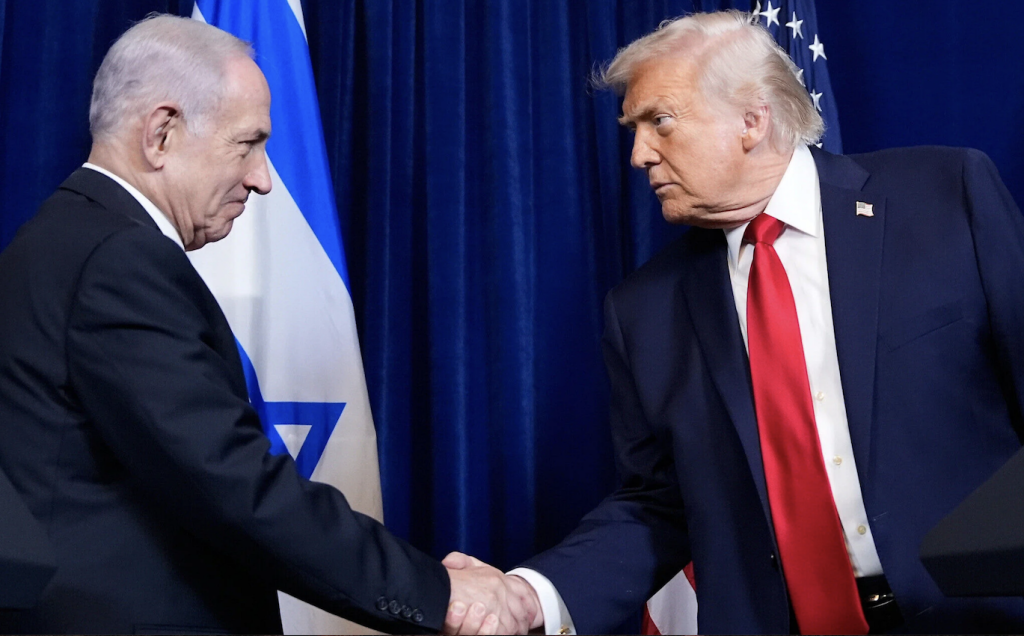
The military offensive launched by Donald Trump and Benjamin Netanyahu against Iran has reignited tensions in the Middle East, potentially exposing vulnerabilities in the U.S.-Israel alliance. This partnership, often touted as a cornerstone of American foreign policy, may now be the Achilles’ heel in Trump’s aggressive strategy against Tehran.
Netanyahu’s recent remarks during an interview on Fox News highlighted a shift in the narrative surrounding this conflict. He claimed that he does not need to “drag” Washington into military actions, asserting that Trump understands Iran as an existential threat. The Israeli Prime Minister framed the issue in stark moral terms: “We are fighting the bad guys. We’re the good guys.” Such simplifications, however, fail to address the complex strategic implications of this renewed aggression.
Cracks in the U.S. Position
The aftermath of the offensive revealed immediate discord within the U.S. administration. Marco Rubio, Secretary of State, suggested that the U.S. intervened to prevent Israeli military action that could provoke retaliation against American interests. This statement implied that the United States would engage in conflict to avoid being pulled in by Israel.
This admission was contentious, particularly among Trump’s base, which traditionally endorses an “America First” stance that opposes unnecessary foreign wars. Trump attempted to clarify the situation, suggesting imminent threats and stating that he might have “forced Israel’s hand.” The necessity to adjust Rubio’s comments underscores the sensitivity surrounding U.S.-Israel relations, affecting both Democratic and Republican perspectives.
The broader context includes the ongoing humanitarian crisis in Gaza, where accusations of genocide against Israel have tarnished its international reputation. According to a recent Gallup poll, American public opinion now shows more sympathy for Palestinians than Israelis, a significant shift that could affect future U.S. policy.
Strategic Alliances and Divergent Interests
From a military standpoint, the United States relies heavily on Israel for its operations against Iran. Israel serves as a critical logistical base, an advanced military outpost, and a valuable source of intelligence. Currently, the operational coordination between the U.S. Department of Defense and the Israel Defense Forces is reportedly stronger than ever.
Despite this collaboration, the interests of the two nations may not align indefinitely. Trump faces the challenge of achieving swift, tangible results without becoming entangled in a prolonged conflict. His aggressive rhetoric, which includes urging the Iranian populace to “take back [their] country,” raises questions about the existence of a coherent post-war strategy. Netanyahu, conversely, may benefit politically from ongoing conflict, as a chaotic situation in Iran could allow him to maintain U.S. involvement in the region.
If the situation escalates into a prolonged conflict, the consequences for the Trump administration could be severe, especially with midterm elections on the horizon and a polarized electorate. Should the U.S. attempt a rapid withdrawal—potentially framed as a victory—Israel may find itself vulnerable against a resilient adversary.
The perception that Israel induced the U.S. into a vague and seemingly endless war could have long-lasting ramifications. Such a narrative would undermine the bipartisan support Israel has historically enjoyed in the United States, damaging its strategic position.
In summary, the ongoing conflict with Iran represents more than a military engagement; it poses a significant test for the U.S.-Israel alliance. As both nations navigate their diverging interests, the implications for regional stability and international relations remain profound and uncertain. The developments in the coming months will likely shape the future of this critical partnership, revealing whether it can withstand the pressures of differing strategic priorities.

Cosmic Mystery Deepens: Where Are the Universe’s Defects?

Lady Bulldogs Shine in Postseason Awards Following Final Four Run

CALV Hosts Essential Class for Local Real Estate Professionals

Urgent Alert: “Spaving” Surges as Shoppers Overspend Online

Jefferies Initiates Coverage on Insmed with “Buy” Rating

Three Dog Night to Perform with Ambrosia at Mayo Civic Center

Urgent Announcement: Charles M. Payment Passes Away at 78

Houston Education Foundation Donates $4,592 for Student Programs

Beeks Financial Cloud Shares Drop 7% Amid Increased Trading Volume

Foreign Inflows into Japan Stocks Surge to ¥1.34 Trillion

University of Hawaiʻi Joins $25.6M AI Project to Monitor Disasters

Sydney Sweeney Embraces Body Positivity Amid Hollywood Challenges

Hudson Williams Gains Popularity as Breakout Star on Heated Rivalry

Urgent Farewell: Joleen Chaney Leaves Legacy at KFOR

Boeing’s Merger with McDonnell Douglas: A Strategic Move Explained

$1.25M Grant Advances Hawaiʻi’s Real-Time Hazard Monitoring

Derrick Dove and ABAC Band Set for Free Americana Concert

BOYNEXTDOOR’s Jaehyun Faces Backlash Amid BTS-TWICE Controversy
-
Business9 months ago
Foreign Inflows into Japan Stocks Surge to ¥1.34 Trillion
-
Science8 months ago
University of Hawaiʻi Joins $25.6M AI Project to Monitor Disasters
-
 Entertainment9 months ago
Sydney Sweeney Embraces Body Positivity Amid Hollywood Challenges
-
 Entertainment7 months ago
Hudson Williams Gains Popularity as Breakout Star on Heated Rivalry
-
 Top Stories8 months ago
Urgent Farewell: Joleen Chaney Leaves Legacy at KFOR
-
 World9 months ago
Boeing’s Merger with McDonnell Douglas: A Strategic Move Explained
-
 Science7 months ago
$1.25M Grant Advances Hawaiʻi’s Real-Time Hazard Monitoring
-
 Entertainment8 months ago
Derrick Dove and ABAC Band Set for Free Americana Concert
-
 Top Stories9 months ago
BOYNEXTDOOR’s Jaehyun Faces Backlash Amid BTS-TWICE Controversy
-

 Health6 months ago
Bodybuilder Eugene Teo Transitions to Mindful Movement for Health
-

 World6 months ago
San Francisco Airport to Host 16 Nonstop Airlines to Europe in 2026
-

 Top Stories7 months ago
National Coast Guard Museum Set to Open in 2027 After Funding Secured