
Politics
Supreme Court to Review Trump’s Controversial Citizenship Order

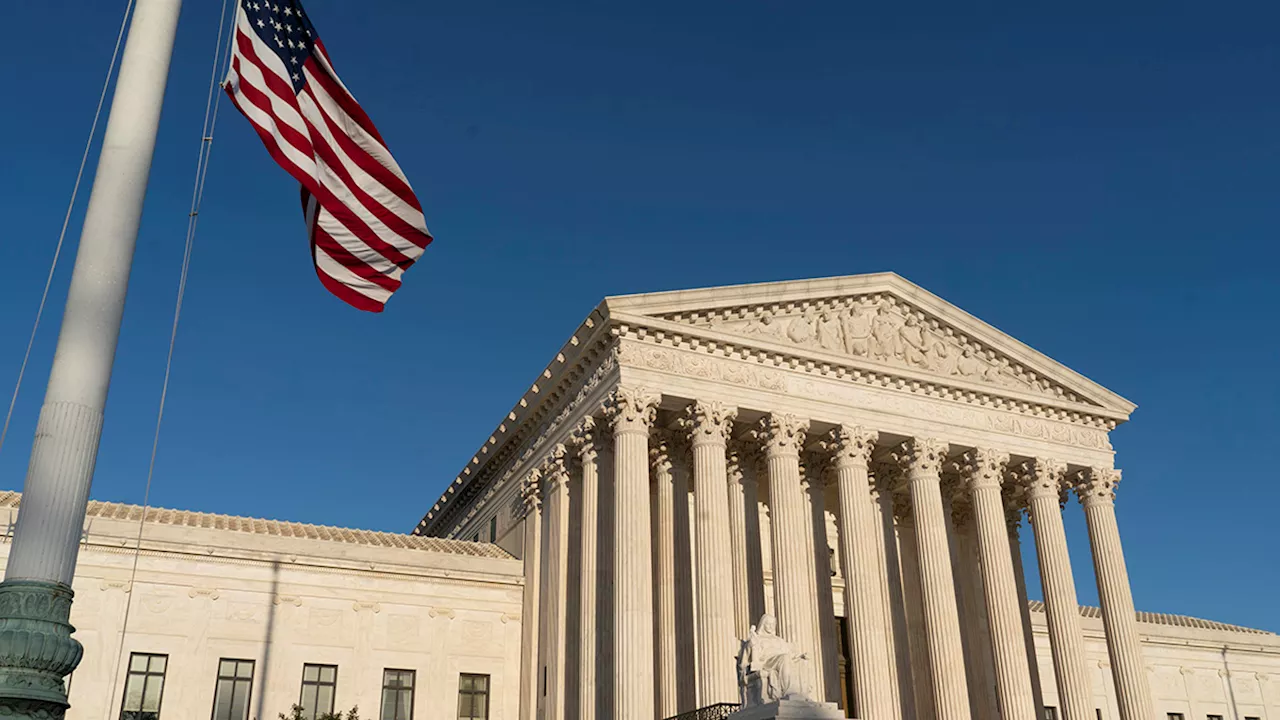
The Supreme Court has agreed to hear an appeal from former President Donald Trump regarding his controversial order on birthright citizenship. The case centers on a ruling from a lower court that struck down Trump’s directive, which asserts that children born to parents who are in the United States illegally or temporarily do not automatically receive American citizenship. This legal challenge could potentially alter over a century of established constitutional interpretation.
The order, signed on January 20, 2025, marks the first significant immigration policy from Trump’s administration to reach the Supreme Court for a final decision. Advocates for the order argue that it aligns with their interpretation of the Constitution’s 14th Amendment, which has traditionally conferred citizenship to individuals born on American soil, with limited exceptions. The order has faced significant backlash, with multiple courts deeming it unconstitutional.
In a series of rulings, various lower courts have consistently found that Trump’s order likely violates the 14th Amendment. This Amendment was originally designed to ensure citizenship for formerly enslaved individuals and their descendants. Notably, every court that has reviewed the issue has concluded that Trump’s assertion undermines this constitutional guarantee.
The Supreme Court’s involvement comes amidst a broader immigration enforcement strategy by the Trump administration, which includes invoking the 18th-century Alien Enemies Act for rapid deportation efforts and increased enforcement actions in several metropolitan areas. The high court has issued mixed signals regarding these initiatives, having temporarily blocked the use of the Alien Enemies Act to expedite the deportation of Venezuelan gang members without court hearings.
The upcoming arguments are expected to delve into complex legal questions surrounding citizenship and jurisdiction. The administration contends that children of noncitizens do not fall under the jurisdiction of U.S. laws, thus precluding them from citizenship. D. John Sauer, a senior lawyer for the Trump administration, stated, “The Fourteenth Amendment’s Citizenship Clause was adopted to grant citizenship to newly freed slaves and their children—not to the children of aliens illegally or temporarily in the United States.”
Support for Trump’s order includes 24 Republican-led states and notable Republican lawmakers such as Senators Ted Cruz of Texas and Lindsey Graham of South Carolina. These supporters argue that the order is necessary to uphold national sovereignty and enforce immigration laws more effectively.
The Supreme Court’s decision to take up this case will occur in the spring, with a definitive ruling anticipated by early summer. This decision could have far-reaching implications for immigration law and citizenship rights in the United States, potentially reshaping the legal landscape surrounding birthright citizenship.
As the nation awaits the court’s ruling, advocacy groups have also filed for temporary restraining orders to prevent the executive order from being implemented, underscoring the contentious atmosphere surrounding immigration policy during Trump’s presidency.
The legal challenges surrounding this order are emblematic of a broader debate on immigration and citizenship that continues to resonate across the United States, with significant impacts on families and communities nationwide.

Cosmic Mystery Deepens: Where Are the Universe’s Defects?

Lady Bulldogs Shine in Postseason Awards Following Final Four Run

CALV Hosts Essential Class for Local Real Estate Professionals

Urgent Alert: “Spaving” Surges as Shoppers Overspend Online

Jefferies Initiates Coverage on Insmed with “Buy” Rating

Three Dog Night to Perform with Ambrosia at Mayo Civic Center

Urgent Announcement: Charles M. Payment Passes Away at 78

Houston Education Foundation Donates $4,592 for Student Programs

Beeks Financial Cloud Shares Drop 7% Amid Increased Trading Volume

Foreign Inflows into Japan Stocks Surge to ¥1.34 Trillion

University of Hawaiʻi Joins $25.6M AI Project to Monitor Disasters

Sydney Sweeney Embraces Body Positivity Amid Hollywood Challenges

Hudson Williams Gains Popularity as Breakout Star on Heated Rivalry

Urgent Farewell: Joleen Chaney Leaves Legacy at KFOR

Boeing’s Merger with McDonnell Douglas: A Strategic Move Explained

$1.25M Grant Advances Hawaiʻi’s Real-Time Hazard Monitoring

Derrick Dove and ABAC Band Set for Free Americana Concert

BOYNEXTDOOR’s Jaehyun Faces Backlash Amid BTS-TWICE Controversy
-
Business9 months ago
Foreign Inflows into Japan Stocks Surge to ¥1.34 Trillion
-
Science8 months ago
University of Hawaiʻi Joins $25.6M AI Project to Monitor Disasters
-
 Entertainment9 months ago
Sydney Sweeney Embraces Body Positivity Amid Hollywood Challenges
-
 Entertainment7 months ago
Hudson Williams Gains Popularity as Breakout Star on Heated Rivalry
-
 Top Stories8 months ago
Urgent Farewell: Joleen Chaney Leaves Legacy at KFOR
-
 World9 months ago
Boeing’s Merger with McDonnell Douglas: A Strategic Move Explained
-
 Science7 months ago
$1.25M Grant Advances Hawaiʻi’s Real-Time Hazard Monitoring
-
 Entertainment8 months ago
Derrick Dove and ABAC Band Set for Free Americana Concert
-
 Top Stories9 months ago
BOYNEXTDOOR’s Jaehyun Faces Backlash Amid BTS-TWICE Controversy
-

 Health6 months ago
Bodybuilder Eugene Teo Transitions to Mindful Movement for Health
-

 World6 months ago
San Francisco Airport to Host 16 Nonstop Airlines to Europe in 2026
-

 Top Stories7 months ago
National Coast Guard Museum Set to Open in 2027 After Funding Secured