
Politics
Study Reveals Humans Are Less Likely to Cheat Than Chimps

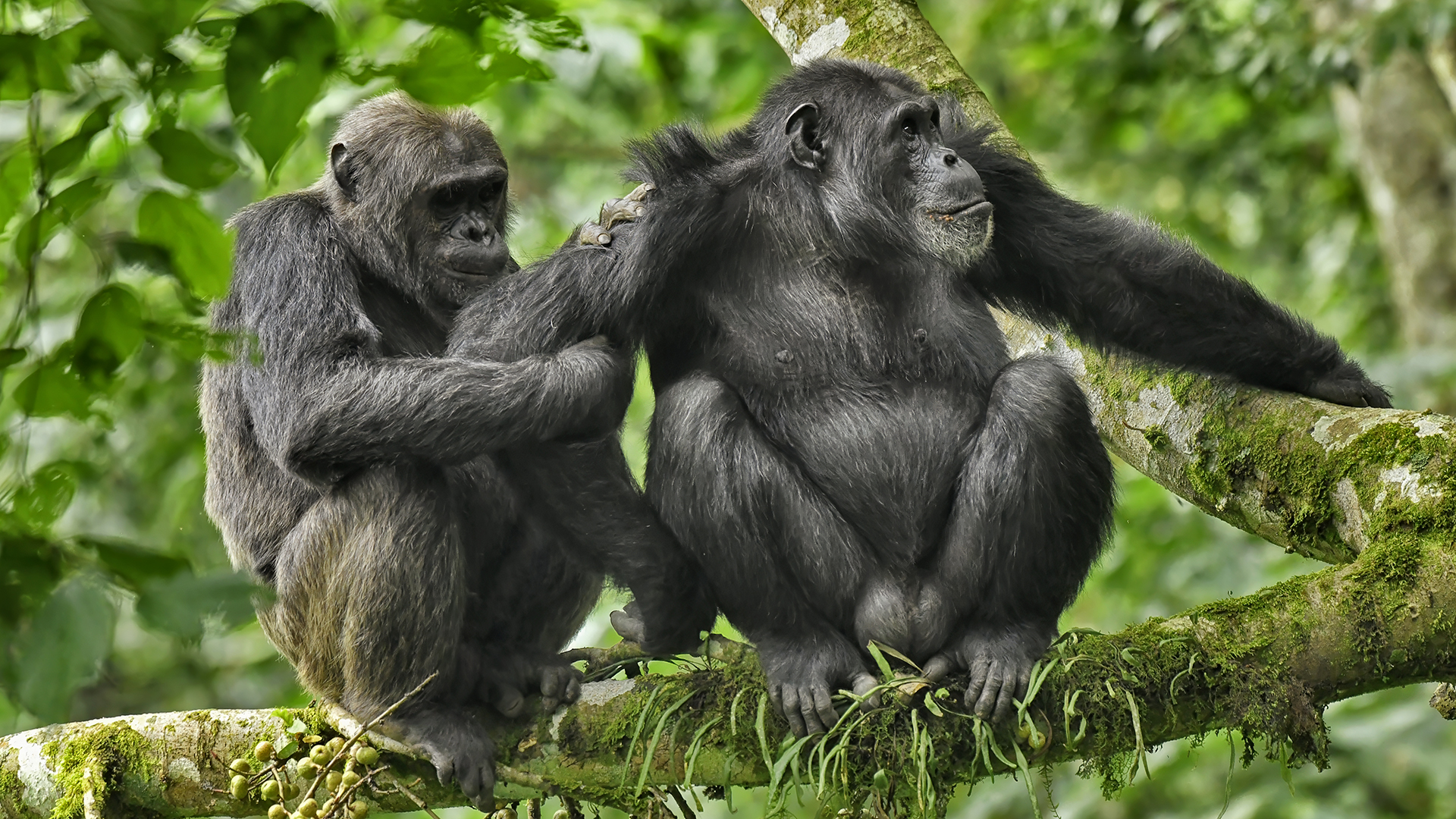
A recent study conducted by researchers at the University of Cambridge has found that humans are less likely to engage in infidelity compared to chimpanzees, while exhibiting a higher tendency for promiscuity than beavers. This research provides new insights into monogamous behavior across various species, ranking them based on parental investment and sibling relationships.
The study analyzed the rate of “full siblings” within different animal species as a measure of monogamy. Species that practice monogamy typically have higher rates of full siblings, who share both parents. In contrast, polygamous species tend to produce more half-siblings. According to the findings, humans have a full sibling rate of 66%, placing them alongside meerkats in terms of loyalty in mating.
Dr. Mark Dyble, a researcher in the Department of Archaeology at Cambridge, emphasized the significance of these findings. “There is a premier league of monogamy, in which humans sit comfortably,” he stated, noting that most mammals tend to adopt a more promiscuous approach to mating. He added, “The finding that human rates of full siblings overlap with the range seen in socially monogamous mammals lends further weight to the view that monogamy is the dominant mating pattern for our species.”
Research Methodology and Findings
To determine human monogamy rates, the researchers relied on genetic data from archaeological sites, including Bronze Age burial grounds throughout Europe and Neolithic sites in Anatolia. Additionally, they examined ethnographic data from 94 societies worldwide, ranging from the hunter-gatherer Hadza in Tanzania to the rice-farming Toraja of Indonesia.
Despite the wide variety of human mating and marriage practices across cultures, Dr. Dyble noted that even the most diverse practices still surpass the levels of non-monogamous species. For instance, meerkats had a full sibling rate of 60%, while beavers ranked higher at 73%. The closest species to humans was the white-handed gibbon, which achieved a monogamy rate of 63.5%.
Interestingly, the moustached tamarin, a small monkey native to the Amazon, has a full sibling rate of 78%, but most other primates scored significantly lower. Mountain gorillas reported a mere 6% full sibling rate, while chimpanzees ranked even lower at 4%, comparable to dolphins. Japanese macaques and Rhesus macaques displayed rates of 2.3% and 1%, respectively.
Comparative Monogamy Among Species
Among other mammals, species in Africa exhibited higher monogamous rates. The Ethiopian wolf achieved a rate of 76.5%, while the African wild dog reached an impressive 85%. Topping the entire study was the California deermouse, which maintains a strikingly high 100% full sibling rating, as they remain paired for life once mated. Conversely, the Soay sheep from Scotland finished at the bottom of the list with a mere 0.6%, attributed to the mating habits of ewes with multiple rams.
Dr. Dyble clarifies that the study focuses on reproductive monogamy rather than sexual behavior. In most mammals, mating and reproduction are closely linked. However, in humans, various cultural practices and methods of birth control can disrupt this connection. As a result, humans experience a range of partnerships that can lead to a mix of full and half-siblings, while still ensuring strong parental investment.
The findings of this research were published in the Proceedings of the Royal Society: Biological Sciences journal, contributing valuable insights into the understanding of monogamous behaviors across the animal kingdom.

Cosmic Mystery Deepens: Where Are the Universe’s Defects?

Lady Bulldogs Shine in Postseason Awards Following Final Four Run

CALV Hosts Essential Class for Local Real Estate Professionals

Urgent Alert: “Spaving” Surges as Shoppers Overspend Online

Jefferies Initiates Coverage on Insmed with “Buy” Rating

Three Dog Night to Perform with Ambrosia at Mayo Civic Center

Urgent Announcement: Charles M. Payment Passes Away at 78

Houston Education Foundation Donates $4,592 for Student Programs

Beeks Financial Cloud Shares Drop 7% Amid Increased Trading Volume

Foreign Inflows into Japan Stocks Surge to ¥1.34 Trillion

University of Hawaiʻi Joins $25.6M AI Project to Monitor Disasters

Sydney Sweeney Embraces Body Positivity Amid Hollywood Challenges

Hudson Williams Gains Popularity as Breakout Star on Heated Rivalry

Urgent Farewell: Joleen Chaney Leaves Legacy at KFOR

Boeing’s Merger with McDonnell Douglas: A Strategic Move Explained

$1.25M Grant Advances Hawaiʻi’s Real-Time Hazard Monitoring

Derrick Dove and ABAC Band Set for Free Americana Concert

BOYNEXTDOOR’s Jaehyun Faces Backlash Amid BTS-TWICE Controversy
-
Business9 months ago
Foreign Inflows into Japan Stocks Surge to ¥1.34 Trillion
-
Science9 months ago
University of Hawaiʻi Joins $25.6M AI Project to Monitor Disasters
-
 Entertainment9 months ago
Sydney Sweeney Embraces Body Positivity Amid Hollywood Challenges
-
 Entertainment7 months ago
Hudson Williams Gains Popularity as Breakout Star on Heated Rivalry
-
 Top Stories8 months ago
Urgent Farewell: Joleen Chaney Leaves Legacy at KFOR
-
 World9 months ago
Boeing’s Merger with McDonnell Douglas: A Strategic Move Explained
-
 Science7 months ago
$1.25M Grant Advances Hawaiʻi’s Real-Time Hazard Monitoring
-
 Entertainment8 months ago
Derrick Dove and ABAC Band Set for Free Americana Concert
-
 Top Stories9 months ago
BOYNEXTDOOR’s Jaehyun Faces Backlash Amid BTS-TWICE Controversy
-

 Health6 months ago
Bodybuilder Eugene Teo Transitions to Mindful Movement for Health
-

 World6 months ago
San Francisco Airport to Host 16 Nonstop Airlines to Europe in 2026
-

 Top Stories7 months ago
National Coast Guard Museum Set to Open in 2027 After Funding Secured