
Politics
Minnesota Senate Committee Considers Overhauling Medicaid Insurance Model

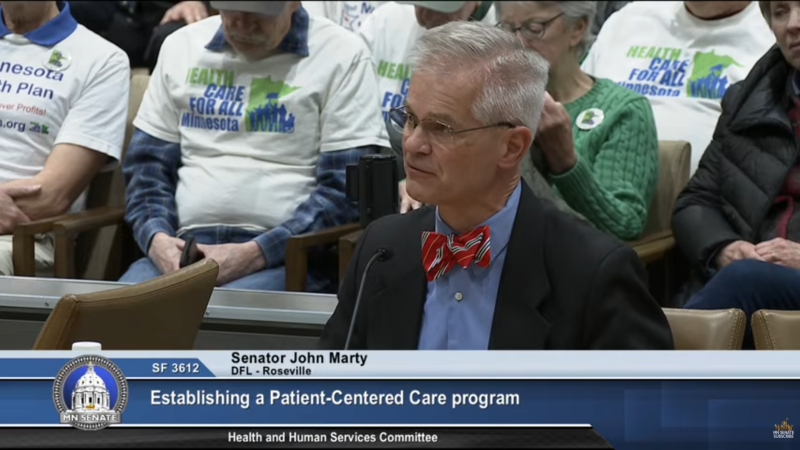
Members of the Minnesota Senate’s Health and Human Services Committee convened on March 10, 2024, to discuss a proposal aimed at transforming the state’s Medicaid and MinnesotaCare programs. The proposed legislation, known as SF 3612, seeks to eliminate insurance companies from these public health programs. Chief author of the bill, Sen. John Marty (DFL-Roseville), emphasized that removing the “middleman” would address several barriers to patient care, including limited provider networks and shifting drug formularies.
Currently, most beneficiaries of MinnesotaCare or Medical Assistance, the state’s Medicaid program, obtain their health care through managed care organizations (MCOs). These are health insurers authorized to provide coverage. Conversely, some patients receive care through a fee-for-service model, which does not involve an MCO. The proposed legislation, which Rep. Tina Liebling (DFL-Rochester) is championing in the House, aims to replace the MCO system with a Patient-Centered Care model. Under this model, the Minnesota Department of Human Services would contract with a single administrative services organization (ASO) to oversee care benefits without assuming financial risk.
Sen. Marty noted that an existing MCO might continue to handle claims payments and administrative duties under the new system. To provide further insight into the potential benefits of this model, Marty invited Sheldon Toubman, an attorney with Disability Rights Connecticut, to testify. Toubman shared that Connecticut’s transition from an MCO system to an ASO model in 2012 has resulted in over $4 billion in savings for the state. He highlighted that the state now sees a medical cost ratio of around 97%, indicating that the vast majority of taxpayer funds are directed toward healthcare services rather than administrative costs.
Opponents of the bill raised concerns about the implications of removing MCOs from the healthcare landscape. Chelsea Olson, representing the Minnesota Council of Health Plans, cautioned that the absence of managed care could deter healthcare providers from accepting Medicaid patients due to lower reimbursement rates. Olson argued, “Managed care organizations leverage their commercial contracts and require in-network doctors to see patients on both their commercial and MA lines of business.” She questioned how the state would maintain this leverage to ensure providers do not prioritize higher-paying commercial patients over those with Medicaid coverage.
The committee also heard from Sen. Bill Lieske (R-Lonsdale), a chiropractor, who echoed Olson’s concerns. He expressed apprehension that a single option could lead to less competitive negotiations for healthcare services, potentially harming both providers and patients.
Adding to the discussion, Nancy Westman, a psychiatric nurse practitioner with Hennepin Health, criticized the existing system for its administrative complexities that hinder timely patient care. She described situations where patients must try multiple psychiatric medications before receiving the appropriate treatment, simply because the necessary medication is not covered without prior attempts with alternatives.
The committee decided to lay the bill over for further consideration, and a fiscal note detailing the potential costs associated with the proposed changes has yet to be made available. As the discussion continues, stakeholders from various sides of the healthcare debate are poised to weigh in on the potential impact of this significant shift in Minnesota’s Medicaid and MinnesotaCare programs.

Cosmic Mystery Deepens: Where Are the Universe’s Defects?

Lady Bulldogs Shine in Postseason Awards Following Final Four Run

CALV Hosts Essential Class for Local Real Estate Professionals

Urgent Alert: “Spaving” Surges as Shoppers Overspend Online

Jefferies Initiates Coverage on Insmed with “Buy” Rating

Three Dog Night to Perform with Ambrosia at Mayo Civic Center

Urgent Announcement: Charles M. Payment Passes Away at 78

Houston Education Foundation Donates $4,592 for Student Programs

Beeks Financial Cloud Shares Drop 7% Amid Increased Trading Volume

Foreign Inflows into Japan Stocks Surge to ¥1.34 Trillion

University of Hawaiʻi Joins $25.6M AI Project to Monitor Disasters

Sydney Sweeney Embraces Body Positivity Amid Hollywood Challenges

Hudson Williams Gains Popularity as Breakout Star on Heated Rivalry

Urgent Farewell: Joleen Chaney Leaves Legacy at KFOR

Boeing’s Merger with McDonnell Douglas: A Strategic Move Explained

$1.25M Grant Advances Hawaiʻi’s Real-Time Hazard Monitoring

Derrick Dove and ABAC Band Set for Free Americana Concert

BOYNEXTDOOR’s Jaehyun Faces Backlash Amid BTS-TWICE Controversy
-
Business9 months ago
Foreign Inflows into Japan Stocks Surge to ¥1.34 Trillion
-
Science8 months ago
University of Hawaiʻi Joins $25.6M AI Project to Monitor Disasters
-
 Entertainment9 months ago
Sydney Sweeney Embraces Body Positivity Amid Hollywood Challenges
-
 Entertainment7 months ago
Hudson Williams Gains Popularity as Breakout Star on Heated Rivalry
-
 Top Stories8 months ago
Urgent Farewell: Joleen Chaney Leaves Legacy at KFOR
-
 World9 months ago
Boeing’s Merger with McDonnell Douglas: A Strategic Move Explained
-
 Science7 months ago
$1.25M Grant Advances Hawaiʻi’s Real-Time Hazard Monitoring
-
 Entertainment8 months ago
Derrick Dove and ABAC Band Set for Free Americana Concert
-
 Top Stories9 months ago
BOYNEXTDOOR’s Jaehyun Faces Backlash Amid BTS-TWICE Controversy
-

 Health6 months ago
Bodybuilder Eugene Teo Transitions to Mindful Movement for Health
-

 World6 months ago
San Francisco Airport to Host 16 Nonstop Airlines to Europe in 2026
-

 Top Stories7 months ago
National Coast Guard Museum Set to Open in 2027 After Funding Secured