
Lifestyle
Homeowners Advised to Use Dish Soap for Winter Drain Issues

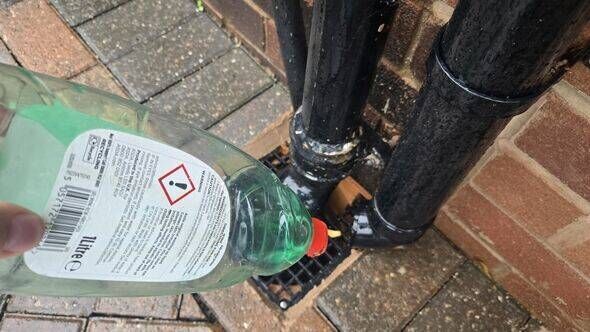
As temperatures drop and winter approaches, homeowners are increasingly reminded of the challenges posed by harsh weather conditions, particularly concerning their drainage systems. With December’s combination of frost, rain, and potential snowfall, outdoor drains become vulnerable to blockages caused by debris and kitchen waste. In response to these common issues, plumbing experts from Maintracts recommend a simple and cost-effective method for clearing stubborn kitchen drains: using dish soap.
According to industry professionals, the problem often arises when exterior drains connected to kitchen sinks become clogged with fallen leaves, mud, and food waste. The accumulation of fats, oils, and grease (commonly referred to as FOG) can create significant blockages in outdoor drainage systems. This not only affects the functionality of the drains but can also lead to more serious plumbing issues if left unaddressed.
Effective Solutions for Clogged Drains
To tackle these clogs, Maintracts emphasizes the effectiveness of using boiling water mixed with dish soap. This method is particularly useful for drains linked to kitchen sinks but should never be applied to storm drains, which are designed solely for roof runoff. Pouring dish soap into storm drains can introduce harmful chemicals into waterways, posing risks to aquatic ecosystems. The experts suggest opting for plant-derived dish soaps that do not contain chemical surfactants.
The process involves pouring boiling water into the affected drain along with a generous amount of dish soap. The heat from the water helps melt the grease, while the soap works to break it down, facilitating a smoother flush away from the system. Homeowners are encouraged to repeat this process multiple times for optimal results.
Maintracts provides an important warning regarding the disposal of fats and oils down the sink. “When hot grease is poured down the sink, it may seem harmless,” the plumbing specialists explain. “But as it cools, it hardens and adheres to the pipe walls, eventually leading to a solid blockage.” Outdoor drains are especially susceptible to this issue, as they often collect additional debris from the environment, further exacerbating the problem.
Preventative Measures for Long-Term Drain Care
Once a blockage has been cleared, implementing preventative measures is essential for maintaining the health of drainage systems. Maintracts offers several tips for ongoing care, including:
– Avoid pouring fats or grease down the sink.
– Wipe plates and pans before washing to minimize residue entering the drain.
– Use strainers in sinks to catch solid particles.
– Consider installing a grease trap for homes that regularly deal with large amounts of food waste.
– Regularly clear outdoor gullies and drain covers of leaves and debris to prevent surface water buildup.
By following these recommendations, homeowners can significantly reduce the risk of drain blockages and maintain the efficiency of their drainage systems throughout the winter months. As the weather becomes more unpredictable, taking proactive steps can save both time and money in the long run.

Cosmic Mystery Deepens: Where Are the Universe’s Defects?

Lady Bulldogs Shine in Postseason Awards Following Final Four Run

CALV Hosts Essential Class for Local Real Estate Professionals

Urgent Alert: “Spaving” Surges as Shoppers Overspend Online

Jefferies Initiates Coverage on Insmed with “Buy” Rating

Three Dog Night to Perform with Ambrosia at Mayo Civic Center

Urgent Announcement: Charles M. Payment Passes Away at 78

Houston Education Foundation Donates $4,592 for Student Programs

Beeks Financial Cloud Shares Drop 7% Amid Increased Trading Volume

Foreign Inflows into Japan Stocks Surge to ¥1.34 Trillion

University of Hawaiʻi Joins $25.6M AI Project to Monitor Disasters

Sydney Sweeney Embraces Body Positivity Amid Hollywood Challenges

Hudson Williams Gains Popularity as Breakout Star on Heated Rivalry

Urgent Farewell: Joleen Chaney Leaves Legacy at KFOR

Boeing’s Merger with McDonnell Douglas: A Strategic Move Explained

$1.25M Grant Advances Hawaiʻi’s Real-Time Hazard Monitoring

Derrick Dove and ABAC Band Set for Free Americana Concert

BOYNEXTDOOR’s Jaehyun Faces Backlash Amid BTS-TWICE Controversy
-
Business9 months ago
Foreign Inflows into Japan Stocks Surge to ¥1.34 Trillion
-
Science8 months ago
University of Hawaiʻi Joins $25.6M AI Project to Monitor Disasters
-
 Entertainment9 months ago
Sydney Sweeney Embraces Body Positivity Amid Hollywood Challenges
-
 Entertainment7 months ago
Hudson Williams Gains Popularity as Breakout Star on Heated Rivalry
-
 Top Stories8 months ago
Urgent Farewell: Joleen Chaney Leaves Legacy at KFOR
-
 World9 months ago
Boeing’s Merger with McDonnell Douglas: A Strategic Move Explained
-
 Science7 months ago
$1.25M Grant Advances Hawaiʻi’s Real-Time Hazard Monitoring
-
 Entertainment8 months ago
Derrick Dove and ABAC Band Set for Free Americana Concert
-
 Top Stories9 months ago
BOYNEXTDOOR’s Jaehyun Faces Backlash Amid BTS-TWICE Controversy
-

 Health6 months ago
Bodybuilder Eugene Teo Transitions to Mindful Movement for Health
-

 World6 months ago
San Francisco Airport to Host 16 Nonstop Airlines to Europe in 2026
-

 Top Stories7 months ago
National Coast Guard Museum Set to Open in 2027 After Funding Secured