
Lifestyle
Duluth Clinic Launches Free Wound Care for Unhoused Residents

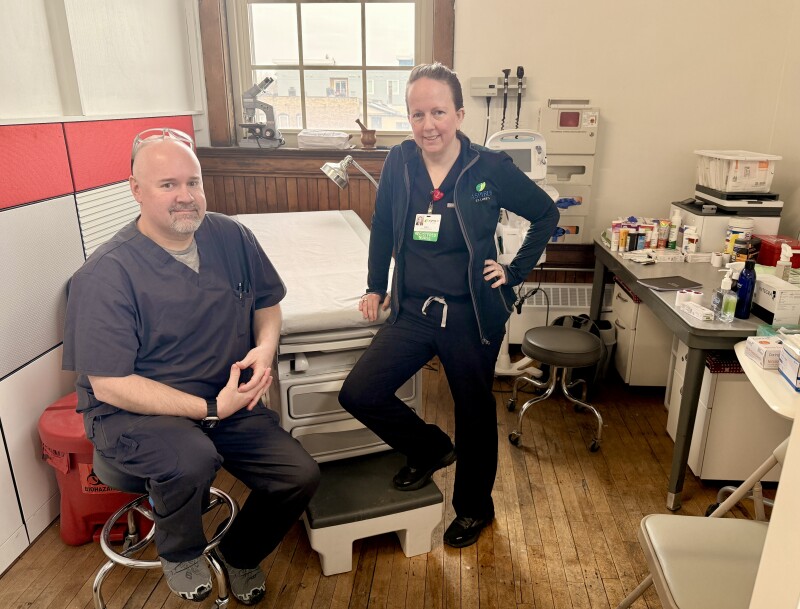
In Duluth, Minnesota, the Chum Hope Clinic has initiated a free wound care service aimed at assisting unhoused individuals. This service operates on the second Monday of each month, from 10 a.m. to 2 p.m., at the Damiano Center. This initiative is a collaborative effort with volunteer providers from the Aspirus St. Luke’s Wound Care Clinic, who offer walk-in care to the local community.
According to Anne Romberg, the health and wellness coordinator at Chum, the clinic has observed a significant increase in the number of individuals requiring wound care. Two years ago, the clinic estimated that about three unhoused individuals sought treatment each month. Today, that figure has risen to approximately 15 per month.
Addressing Rising Health Needs
The rise in wound cases is partially attributed to the increasing prevalence of drugs like xylazine, often mixed with fentanyl and heroin. Romberg noted that such substances can lead to necrotic wounds that are difficult to heal, stating, “These wounds can develop even in areas where individuals do not inject drugs.”
Jarrod Buresh, the medical director at Aspirus St. Luke’s Wound Care, has been volunteering at the Hope Clinic since January. He explained that the xylazine component can restrict blood flow in the vessels, creating tissue necrosis. This not only complicates treatment but also introduces a range of other wound care needs, including abscesses, frostbite, and wounds related to diabetes.
“It’s a vast spectrum of wounds we are addressing,” Buresh commented, highlighting the diverse needs of this vulnerable population.
Building Trust and Accessibility
The partnership between Chum and Aspirus St. Luke’s Wound Care Clinic originated from monthly meetings focused on health care for the unhoused. These gatherings brought together various community partners, including Maija Kaarto, the clinic’s clinical supervisor, who frequently shares wound care education within the community.
Buresh and Kaarto typically dedicate about four hours each month to provide care for around 10 to 12 patients at the Damiano Center. Romberg emphasized that Buresh’s approach allows for deeper engagement with patients, free from the pressure of a traditional clinic environment. “He can take unlimited time to connect with the individuals,” she noted.
The clinic aims to build trust among patients, which is essential for encouraging them to seek further care. “Many unhoused individuals may have mental health issues or fear of judgment that prevent them from accessing traditional care settings,” Buresh explained. “Establishing rapport is crucial.”
Through this initiative, Buresh aims to create a welcoming atmosphere where patients feel comfortable accessing the care they need. His commitment to serving this population stems from years of experience in cities like Cleveland and Detroit, where he worked with large numbers of unhoused individuals.
Preventing Severe Health Consequences
Diabetes and venous disease are common among the unhoused, often leading to serious wounds. Buresh warned that untreated diabetic wounds can escalate to amputations or life-threatening infections. “A diabetic foot ulcer can lead to necrotizing fasciitis, which is a surgical emergency, while chronic cellulitis can result in sepsis,” he explained.
Providing early intervention can significantly reduce health complications and the strain on local hospital systems. “There’s no reason to let these issues linger,” Buresh urged. “We want individuals to know that help is available.”
The wound care process involves procedures such as debridement, which removes dead or infected tissue to promote healing. Patients receive topical anesthetics to ensure comfort during treatment.
Community support is vital to sustain the program, and donations are accepted at the Chum administrative building at 102 W. Second St.. Needed items include gauze, dressings, and footwear. Chum has secured a $5,000 grant to create wound care kits, supported by contributions from the University of Minnesota Duluth medical students and donations from medical suppliers.
Romberg expressed her dedication to the initiative, stating, “I feel very passionate about my job and helping those who are vulnerable.” This new service at the Hope Clinic reflects a significant step towards dignifying healthcare access for the unhoused population in Duluth and improving their overall well-being.

Cosmic Mystery Deepens: Where Are the Universe’s Defects?

Lady Bulldogs Shine in Postseason Awards Following Final Four Run

CALV Hosts Essential Class for Local Real Estate Professionals

Urgent Alert: “Spaving” Surges as Shoppers Overspend Online

Jefferies Initiates Coverage on Insmed with “Buy” Rating

Three Dog Night to Perform with Ambrosia at Mayo Civic Center

Urgent Announcement: Charles M. Payment Passes Away at 78

Houston Education Foundation Donates $4,592 for Student Programs

Beeks Financial Cloud Shares Drop 7% Amid Increased Trading Volume

Foreign Inflows into Japan Stocks Surge to ¥1.34 Trillion

University of Hawaiʻi Joins $25.6M AI Project to Monitor Disasters

Sydney Sweeney Embraces Body Positivity Amid Hollywood Challenges

Hudson Williams Gains Popularity as Breakout Star on Heated Rivalry

Urgent Farewell: Joleen Chaney Leaves Legacy at KFOR

Boeing’s Merger with McDonnell Douglas: A Strategic Move Explained

$1.25M Grant Advances Hawaiʻi’s Real-Time Hazard Monitoring

Derrick Dove and ABAC Band Set for Free Americana Concert

BOYNEXTDOOR’s Jaehyun Faces Backlash Amid BTS-TWICE Controversy
-
Business9 months ago
Foreign Inflows into Japan Stocks Surge to ¥1.34 Trillion
-
Science8 months ago
University of Hawaiʻi Joins $25.6M AI Project to Monitor Disasters
-
 Entertainment9 months ago
Sydney Sweeney Embraces Body Positivity Amid Hollywood Challenges
-
 Entertainment7 months ago
Hudson Williams Gains Popularity as Breakout Star on Heated Rivalry
-
 Top Stories8 months ago
Urgent Farewell: Joleen Chaney Leaves Legacy at KFOR
-
 World9 months ago
Boeing’s Merger with McDonnell Douglas: A Strategic Move Explained
-
 Science7 months ago
$1.25M Grant Advances Hawaiʻi’s Real-Time Hazard Monitoring
-
 Entertainment8 months ago
Derrick Dove and ABAC Band Set for Free Americana Concert
-
 Top Stories9 months ago
BOYNEXTDOOR’s Jaehyun Faces Backlash Amid BTS-TWICE Controversy
-

 Health6 months ago
Bodybuilder Eugene Teo Transitions to Mindful Movement for Health
-

 World6 months ago
San Francisco Airport to Host 16 Nonstop Airlines to Europe in 2026
-

 Top Stories7 months ago
National Coast Guard Museum Set to Open in 2027 After Funding Secured