
Health
Revolutionizing Dementia Care: New Hope for Patients Emerges

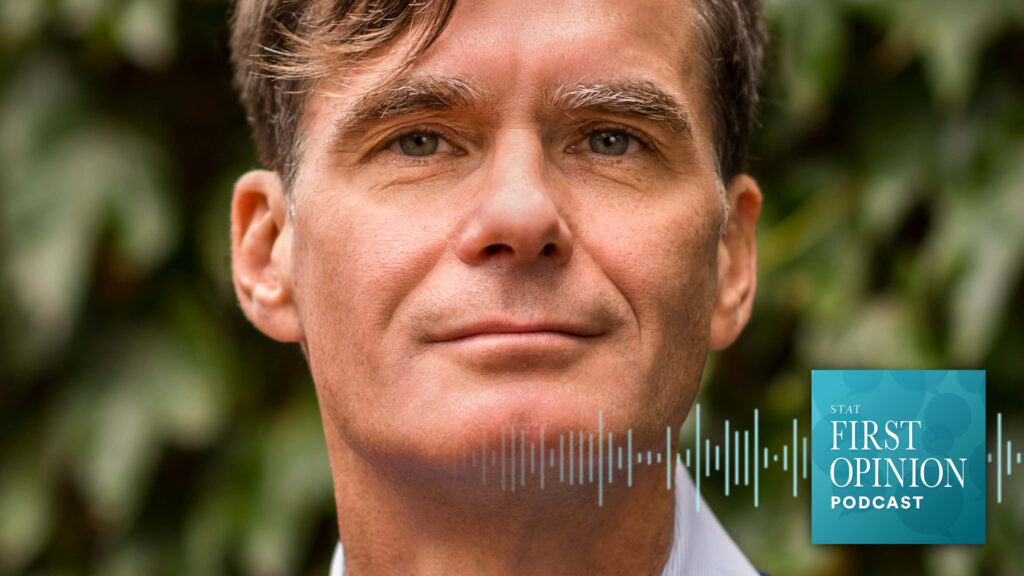
Significant advancements in dementia care are transforming how healthcare professionals interact with patients, according to Dr. Jason Karlawish. A professor of medicine, medical ethics, health policy, and neurology at the University of Pennsylvania, Karlawish highlights that the landscape of dementia treatment is evolving rapidly. In a recent episode of the “First Opinion Podcast,” he reflected on his experiences since the late 1990s, a period when options for patients were severely limited.
Back then, the primary role of physicians was to provide a diagnosis, often without the support of effective treatments. “I gave them a diagnosis,” Karlawish noted, emphasizing the stark contrast to the current situation. Now, advancements in diagnostics allow for definitive diagnoses, and emerging therapies are beginning to slow disease progression for some patients.
New Diagnostic Tools and Treatment Options
The evolution of dementia care is characterized by what Karlawish refers to as the “democratization of dementia.” This term signifies a shift towards more personalized patient experiences. The medical community is gradually adapting to new diagnostic tools that reduce uncertainty surrounding the disease. “For many patients, I can give you a definitive diagnosis,” he stated. “And for some patients, I can do that and give you a therapy that slows the progression of disease.”
This transformation highlights the need for the U.S. medical system to keep pace with the rapid advancements in treatment and diagnosis. As Karlawish elaborates, each patient’s experience with dementia is unique, marking a departure from the more generalized narratives of the past. The ability to tailor treatment plans based on individual needs is a critical step forward in dementia care, allowing healthcare providers to respond more effectively to the complexities of the disease.
Implications for Patients and Healthcare Providers
The implications of these advancements extend beyond just diagnosis and treatment. Karlawish’s insights reveal a broader shift in how dementia is understood and managed. Patients now have the opportunity to engage in their care more actively, fostering a sense of empowerment previously absent in the late 20th and early 21st centuries.
As the field continues to evolve, ongoing education and adaptation within the healthcare system will be crucial. The integration of new diagnostic methods and therapies into standard practice represents not only an opportunity to improve patient outcomes but also a call for healthcare professionals to stay informed about these changes.
Listeners interested in exploring these developments further can access the “First Opinion Podcast” on platforms like Apple Podcasts and Spotify. The podcast offers a deeper dive into the latest advancements in healthcare and the ongoing conversations shaping patient care.
As the revolution in dementia care unfolds, the focus on individualized treatment is paving the way for a brighter future for patients and their families. The journey is just beginning, but the progress made thus far holds promise for those affected by this complex disease.

Cosmic Mystery Deepens: Where Are the Universe’s Defects?

Lady Bulldogs Shine in Postseason Awards Following Final Four Run

CALV Hosts Essential Class for Local Real Estate Professionals

Urgent Alert: “Spaving” Surges as Shoppers Overspend Online

Jefferies Initiates Coverage on Insmed with “Buy” Rating

Three Dog Night to Perform with Ambrosia at Mayo Civic Center

Urgent Announcement: Charles M. Payment Passes Away at 78

Houston Education Foundation Donates $4,592 for Student Programs

Beeks Financial Cloud Shares Drop 7% Amid Increased Trading Volume

Foreign Inflows into Japan Stocks Surge to ¥1.34 Trillion

University of Hawaiʻi Joins $25.6M AI Project to Monitor Disasters

Sydney Sweeney Embraces Body Positivity Amid Hollywood Challenges

Hudson Williams Gains Popularity as Breakout Star on Heated Rivalry

Urgent Farewell: Joleen Chaney Leaves Legacy at KFOR

Boeing’s Merger with McDonnell Douglas: A Strategic Move Explained

$1.25M Grant Advances Hawaiʻi’s Real-Time Hazard Monitoring

Derrick Dove and ABAC Band Set for Free Americana Concert

BOYNEXTDOOR’s Jaehyun Faces Backlash Amid BTS-TWICE Controversy
-
Business9 months ago
Foreign Inflows into Japan Stocks Surge to ¥1.34 Trillion
-
Science9 months ago
University of Hawaiʻi Joins $25.6M AI Project to Monitor Disasters
-
 Entertainment9 months ago
Sydney Sweeney Embraces Body Positivity Amid Hollywood Challenges
-
 Entertainment7 months ago
Hudson Williams Gains Popularity as Breakout Star on Heated Rivalry
-
 Top Stories8 months ago
Urgent Farewell: Joleen Chaney Leaves Legacy at KFOR
-
 World9 months ago
Boeing’s Merger with McDonnell Douglas: A Strategic Move Explained
-
 Science7 months ago
$1.25M Grant Advances Hawaiʻi’s Real-Time Hazard Monitoring
-
 Entertainment8 months ago
Derrick Dove and ABAC Band Set for Free Americana Concert
-
 Top Stories9 months ago
BOYNEXTDOOR’s Jaehyun Faces Backlash Amid BTS-TWICE Controversy
-

 Health6 months ago
Bodybuilder Eugene Teo Transitions to Mindful Movement for Health
-

 World6 months ago
San Francisco Airport to Host 16 Nonstop Airlines to Europe in 2026
-

 Top Stories7 months ago
National Coast Guard Museum Set to Open in 2027 After Funding Secured