
Business
Homegrown Oat Mill Invests $68 Million to Transform Minnesota Agriculture

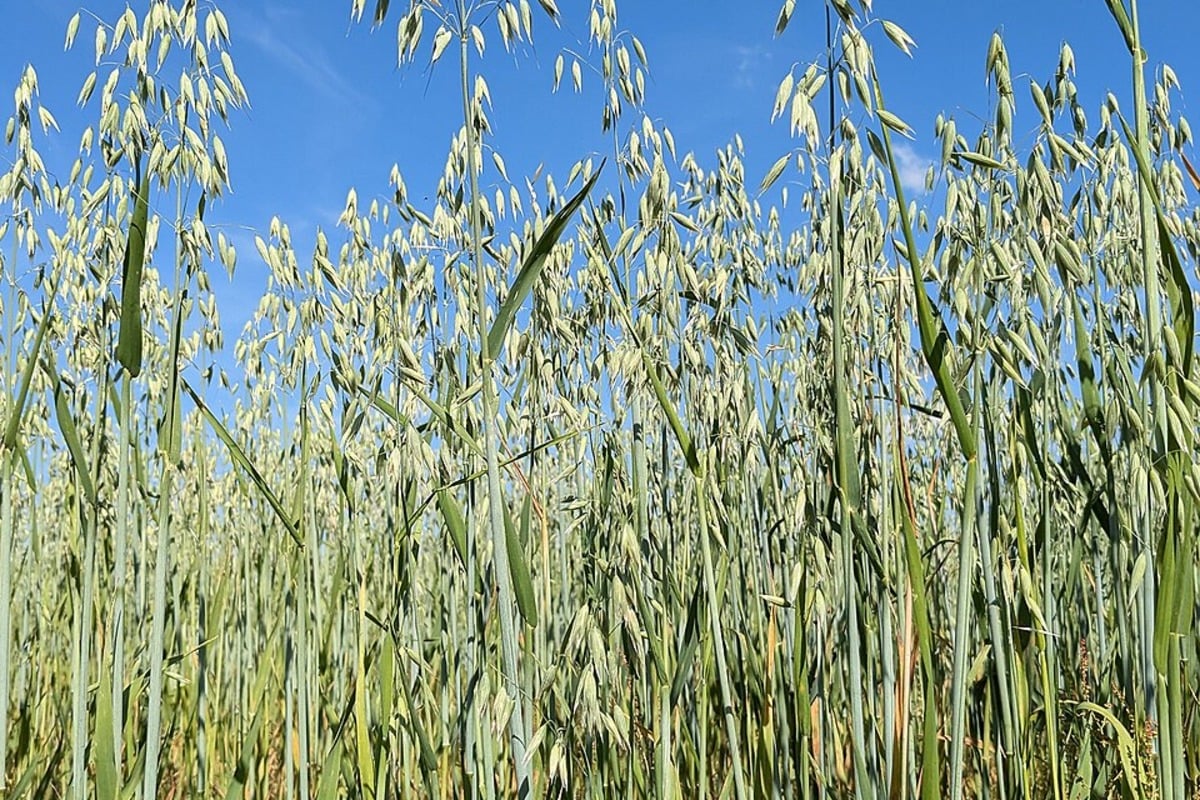
A farmer-owned oat mill is taking shape near Albert Lea, Minnesota, with a significant investment of approximately $68 million. Green Acres Milling aims to establish itself as a key player in the local agricultural landscape by providing nearby buyers for food-grade oats. This initiative is expected to create new revenue opportunities for farmers traditionally focused on corn and soybeans.
The mill, designed as a regional processing hub, is set to begin operations by late summer. It is projected to process around 4 million bushels of oats annually, driven by strong buyer demand for traceable, gluten-free oat ingredients. According to Agweek, the scale of the project reflects the potential for farmers to diversify their crops, and organizers believe it could draw tens of thousands of acres back into oat production.
City Support and Infrastructure Development
Local officials have swiftly approved the project, with Albert Lea City Council facilitating necessary infrastructure work. Initial plans outlined a 135,000-square-foot facility aimed at processing about 2 million bushels annually. This framework received modest tax-increment support from the city, as reported by the Albert Lea Tribune, which helped expedite construction and site preparation.
The project gained momentum as more farmer investors joined the initiative, supported by public grant programs. The Minnesota Department of Agriculture has allocated a $1.5 million Resilient Food Systems Infrastructure grant to Green Acres, which plans to source oats from over 100 farmer-owners within a 120-mile radius.
Advancements in Oat Varieties and Environmental Benefits
In support of this initiative, plant breeders at the University of Minnesota have developed a new oat variety named MN-Amber, specifically for food-grade milling. This variety offers improved yield, test weight, and grain protein compared to earlier releases. According to the University of Minnesota Agricultural Experiment Station, certified seed producers will have access to MN-Amber this spring, with wider availability expected later.
Moreover, the introduction of oats into traditional corn-soy rotations has notable environmental benefits. Research from the University of Minnesota Extension indicates that integrating small grains like oats can reduce nitrate levels in drainage water. Additionally, planting oats alongside medium red clover can provide nitrogen credits of approximately 75 pounds per acre for subsequent corn crops. These factors contribute to the growing push for small-grain diversification in the Upper Midwest.
While the initiative presents numerous opportunities, practical challenges remain. Crop insurance regulations, price risks associated with oats compared to corn and soybeans, and existing storage systems designed for other grains need to be addressed. Data from the USDA National Agricultural Statistics Service shows that Minnesota ranks second in the United States for on-farm grain storage capacity, yet much of this infrastructure is tailored for corn and soybeans, necessitating adjustments for oat storage and handling.
Organizers emphasize that the new mill could streamline supply chains and offer premiums for traceable, allergen-free oats. Several farmers are already testing oat crops this spring, driven by the project’s potential and demand from buyers. Landon Plagge, one of the founders, stated that the farmer investment and solid buyer commitment were crucial in determining the project’s scale. Outreach events have encouraged producers to consider oats as a viable third crop.
As the season progresses, the Green Acres development team and several partner farmers are actively planting trial fields. This initiative not only aims to support local farmers but also seeks to reshape the agricultural landscape of Minnesota by reintroducing oats into the region’s farming practices.

Cosmic Mystery Deepens: Where Are the Universe’s Defects?

Lady Bulldogs Shine in Postseason Awards Following Final Four Run

CALV Hosts Essential Class for Local Real Estate Professionals

Urgent Alert: “Spaving” Surges as Shoppers Overspend Online

Jefferies Initiates Coverage on Insmed with “Buy” Rating

Three Dog Night to Perform with Ambrosia at Mayo Civic Center

Urgent Announcement: Charles M. Payment Passes Away at 78

Houston Education Foundation Donates $4,592 for Student Programs

Beeks Financial Cloud Shares Drop 7% Amid Increased Trading Volume

Foreign Inflows into Japan Stocks Surge to ¥1.34 Trillion

University of Hawaiʻi Joins $25.6M AI Project to Monitor Disasters

Sydney Sweeney Embraces Body Positivity Amid Hollywood Challenges

Hudson Williams Gains Popularity as Breakout Star on Heated Rivalry

Urgent Farewell: Joleen Chaney Leaves Legacy at KFOR

Boeing’s Merger with McDonnell Douglas: A Strategic Move Explained

$1.25M Grant Advances Hawaiʻi’s Real-Time Hazard Monitoring

BOYNEXTDOOR’s Jaehyun Faces Backlash Amid BTS-TWICE Controversy

Derrick Dove and ABAC Band Set for Free Americana Concert
-
Business6 months ago
Foreign Inflows into Japan Stocks Surge to ¥1.34 Trillion
-
Science6 months ago
University of Hawaiʻi Joins $25.6M AI Project to Monitor Disasters
-
 Entertainment6 months ago
Sydney Sweeney Embraces Body Positivity Amid Hollywood Challenges
-
 Entertainment5 months ago
Hudson Williams Gains Popularity as Breakout Star on Heated Rivalry
-
 Top Stories6 months ago
Urgent Farewell: Joleen Chaney Leaves Legacy at KFOR
-
 World6 months ago
Boeing’s Merger with McDonnell Douglas: A Strategic Move Explained
-
 Science5 months ago
$1.25M Grant Advances Hawaiʻi’s Real-Time Hazard Monitoring
-
 Top Stories6 months ago
BOYNEXTDOOR’s Jaehyun Faces Backlash Amid BTS-TWICE Controversy
-
 Entertainment6 months ago
Derrick Dove and ABAC Band Set for Free Americana Concert
-

 Health3 months ago
Bodybuilder Eugene Teo Transitions to Mindful Movement for Health
-

 Health4 months ago
Hartford’s Abandoned Tower Faces Growing Safety Concerns
-

 World6 months ago
French Film Explores Group Therapy in ‘Group – The Schopenhauer Project’