
Business
FinCEN Eases Compliance Burden for Financial Institutions

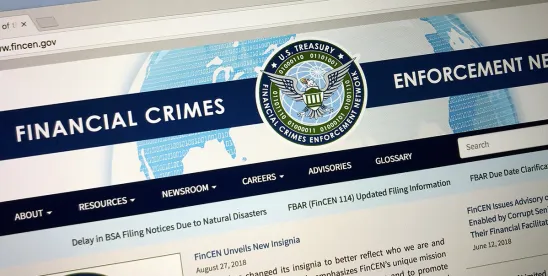
On February 13, 2026, the Financial Crimes Enforcement Network (FinCEN) announced a significant change in regulatory requirements affecting covered financial institutions. The new order, designated as FIN-2026-R001, provides exceptive relief from the longstanding mandate to identify and verify the beneficial owners of legal entity customers at each new account opening. While this adjustment is expected to ease compliance burdens for many in the financial services sector, it does not imply a relaxation of their broader anti-money laundering (AML) and Bank Secrecy Act (BSA) obligations.
Understanding the New Exceptive Relief Order
The relief outlined in the new order allows financial institutions to forgo the verification process for beneficial owners of legal entity customers during each account opening. Previously, institutions were required to complete this verification process for each new account, even if it had been carried out just hours or days prior. Under the revised framework, institutions can limit their verification efforts to three specific circumstances. Notably, if an institution’s risk-based procedures signal the need for re-verification, it may rely on previously obtained ownership information, provided the customer certifies that this information remains accurate.
This shift comes in response to ongoing feedback from financial institutions and industry trade groups, which have raised concerns about the burdensome nature of the account-by-account verification requirement. Large corporate customers, who frequently open new accounts, often found themselves facing duplicative certification processes that imposed significant compliance costs without meaningful benefits to financial crime prevention. The order also aligns with Executive Order 14192, issued on January 31, 2025, which emphasizes a policy to reduce unnecessary regulatory burdens while preserving essential safeguards for the U.S. financial system.
Key Compliance Obligations Remain Intact
Despite the introduction of this relief, covered financial institutions must continue to adhere to all other applicable AML and financial crime regulations under the BSA. These include:
– **Program Requirements**: Institutions are still required to establish and maintain written procedures designed to identify and verify beneficial owners of legal entity customers.
– **Ongoing Due Diligence**: Institutions must conduct ongoing monitoring to identify and report suspicious transactions while maintaining and updating customer information based on risk assessments.
– **Suspicious Activity Reporting**: All reporting obligations under the BSA remain fully in effect.
– **Recordkeeping**: Institutions must retain records of any certifications or confirmations received from customers regarding beneficial ownership information.
FinCEN’s order highlights the agency’s commitment to a risk-based approach to AML compliance. The statement clarifies that this relief does not discourage financial institutions from exceeding minimum compliance requirements if such actions align with their risk profile and tolerance. Therefore, institutions maintain the discretion to continue existing due diligence practices that are suitable for their specific risk environments.
It is crucial for institutions to recognize that the exceptive relief does not mandate a reduction in verification procedures. For those with higher-risk customer bases, more frequent beneficial ownership verification may still be necessary and prudent, even if it is no longer strictly required at each account opening.
Importance of Vigilance in Compliance
Regulatory scrutiny remains high, as evidenced by recent enforcement actions against various financial institutions. From community banks to large global entities, no organization is exempt from regulatory oversight. The consent order involving Clear Fork Bank illustrates that regulators are attentive to BSA/AML deficiencies across the board. Additionally, TD Bank’s historic $3.1 billion settlement for money laundering serves as a stark reminder of the potential consequences of compliance failures.
Given this context, the message from FinCEN’s order is clear: while regulatory streamlining is beneficial, it cannot replace the need for robust, risk-based compliance programs. Institutions that perceive this relief as a chance to diminish their compliance investments do so at their own risk. The fundamental obligations under the BSA—knowing your customer, monitoring for suspicious activity, and maintaining an effective AML program—continue to hold significant importance.
In light of these developments, financial institutions should take several practical steps to incorporate the exceptive relief into their operations effectively. They should review current Customer Due Diligence (CDD) procedures, update policies and training materials to reflect the new framework, and document any risk-based decisions regarding the reliance on previously obtained beneficial ownership information. It is essential to maintain good practices that serve legitimate risk management purposes, rather than merely complying with regulatory requirements.
As FinCEN indicates that further changes to the CDD Rule may be forthcoming, institutions are encouraged to stay informed and adapt accordingly.
In conclusion, FinCEN’s exceptive relief order signifies a move towards a more efficient, risk-based approach to customer due diligence. While financial institutions will appreciate the reduction in duplicative compliance activities, they must remain vigilant in fulfilling the foundational requirements of the BSA. Adopting a strong culture of compliance is not merely a legal obligation; it is essential for safeguarding the integrity of financial institutions, their customers, and the broader financial system.

Cosmic Mystery Deepens: Where Are the Universe’s Defects?

Lady Bulldogs Shine in Postseason Awards Following Final Four Run

CALV Hosts Essential Class for Local Real Estate Professionals

Urgent Alert: “Spaving” Surges as Shoppers Overspend Online

Jefferies Initiates Coverage on Insmed with “Buy” Rating

Three Dog Night to Perform with Ambrosia at Mayo Civic Center

Urgent Announcement: Charles M. Payment Passes Away at 78

Houston Education Foundation Donates $4,592 for Student Programs

Beeks Financial Cloud Shares Drop 7% Amid Increased Trading Volume

Foreign Inflows into Japan Stocks Surge to ¥1.34 Trillion

University of Hawaiʻi Joins $25.6M AI Project to Monitor Disasters

Sydney Sweeney Embraces Body Positivity Amid Hollywood Challenges

Hudson Williams Gains Popularity as Breakout Star on Heated Rivalry

Urgent Farewell: Joleen Chaney Leaves Legacy at KFOR

Boeing’s Merger with McDonnell Douglas: A Strategic Move Explained

$1.25M Grant Advances Hawaiʻi’s Real-Time Hazard Monitoring

Derrick Dove and ABAC Band Set for Free Americana Concert

BOYNEXTDOOR’s Jaehyun Faces Backlash Amid BTS-TWICE Controversy
-
Business9 months ago
Foreign Inflows into Japan Stocks Surge to ¥1.34 Trillion
-
Science8 months ago
University of Hawaiʻi Joins $25.6M AI Project to Monitor Disasters
-
 Entertainment9 months ago
Sydney Sweeney Embraces Body Positivity Amid Hollywood Challenges
-
 Entertainment7 months ago
Hudson Williams Gains Popularity as Breakout Star on Heated Rivalry
-
 Top Stories8 months ago
Urgent Farewell: Joleen Chaney Leaves Legacy at KFOR
-
 World9 months ago
Boeing’s Merger with McDonnell Douglas: A Strategic Move Explained
-
 Science7 months ago
$1.25M Grant Advances Hawaiʻi’s Real-Time Hazard Monitoring
-
 Entertainment8 months ago
Derrick Dove and ABAC Band Set for Free Americana Concert
-
 Top Stories9 months ago
BOYNEXTDOOR’s Jaehyun Faces Backlash Amid BTS-TWICE Controversy
-

 Health6 months ago
Bodybuilder Eugene Teo Transitions to Mindful Movement for Health
-

 World6 months ago
San Francisco Airport to Host 16 Nonstop Airlines to Europe in 2026
-

 Top Stories7 months ago
National Coast Guard Museum Set to Open in 2027 After Funding Secured