
Business
Federal Reserve Cuts Rates Again, Chair Warns of Economic Uncertainty

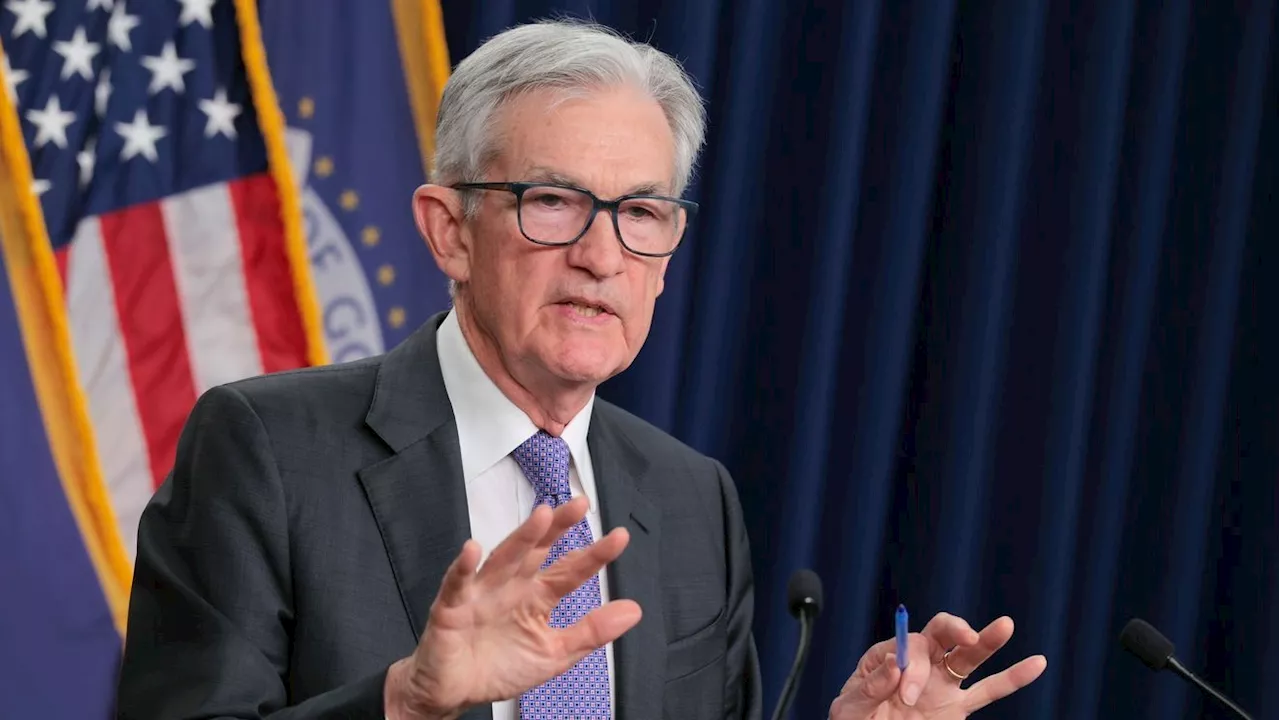
The Federal Reserve has reduced its benchmark interest rate for the third time this year, cutting it by a quarter percentage point to a range of 3.5 percent to 3.75 percent. This decision, announced on December 10, 2025, comes as the central bank navigates persistent inflation pressures alongside signs of a cooling labor market. During a press conference, Chair Jerome Powell emphasized the uncertainty that lies ahead.
In his remarks, Powell acknowledged the delicate balancing act faced by policymakers. He stated, “In the near term, risks to inflation are tilted to the upside, and risks to employment to the downside — a challenging situation.” His comments reflect the Federal Reserve’s ongoing struggle to manage its dual mandate of fostering maximum employment while controlling inflation, which remains above the targeted 2 percent level.
President Donald Trump reacted to the news by suggesting that the interest rate cuts could have been more substantial. Speaking at a roundtable, he expressed that rates “could have been doubled, at least doubled.” This statement underscores the political implications of the Federal Reserve’s actions, especially as Trump approaches the conclusion of his search for a new Fed chair. He has indicated that he expects his next appointee to advocate for lower borrowing costs, a priority he has linked directly to his administration’s agenda on affordability.
The timing of the rate cut is particularly significant as the United States prepares for the 2026 midterm elections. The White House has framed lower interest rates as a means to alleviate financial strain on households that have faced rising prices for several years. Trump’s comments suggest that he views the management of interest rates as a key component of his economic messaging.
National Economic Council Director Kevin Hassett, viewed as a leading candidate for the Fed chair position, echoed the president’s sentiments, asserting that the Federal Reserve has “plenty of room to cut rates.” His remarks have helped to reinforce market expectations that the current easing cycle may continue in the months ahead.
Critics of the administration, particularly from the Democratic Party, contend that the focus on rate cuts overlooks deeper structural issues contributing to affordability challenges. Rep. Sarah McBride of Delaware criticized the Republican approach, stating that Americans face “a litany of broken promises and billionaire tax breaks.” She argued that the affordability crisis is a result of choices made by congressional Republicans and by Trump.
While the administration promotes rate cuts as a quick solution for consumers, there are warnings that aggressive reductions could lead to higher debt levels and potentially overheat segments of the economy. Nonetheless, the current administration is keen on shaping the national discourse on economic issues as the election cycle approaches.
As the Federal Reserve strives to align its monetary policy with economic realities, the stakes remain high. Powell’s caution about the potential risks ahead indicates that while immediate relief may be on the way for consumers, the central bank is carefully weighing its options moving forward. The tension between stimulating growth and managing inflation will likely continue to challenge economic policymakers in the coming months.

Cosmic Mystery Deepens: Where Are the Universe’s Defects?

Lady Bulldogs Shine in Postseason Awards Following Final Four Run

CALV Hosts Essential Class for Local Real Estate Professionals

Urgent Alert: “Spaving” Surges as Shoppers Overspend Online

Jefferies Initiates Coverage on Insmed with “Buy” Rating

Three Dog Night to Perform with Ambrosia at Mayo Civic Center

Urgent Announcement: Charles M. Payment Passes Away at 78

Houston Education Foundation Donates $4,592 for Student Programs

Beeks Financial Cloud Shares Drop 7% Amid Increased Trading Volume

Foreign Inflows into Japan Stocks Surge to ¥1.34 Trillion

University of Hawaiʻi Joins $25.6M AI Project to Monitor Disasters

Sydney Sweeney Embraces Body Positivity Amid Hollywood Challenges

Hudson Williams Gains Popularity as Breakout Star on Heated Rivalry

Urgent Farewell: Joleen Chaney Leaves Legacy at KFOR

Boeing’s Merger with McDonnell Douglas: A Strategic Move Explained

$1.25M Grant Advances Hawaiʻi’s Real-Time Hazard Monitoring

Derrick Dove and ABAC Band Set for Free Americana Concert

BOYNEXTDOOR’s Jaehyun Faces Backlash Amid BTS-TWICE Controversy
-
Business9 months ago
Foreign Inflows into Japan Stocks Surge to ¥1.34 Trillion
-
Science9 months ago
University of Hawaiʻi Joins $25.6M AI Project to Monitor Disasters
-
 Entertainment9 months ago
Sydney Sweeney Embraces Body Positivity Amid Hollywood Challenges
-
 Entertainment7 months ago
Hudson Williams Gains Popularity as Breakout Star on Heated Rivalry
-
 Top Stories8 months ago
Urgent Farewell: Joleen Chaney Leaves Legacy at KFOR
-
 World9 months ago
Boeing’s Merger with McDonnell Douglas: A Strategic Move Explained
-
 Science7 months ago
$1.25M Grant Advances Hawaiʻi’s Real-Time Hazard Monitoring
-
 Entertainment8 months ago
Derrick Dove and ABAC Band Set for Free Americana Concert
-
 Top Stories9 months ago
BOYNEXTDOOR’s Jaehyun Faces Backlash Amid BTS-TWICE Controversy
-

 Health6 months ago
Bodybuilder Eugene Teo Transitions to Mindful Movement for Health
-

 World6 months ago
San Francisco Airport to Host 16 Nonstop Airlines to Europe in 2026
-

 Top Stories7 months ago
National Coast Guard Museum Set to Open in 2027 After Funding Secured