
Business
Coinbase CEO Brian Armstrong Trolly Prediction Markets During Call

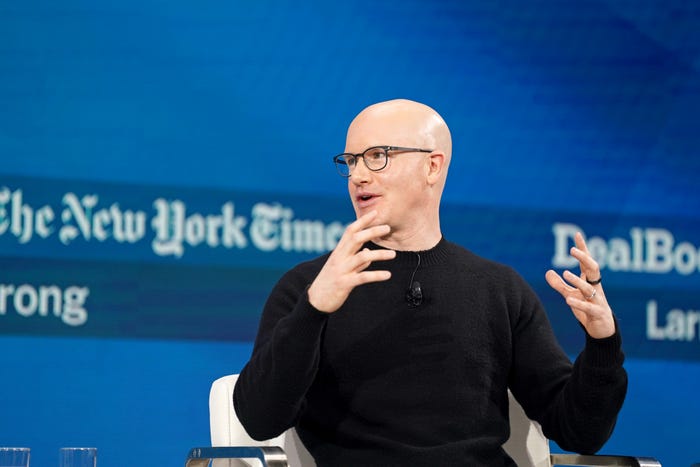
During a recent earnings call, Brian Armstrong, CEO of Coinbase, playfully engaged with prediction markets by casually mentioning key buzzwords, causing a stir among traders. Armstrong’s comments, made on October 30, 2023, were part of a broader discussion regarding the implications of prediction markets and their susceptibility to manipulation.
At the end of Coinbase’s third-quarter earnings call, Armstrong acknowledged his awareness of what traders were betting on regarding his statements. He concluded the call by listing five crypto-related terms: “bitcoin, ethereum, blockchain, staking, and Web3.” This light-hearted moment came after traders had placed approximately $84,000 in bets on platforms like Polymarket and Kalshi regarding the specific words he might use.
In a conversation with Andrew Ross Sorkin during the “Dealbook Summit,” Armstrong remarked, “The conference call was me just having a little bit of fun.” His recognition of the prediction market’s activities highlighted the precarious nature of such platforms, which can easily be influenced by public figures’ words.
The CEO clarified that he did not participate in any trading related to his statements, affirming, “I didn’t trade on it, of course.” This assertion came amidst questions about the ethical concerns surrounding insider trading in prediction markets. Armstrong noted that while insider trading could undermine market integrity, it might also enhance the quality of information available to the public.
He elaborated, mentioning a recent discussion with a nominee to the Commodity Futures Trading Commission. “If your goal is to actually, for the 99% of people trying to get signals about what’s going to happen in the world… you actually want insider trading,” he explained. Armstrong suggested that informed individuals could provide valuable insights, improving the overall quality of predictions.
Following the earnings call, Armstrong took to social media, sharing a reflection on the incident. He tweeted, “lol this was fun – happened spontaneously when someone on our team dropped a link in the chat.” The tweet garnered attention, illustrating how easily the lines between corporate communication and market speculation can blur.
While some may view Armstrong’s actions as a harmless jest, the implications for prediction markets are significant. Polymarket responded to the event with humor, stating, “Coinbase’s CEO brought up the polymarket & just read thru the whole list… diabolical work.” This exchange underscores the ongoing conversation regarding the risks and ethical considerations inherent in prediction markets.
Coinbase has previously invested in both Polymarket and Kalshi, raising questions about potential conflicts of interest. A spokesperson for Coinbase emphasized the company’s commitment to integrity, stating, “Coinbase has robust policies and internal controls that prohibit employees, including executives, from participating in prediction markets or any related activity involving the company.”
The discussion surrounding prediction markets is further complicated by recent events. Officials responsible for the Nobel Peace Prize are currently reviewing a surge in trading related to Venezuelan opposition leader María Corina Machado just before she was announced as the winner. Such instances highlight concerns regarding the influence of non-public information on market integrity.
In a report released earlier this year, KPMG noted that its clients expressed concerns about the use of insider information on prediction markets. The consulting firm recommended that financial service firms take proactive measures to identify and mitigate risks associated with non-public information to maintain ethical standards.
As the landscape of prediction markets continues to evolve, platforms like Kalshi and Polymarket remain undeterred by Armstrong’s recent antics, continuing to offer trades on future statements he may make. For example, approximately $49,000 was wagered on Kalshi regarding what Armstrong would mention during his live interview with Sorkin.
In this rapidly changing environment, the intersection of corporate communication and prediction markets raises important questions about transparency, ethics, and the responsibility of public figures. Armstrong’s light-hearted remarks serve as a reminder of the delicate balance between engaging with the market and upholding its integrity.

Cosmic Mystery Deepens: Where Are the Universe’s Defects?

Lady Bulldogs Shine in Postseason Awards Following Final Four Run

CALV Hosts Essential Class for Local Real Estate Professionals

Urgent Alert: “Spaving” Surges as Shoppers Overspend Online

Jefferies Initiates Coverage on Insmed with “Buy” Rating

Three Dog Night to Perform with Ambrosia at Mayo Civic Center

Urgent Announcement: Charles M. Payment Passes Away at 78

Houston Education Foundation Donates $4,592 for Student Programs

Beeks Financial Cloud Shares Drop 7% Amid Increased Trading Volume

Foreign Inflows into Japan Stocks Surge to ¥1.34 Trillion

University of Hawaiʻi Joins $25.6M AI Project to Monitor Disasters

Sydney Sweeney Embraces Body Positivity Amid Hollywood Challenges

Hudson Williams Gains Popularity as Breakout Star on Heated Rivalry

Urgent Farewell: Joleen Chaney Leaves Legacy at KFOR

Boeing’s Merger with McDonnell Douglas: A Strategic Move Explained

$1.25M Grant Advances Hawaiʻi’s Real-Time Hazard Monitoring

Derrick Dove and ABAC Band Set for Free Americana Concert

BOYNEXTDOOR’s Jaehyun Faces Backlash Amid BTS-TWICE Controversy
-
Business9 months ago
Foreign Inflows into Japan Stocks Surge to ¥1.34 Trillion
-
Science8 months ago
University of Hawaiʻi Joins $25.6M AI Project to Monitor Disasters
-
 Entertainment9 months ago
Sydney Sweeney Embraces Body Positivity Amid Hollywood Challenges
-
 Entertainment7 months ago
Hudson Williams Gains Popularity as Breakout Star on Heated Rivalry
-
 Top Stories8 months ago
Urgent Farewell: Joleen Chaney Leaves Legacy at KFOR
-
 World9 months ago
Boeing’s Merger with McDonnell Douglas: A Strategic Move Explained
-
 Science7 months ago
$1.25M Grant Advances Hawaiʻi’s Real-Time Hazard Monitoring
-
 Entertainment8 months ago
Derrick Dove and ABAC Band Set for Free Americana Concert
-
 Top Stories9 months ago
BOYNEXTDOOR’s Jaehyun Faces Backlash Amid BTS-TWICE Controversy
-

 Health6 months ago
Bodybuilder Eugene Teo Transitions to Mindful Movement for Health
-

 World6 months ago
San Francisco Airport to Host 16 Nonstop Airlines to Europe in 2026
-

 Top Stories7 months ago
National Coast Guard Museum Set to Open in 2027 After Funding Secured