
World
Poland’s Nazi-Era Tunnels Transformed into Dark Tourism Museum

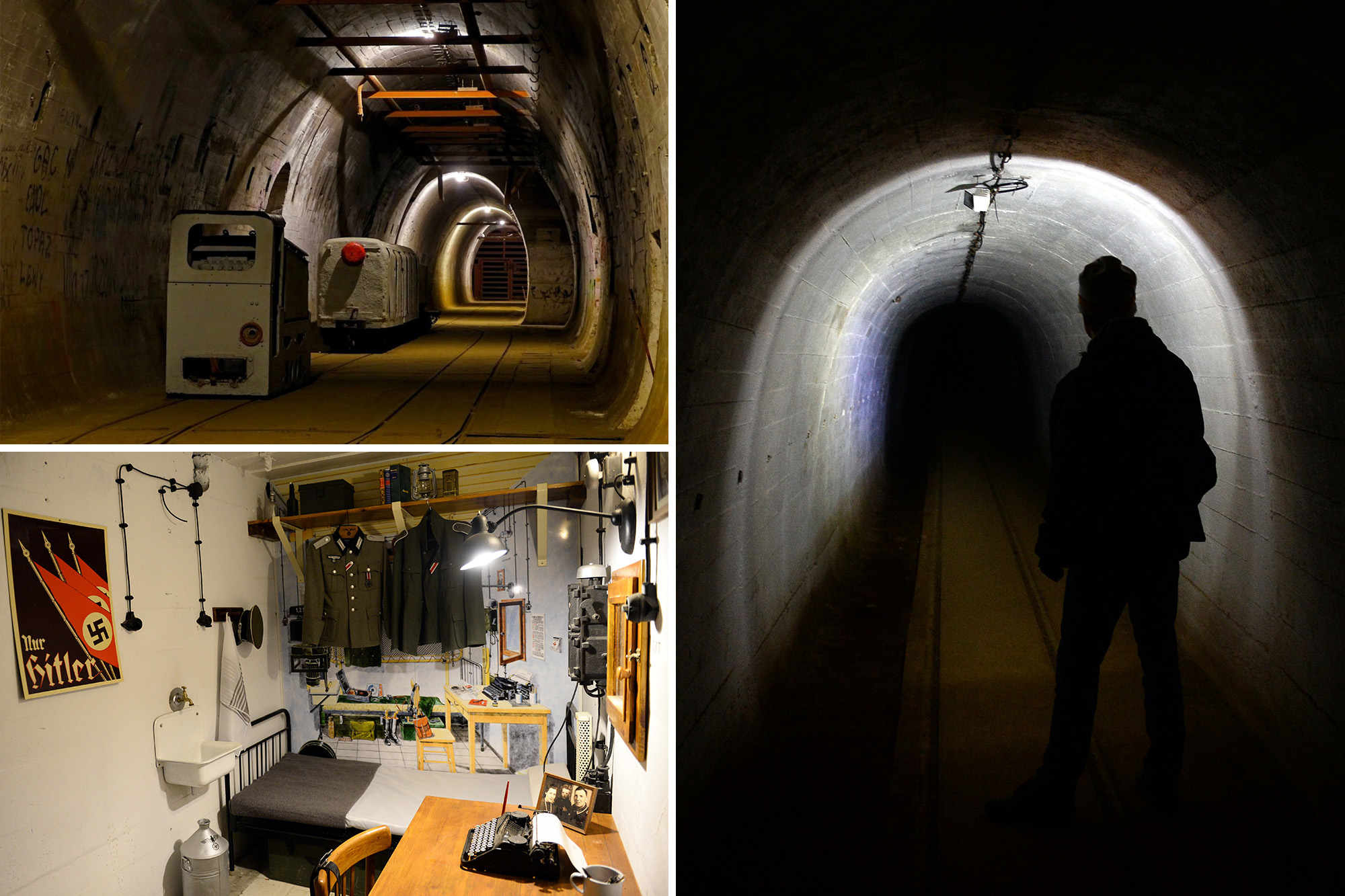
A nearly 20-mile network of underground tunnels and facilities from Nazi Germany has been transformed into a museum in Poland, allowing visitors to explore a dark chapter in history. The site, known as Festungsfront Oder-Warthe-Bogen or the Ostwall, is located near the small village of Pniewo and was abandoned in 1945. Now part of the Międzyrzecz Fortified Region Museum, the tunnels serve as a dark tourism destination, showcasing the remnants of a military complex that was never completed.
Mikolaj Wiktorowski, a guide at the museum, explained that the tunnels were initially designed for long-term habitation by soldiers, with facilities aimed at making life underground more comfortable. The museum, which opened in 2011, has recreated various sections of the tunnels to illustrate the daily lives of members of the Third Reich, featuring mannequins in uniform positioned in administrative rooms, sleeping quarters, and restrooms.
Historical Significance and Construction
The construction of the Ostwall began before the outbreak of World War II, as Adolf Hitler aimed to fortify Germany’s eastern frontier against Poland and the Soviet Union. The original plans envisioned a structure stretching 50 miles, with work projected to continue until 1951. However, by 1938, Germany redirected its focus towards France, leading to a halt in the Ostwall’s construction. Following the invasion of Poland in 1939, the ambitious project was abandoned.
Despite its incomplete status, the Ostwall is recognized as one of the most advanced fortifications of its time, with its central section capable of accommodating tens of thousands of soldiers. The tunnels remained hidden from public view for decades until their recent transformation into a museum.
Modern-Day Exploration and Cultural Impact
In the 1980s and 1990s, the abandoned tunnels gained a new life as a venue for raves and weddings, attracting a counter-cultural group known as the Bunker People. Their presence left a lasting mark, with graffiti covering the walls of the tunnels. Wiktorowski remarked, “The graffiti are the soul of this place. Without them, we would just have bare, lifeless walls.”
Today, the Międzyrzecz Fortified Region Museum not only serves as a historical site but also as a poignant reminder of the past, drawing visitors who seek to understand the complexities of history. As tourism continues to evolve, the tunnels offer a unique glimpse into a period marked by conflict and resilience, ensuring that the lessons of the past remain accessible to future generations.

Cosmic Mystery Deepens: Where Are the Universe’s Defects?

Lady Bulldogs Shine in Postseason Awards Following Final Four Run

CALV Hosts Essential Class for Local Real Estate Professionals

Urgent Alert: “Spaving” Surges as Shoppers Overspend Online

Jefferies Initiates Coverage on Insmed with “Buy” Rating

Three Dog Night to Perform with Ambrosia at Mayo Civic Center

Urgent Announcement: Charles M. Payment Passes Away at 78

Houston Education Foundation Donates $4,592 for Student Programs

Beeks Financial Cloud Shares Drop 7% Amid Increased Trading Volume

Foreign Inflows into Japan Stocks Surge to ¥1.34 Trillion

University of Hawaiʻi Joins $25.6M AI Project to Monitor Disasters

Sydney Sweeney Embraces Body Positivity Amid Hollywood Challenges

Hudson Williams Gains Popularity as Breakout Star on Heated Rivalry

Urgent Farewell: Joleen Chaney Leaves Legacy at KFOR

Boeing’s Merger with McDonnell Douglas: A Strategic Move Explained

$1.25M Grant Advances Hawaiʻi’s Real-Time Hazard Monitoring

Derrick Dove and ABAC Band Set for Free Americana Concert

BOYNEXTDOOR’s Jaehyun Faces Backlash Amid BTS-TWICE Controversy
-
Business9 months ago
Foreign Inflows into Japan Stocks Surge to ¥1.34 Trillion
-
Science9 months ago
University of Hawaiʻi Joins $25.6M AI Project to Monitor Disasters
-
 Entertainment9 months ago
Sydney Sweeney Embraces Body Positivity Amid Hollywood Challenges
-
 Entertainment7 months ago
Hudson Williams Gains Popularity as Breakout Star on Heated Rivalry
-
 Top Stories8 months ago
Urgent Farewell: Joleen Chaney Leaves Legacy at KFOR
-
 World9 months ago
Boeing’s Merger with McDonnell Douglas: A Strategic Move Explained
-
 Science7 months ago
$1.25M Grant Advances Hawaiʻi’s Real-Time Hazard Monitoring
-
 Entertainment8 months ago
Derrick Dove and ABAC Band Set for Free Americana Concert
-
 Top Stories9 months ago
BOYNEXTDOOR’s Jaehyun Faces Backlash Amid BTS-TWICE Controversy
-

 Health6 months ago
Bodybuilder Eugene Teo Transitions to Mindful Movement for Health
-
 World6 months ago
San Francisco Airport to Host 16 Nonstop Airlines to Europe in 2026
-

 Top Stories7 months ago
National Coast Guard Museum Set to Open in 2027 After Funding Secured