
Politics
Trump’s Proposed Federal Compact Threatens Higher Education Landscape

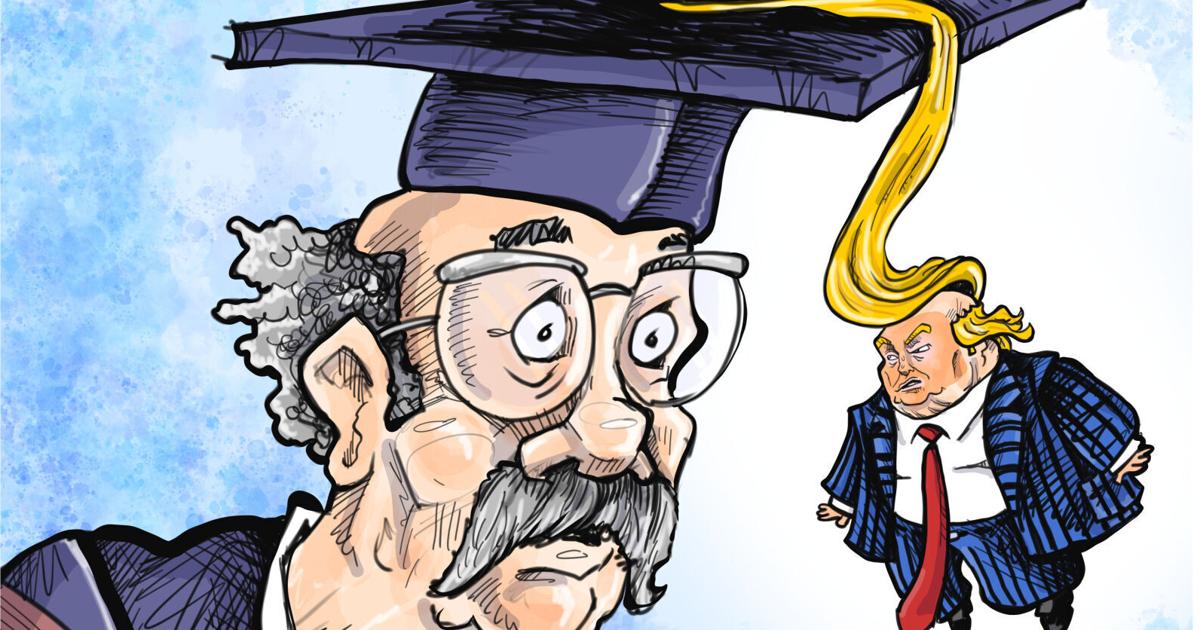
President Donald Trump has initiated a controversial push to compel some of the United States’ leading universities to sign a sweeping federal “compact.” This move, which critics argue may undermine academic freedom and governance, follows a series of contentious policies from his administration, including pardons for individuals involved in the January 6 insurrection.
Trump’s proposed compact aims to enforce specific ideological standards and compliance with federal guidelines, raising significant concerns among educators and administrators. Critics, including former political reporter James Rosen, argue that this approach could cripple the autonomy of institutions that are foundational to American higher education.
Concerns Over Academic Freedom
The implications of Trump’s demands extend beyond mere compliance. Many university leaders fear that signing such a compact could lead to a chilling effect on academic inquiry and discourse. Institutions that have long prided themselves on fostering open debates and diverse viewpoints may find themselves constrained by federal regulations dictating their policies and practices.
Rosen, writing for InsideSources.com, emphasizes the potential risks associated with this initiative. He asserts that the compact could tilt the educational landscape towards a more homogenized set of beliefs, stifling innovation and critical thought.
The stakes are particularly high for universities that receive federal funding, which has become a lifeline for many institutions facing financial difficulties. The prospect of losing such support could pressure them into compliance, thereby eroding their independence.
Impacts on Students and Faculty
The proposed compact has raised alarm bells not only among university administrators but also among students and faculty members. Many educators worry that the compact could impose restrictions on curriculum and research, limiting their ability to explore controversial or progressive topics.
As institutions navigate these challenges, the broader implications for the educational system could be profound. Students may find their academic experiences transformed, as universities may prioritize adherence to federal guidelines over the principles of academic freedom.
Critics argue that such a shift could negatively impact the quality of education, as courses and programs may be altered to align with political objectives rather than scholarly rigor. This concern is especially pertinent in a climate where social issues and scientific inquiry are increasingly under scrutiny.
In conclusion, the push for a federal compact by President Trump represents a significant challenge to the autonomy of American universities. As these institutions confront the possibility of new federal regulations, the consequences for academic freedom, student experiences, and the overall landscape of higher education remain to be seen. The debate surrounding this initiative will likely intensify as stakeholders assess its potential ramifications.

Cosmic Mystery Deepens: Where Are the Universe’s Defects?

Lady Bulldogs Shine in Postseason Awards Following Final Four Run

CALV Hosts Essential Class for Local Real Estate Professionals

Urgent Alert: “Spaving” Surges as Shoppers Overspend Online

Jefferies Initiates Coverage on Insmed with “Buy” Rating

Three Dog Night to Perform with Ambrosia at Mayo Civic Center

Urgent Announcement: Charles M. Payment Passes Away at 78

Houston Education Foundation Donates $4,592 for Student Programs

Beeks Financial Cloud Shares Drop 7% Amid Increased Trading Volume

Foreign Inflows into Japan Stocks Surge to ¥1.34 Trillion

University of Hawaiʻi Joins $25.6M AI Project to Monitor Disasters

Sydney Sweeney Embraces Body Positivity Amid Hollywood Challenges

Hudson Williams Gains Popularity as Breakout Star on Heated Rivalry

Urgent Farewell: Joleen Chaney Leaves Legacy at KFOR

Boeing’s Merger with McDonnell Douglas: A Strategic Move Explained

$1.25M Grant Advances Hawaiʻi’s Real-Time Hazard Monitoring

Derrick Dove and ABAC Band Set for Free Americana Concert

BOYNEXTDOOR’s Jaehyun Faces Backlash Amid BTS-TWICE Controversy
-
Business9 months ago
Foreign Inflows into Japan Stocks Surge to ¥1.34 Trillion
-
Science9 months ago
University of Hawaiʻi Joins $25.6M AI Project to Monitor Disasters
-
 Entertainment9 months ago
Sydney Sweeney Embraces Body Positivity Amid Hollywood Challenges
-
 Entertainment7 months ago
Hudson Williams Gains Popularity as Breakout Star on Heated Rivalry
-
 Top Stories8 months ago
Urgent Farewell: Joleen Chaney Leaves Legacy at KFOR
-
 World9 months ago
Boeing’s Merger with McDonnell Douglas: A Strategic Move Explained
-
 Science7 months ago
$1.25M Grant Advances Hawaiʻi’s Real-Time Hazard Monitoring
-
 Entertainment8 months ago
Derrick Dove and ABAC Band Set for Free Americana Concert
-
 Top Stories9 months ago
BOYNEXTDOOR’s Jaehyun Faces Backlash Amid BTS-TWICE Controversy
-

 Health6 months ago
Bodybuilder Eugene Teo Transitions to Mindful Movement for Health
-

 World6 months ago
San Francisco Airport to Host 16 Nonstop Airlines to Europe in 2026
-

 Top Stories7 months ago
National Coast Guard Museum Set to Open in 2027 After Funding Secured