
Science
Earth’s Orbit Hosts Asteroid, Sparks Moon-like Speculation

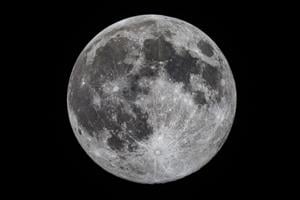
A significant development has occurred in Earth’s orbit with the arrival of a large asteroid, igniting discussions among scientists about its similarities to the Moon. Although some reports suggest the asteroid might qualify as a second moon, experts caution that it does not fulfill the criteria to be considered an equal counterpart to Earth’s natural satellite.
The asteroid has been observed rotating around the planet in a pattern reminiscent of the Moon’s orbit. This unusual behavior has led to speculation about whether it could be classified as a second moon. However, experts emphasize that while its orbital path resembles that of the Moon, it is fundamentally different in composition and characteristics.
Understanding the Discovery
The asteroid’s entry into Earth’s orbit has caught the attention of astronomers and space enthusiasts alike. Initial observations indicate that it is approximately 1,000 meters in diameter, making it a significant object in size. Its orbit around Earth appears stable, but it is classified as a temporary satellite rather than a true moon.
According to Dr. Sarah Mitchell, an astrophysicist at the International Space Research Institute, “While the asteroid’s movements might mimic those of the Moon, it lacks the geological and historical significance associated with our natural satellite.” This distinction is vital in understanding the role of such asteroids in our solar system.
The classification issue arises from the definitions used in astronomy. A true moon is a natural satellite that has formed alongside a planet, while temporary objects like this asteroid can be captured by a planet’s gravity but do not originate from it.
Impact on Scientific Understanding
The excitement surrounding this discovery underscores the importance of continued observation and research. Scientists intend to monitor the asteroid to gather more data about its trajectory and physical properties. This information could enhance our understanding of how celestial bodies interact within our solar system.
Moreover, the discovery raises questions about how many objects might be temporarily captured by Earth or other planets. Dr. Mitchell adds, “This event opens a window into the dynamics of our solar system and how it has evolved over time.”
While the asteroid may not be classified as a second moon, its presence serves as a reminder of the dynamic nature of celestial bodies and their interactions with Earth. The scientific community will continue to study this phenomenon to gain insights into the complexities of space.
In conclusion, while the asteroid’s behavior has fueled speculation about a second moon, experts reaffirm that it remains a temporary space visitor, providing an opportunity for further exploration and understanding of our universe.

Cosmic Mystery Deepens: Where Are the Universe’s Defects?

Lady Bulldogs Shine in Postseason Awards Following Final Four Run

CALV Hosts Essential Class for Local Real Estate Professionals

Urgent Alert: “Spaving” Surges as Shoppers Overspend Online

Jefferies Initiates Coverage on Insmed with “Buy” Rating

Three Dog Night to Perform with Ambrosia at Mayo Civic Center

Urgent Announcement: Charles M. Payment Passes Away at 78

Houston Education Foundation Donates $4,592 for Student Programs

Beeks Financial Cloud Shares Drop 7% Amid Increased Trading Volume

Foreign Inflows into Japan Stocks Surge to ¥1.34 Trillion

University of Hawaiʻi Joins $25.6M AI Project to Monitor Disasters

Sydney Sweeney Embraces Body Positivity Amid Hollywood Challenges

Hudson Williams Gains Popularity as Breakout Star on Heated Rivalry

Urgent Farewell: Joleen Chaney Leaves Legacy at KFOR

Boeing’s Merger with McDonnell Douglas: A Strategic Move Explained

$1.25M Grant Advances Hawaiʻi’s Real-Time Hazard Monitoring

Derrick Dove and ABAC Band Set for Free Americana Concert

BOYNEXTDOOR’s Jaehyun Faces Backlash Amid BTS-TWICE Controversy
-
Business9 months ago
Foreign Inflows into Japan Stocks Surge to ¥1.34 Trillion
-
Science8 months ago
University of Hawaiʻi Joins $25.6M AI Project to Monitor Disasters
-
 Entertainment9 months ago
Sydney Sweeney Embraces Body Positivity Amid Hollywood Challenges
-
 Entertainment7 months ago
Hudson Williams Gains Popularity as Breakout Star on Heated Rivalry
-
 Top Stories8 months ago
Urgent Farewell: Joleen Chaney Leaves Legacy at KFOR
-
 World9 months ago
Boeing’s Merger with McDonnell Douglas: A Strategic Move Explained
-
 Science7 months ago
$1.25M Grant Advances Hawaiʻi’s Real-Time Hazard Monitoring
-
 Entertainment8 months ago
Derrick Dove and ABAC Band Set for Free Americana Concert
-
 Top Stories9 months ago
BOYNEXTDOOR’s Jaehyun Faces Backlash Amid BTS-TWICE Controversy
-

 Health6 months ago
Bodybuilder Eugene Teo Transitions to Mindful Movement for Health
-

 World6 months ago
San Francisco Airport to Host 16 Nonstop Airlines to Europe in 2026
-

 Top Stories7 months ago
National Coast Guard Museum Set to Open in 2027 After Funding Secured