
World
Canada’s CF-18 Hornet: The Backbone of Air Power Transition

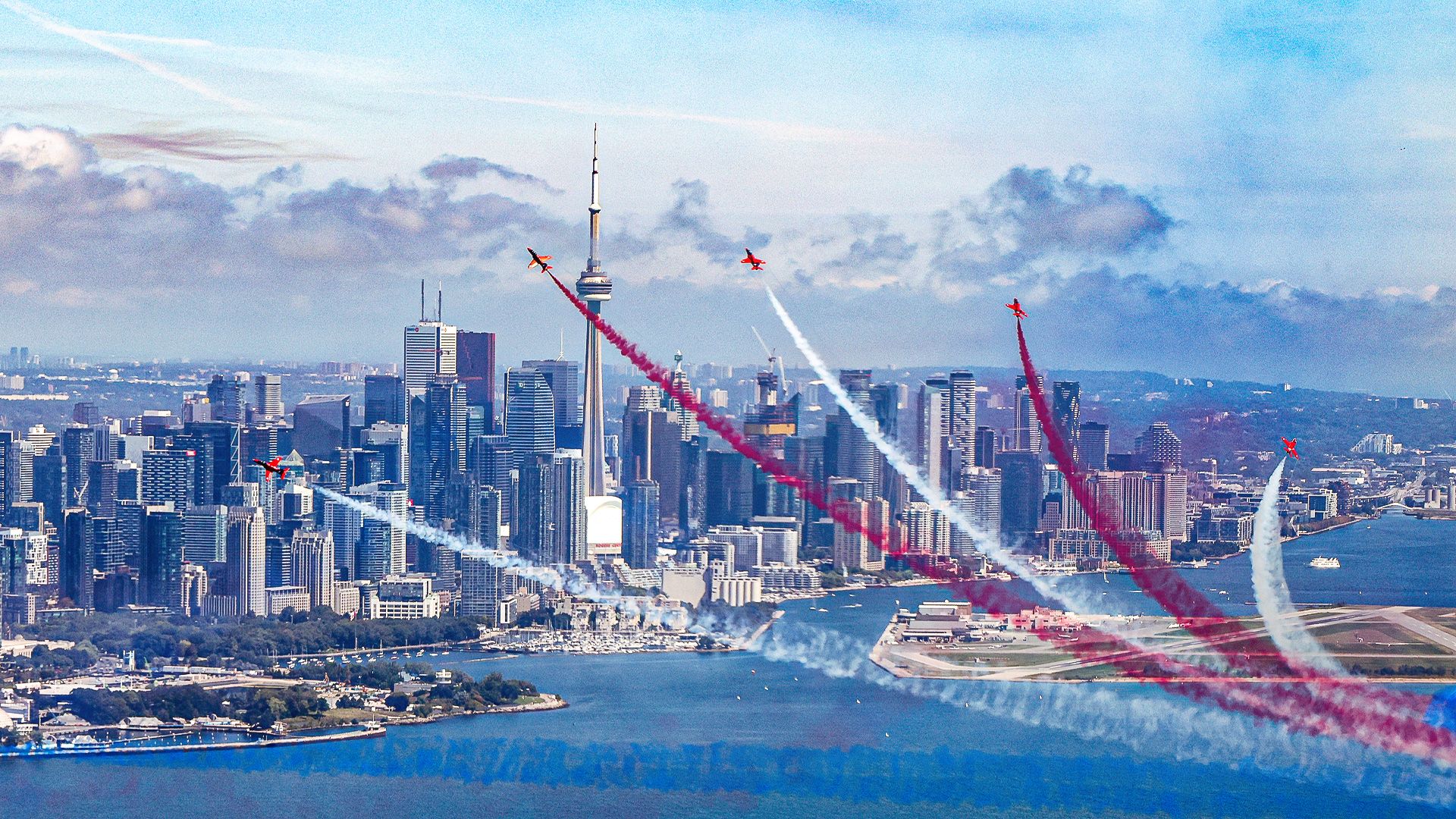
The CF-18 Hornet, officially known as the CF-188, remains the most prominent fighter jet in the Royal Canadian Air Force (RCAF). As the only active fighter aircraft currently in service, the Hornet has played a crucial role in defining Canadian air operations for decades. The RCAF highlights the CF-18 as its longest-serving frontline fighter, with performances in air shows since the 1980s, making it both operationally essential and culturally significant.
As Canada transitions to a new era of aerial combat, the country has committed to acquiring 88 F-35 Lightning II stealth fighters, with the initial deliveries scheduled for 2026. The first of these aircraft is expected to complete testing and arrive in Canada by 2028. Until this transition is finalized, the CF-18 will continue to serve as the core of Canada’s air power.
RCAF’s Diverse Fleet and Operational Roles
The RCAF operates a wide range of aircraft, extending beyond just fighter jets. Its inventory includes maritime search and rescue planes, tactical aviation platforms, trainers, freighters, and air demonstration aircraft. The force manages an array of aircraft, such as the CF-188 Hornets, CP-140 Aurora patrol aircraft, CH-148 Cyclone maritime helicopters, and CC-130J Hercules tactical transports.
This diverse fleet reflects Canada’s geographical challenges and defense commitments. The RCAF conducts sovereignty patrols over vast northern territories, contributes to NORAD and NATO missions, and supports search-and-rescue operations. Consequently, the RCAF functions as a full-spectrum national air service, balancing tactical air operations with broader responsibilities.
Operational Readiness and Fighter Capabilities
At the heart of Canadian fighter operations is a commitment to sovereignty and readiness. The Government of Canada mandates that the CF-18 fleet maintains a state of alert 24 hours a day, every day of the year. This ensures rapid response capabilities to threats in the nation’s airspace. Canadian fighters operate within the multinational NORAD framework, collaborating with the United States Air Force to secure North American airspace.
The RCAF’s primary fighter bases are located at 3 Wing Bagotville in Quebec and 4 Wing Cold Lake in Alberta. Bagotville primarily provides combat-ready forces, while Cold Lake houses the nation’s fighter pilot training center. This centralized training is crucial given the relatively small size of Canada’s fleet. Additionally, northern locations like Yellowknife, Inuvik, and Iqaluit help facilitate fleet dispersal and enhance response options in the Arctic.
The CF-18 is a multi-role fighter, serving various roles, including air defense, ground attack, and tactical support. With a top speed of Mach 1.8 and impressive operational range, it remains a vital asset for the RCAF. The Hornet Extension Project aims to sustain the CF-18’s operational readiness until 2032, when the F-35s are expected to be fully operational.
The F-35 Lightning II represents the future of Canada’s air combat capabilities. Designed to replace the CF-18 for missions where stealth and sensor fusion are critical, the F-35 is set to enhance the RCAF’s operational landscape. The Future Fighter Capability Project outlines plans for the acquisition of 88 F-35 models, with the first aircraft projected to enter service in 2028. Full operational capabilities are anticipated by 2030.
The F-35’s advanced features, including stealth technology and real-time information sharing, are essential for modern warfare. As the RCAF frequently operates alongside allies, the F-35’s networked capabilities will prove invaluable.
Historical Context and Future Prospects
The operational history of the CF-18 cements its status as the RCAF’s most established fighter aircraft. Its first deployment occurred during the Gulf War, when Canada sent 24 Hornets to Qatar. The aircraft also participated in NATO missions during the Kosovo campaign, contributing significantly to allied operations from Italy.
In 2011, the CF-18 fleet played a crucial role in Operation Mobile in Libya, where seven Hornets conducted over 900 combat missions and dropped nearly 700 bombs on targets threatening civilians. More recently, between 2014 and 2016, Canadian CF-18s were involved in Operation Impact against militants in Iraq and Syria, completing around 1,400 sorties.
While the F-35 has yet to be operationally deployed by Canada, its international counterparts have already begun to demonstrate its capabilities in various conflicts. As the RCAF prepares for the future, the CF-18 remains a symbol of pride and operational readiness.
In conclusion, the CF-18 Hornet stands as an exceptional platform, embodying the operational strength of the RCAF. Even as Canada incorporates newer models into its fleet, the CF-18 continues to be a critical component of the nation’s air defense infrastructure. With evolving global conflict dynamics, the role of the Hornet remains significant as Canada anticipates its transition to advanced fighter capabilities.

Cosmic Mystery Deepens: Where Are the Universe’s Defects?

Lady Bulldogs Shine in Postseason Awards Following Final Four Run

CALV Hosts Essential Class for Local Real Estate Professionals

Urgent Alert: “Spaving” Surges as Shoppers Overspend Online

Jefferies Initiates Coverage on Insmed with “Buy” Rating

Three Dog Night to Perform with Ambrosia at Mayo Civic Center

Urgent Announcement: Charles M. Payment Passes Away at 78

Houston Education Foundation Donates $4,592 for Student Programs

Beeks Financial Cloud Shares Drop 7% Amid Increased Trading Volume

Foreign Inflows into Japan Stocks Surge to ¥1.34 Trillion

University of Hawaiʻi Joins $25.6M AI Project to Monitor Disasters

Sydney Sweeney Embraces Body Positivity Amid Hollywood Challenges

Hudson Williams Gains Popularity as Breakout Star on Heated Rivalry

Boeing’s Merger with McDonnell Douglas: A Strategic Move Explained

Urgent Farewell: Joleen Chaney Leaves Legacy at KFOR

$1.25M Grant Advances Hawaiʻi’s Real-Time Hazard Monitoring

Derrick Dove and ABAC Band Set for Free Americana Concert

BOYNEXTDOOR’s Jaehyun Faces Backlash Amid BTS-TWICE Controversy
-
Business9 months ago
Foreign Inflows into Japan Stocks Surge to ¥1.34 Trillion
-
Science9 months ago
University of Hawaiʻi Joins $25.6M AI Project to Monitor Disasters
-
 Entertainment9 months ago
Sydney Sweeney Embraces Body Positivity Amid Hollywood Challenges
-
 Entertainment8 months ago
Hudson Williams Gains Popularity as Breakout Star on Heated Rivalry
-
 World9 months ago
Boeing’s Merger with McDonnell Douglas: A Strategic Move Explained
-
 Top Stories9 months ago
Urgent Farewell: Joleen Chaney Leaves Legacy at KFOR
-
 Science8 months ago
$1.25M Grant Advances Hawaiʻi’s Real-Time Hazard Monitoring
-
 Entertainment9 months ago
Derrick Dove and ABAC Band Set for Free Americana Concert
-
 Top Stories9 months ago
BOYNEXTDOOR’s Jaehyun Faces Backlash Amid BTS-TWICE Controversy
-

 Health7 months ago
Bodybuilder Eugene Teo Transitions to Mindful Movement for Health
-

 World7 months ago
San Francisco Airport to Host 16 Nonstop Airlines to Europe in 2026
-

 Top Stories7 months ago
National Coast Guard Museum Set to Open in 2027 After Funding Secured