
World
Venezuela Postpones Elections, Strengthening Maduro’s Regime

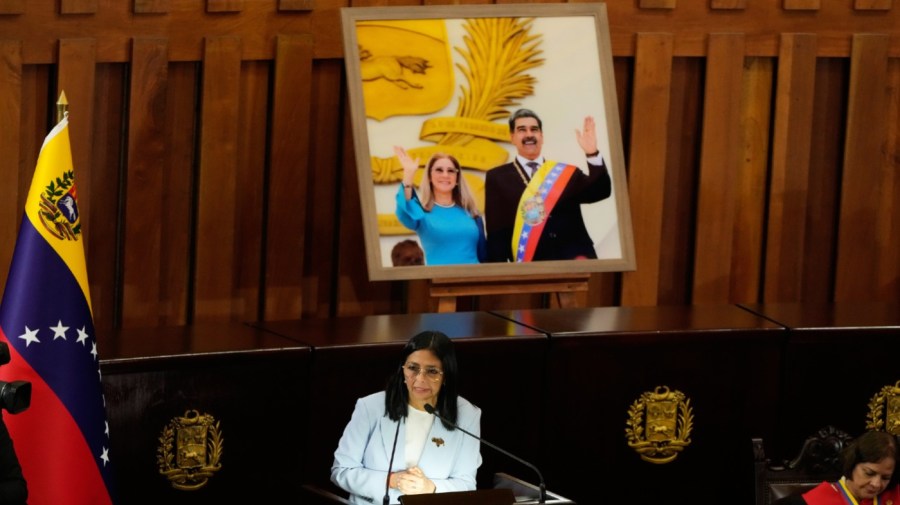
The interim government of Venezuela has decided against establishing an electoral calendar for the upcoming months, a move that many believe will only serve to bolster the regime of President Nicolás Maduro. This delay in free elections has raised concerns among various sectors of the international community, particularly regarding the implications for democratic governance in the country.
In a statement released on March 15, 2024, the interim government acknowledged the strong leadership of the United States in advocating for democratic reforms. However, they refrained from committing to a timeline for elections, which were anticipated as a critical step toward restoring democratic processes in Venezuela. Observers fear that this indecision allows Maduro’s administration to consolidate power while avoiding accountability for ongoing human rights violations.
The National Assembly, which remains under the interim government’s control, faces increasing pressure to take decisive action. With the political landscape in Venezuela growing more complex, the absence of a clear electoral plan may further alienate citizens who are eager for change. Many Venezuelans view the lack of elections as a continuation of the status quo, where the Maduro regime has faced accusations of corruption and mismanagement.
The international community has been vocal in its criticism of the delay. Human rights organizations and foreign governments have urged the interim government to prioritize the establishment of a transparent electoral process. In recent months, protests have erupted across major cities, including Caracas, as citizens demand their right to vote and express frustration with the current political impasse.
Amid these developments, the interim government has emphasized its commitment to democratic principles. Yet, without a concrete plan for elections, skepticism remains among both citizens and international observers. The urgency for a credible electoral calendar is underscored by the approaching 2024 elections, which many see as a pivotal moment for Venezuela’s future.
As the situation unfolds, the implications of this decision could resonate far beyond Venezuela’s borders. Regional stability, economic recovery, and the potential for humanitarian assistance hinge on the establishment of a viable electoral process. The international community continues to watch closely, hoping for a resolution that aligns with the aspirations of the Venezuelan people for democracy and justice.
In summary, the failure to set an electoral timetable not only prolongs the Maduro regime’s grip on power but also raises significant concerns about the future of democracy in Venezuela. The world awaits a decisive response from the interim government that could lead the nation toward a more hopeful and democratic future.

Cosmic Mystery Deepens: Where Are the Universe’s Defects?

Lady Bulldogs Shine in Postseason Awards Following Final Four Run

CALV Hosts Essential Class for Local Real Estate Professionals

Urgent Alert: “Spaving” Surges as Shoppers Overspend Online

Jefferies Initiates Coverage on Insmed with “Buy” Rating

Three Dog Night to Perform with Ambrosia at Mayo Civic Center

Urgent Announcement: Charles M. Payment Passes Away at 78

Houston Education Foundation Donates $4,592 for Student Programs

Beeks Financial Cloud Shares Drop 7% Amid Increased Trading Volume

Foreign Inflows into Japan Stocks Surge to ¥1.34 Trillion

University of Hawaiʻi Joins $25.6M AI Project to Monitor Disasters

Sydney Sweeney Embraces Body Positivity Amid Hollywood Challenges

Hudson Williams Gains Popularity as Breakout Star on Heated Rivalry

Urgent Farewell: Joleen Chaney Leaves Legacy at KFOR

Boeing’s Merger with McDonnell Douglas: A Strategic Move Explained

$1.25M Grant Advances Hawaiʻi’s Real-Time Hazard Monitoring

Derrick Dove and ABAC Band Set for Free Americana Concert

BOYNEXTDOOR’s Jaehyun Faces Backlash Amid BTS-TWICE Controversy
-
Business9 months ago
Foreign Inflows into Japan Stocks Surge to ¥1.34 Trillion
-
Science9 months ago
University of Hawaiʻi Joins $25.6M AI Project to Monitor Disasters
-
 Entertainment9 months ago
Sydney Sweeney Embraces Body Positivity Amid Hollywood Challenges
-
 Entertainment7 months ago
Hudson Williams Gains Popularity as Breakout Star on Heated Rivalry
-
 Top Stories8 months ago
Urgent Farewell: Joleen Chaney Leaves Legacy at KFOR
-
 World9 months ago
Boeing’s Merger with McDonnell Douglas: A Strategic Move Explained
-
 Science7 months ago
$1.25M Grant Advances Hawaiʻi’s Real-Time Hazard Monitoring
-
 Entertainment8 months ago
Derrick Dove and ABAC Band Set for Free Americana Concert
-
 Top Stories9 months ago
BOYNEXTDOOR’s Jaehyun Faces Backlash Amid BTS-TWICE Controversy
-

 Health6 months ago
Bodybuilder Eugene Teo Transitions to Mindful Movement for Health
-

 World6 months ago
San Francisco Airport to Host 16 Nonstop Airlines to Europe in 2026
-

 Top Stories7 months ago
National Coast Guard Museum Set to Open in 2027 After Funding Secured