
World
Iran Signals Willingness to Negotiate Nuclear Deal with US

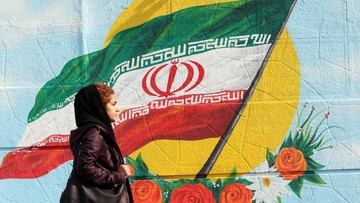
Iran has expressed its readiness to engage in negotiations regarding its nuclear program, contingent upon the United States lifting economic sanctions. In an interview with the BBC on February 15, 2024, Iranian Deputy Foreign Minister Majid Takht-Ravanchi conveyed that initial discussions had been somewhat positive, although he cautioned that it is still early to draw conclusions.
Tehran is prepared to discuss limitations on its nuclear activities in exchange for the removal of sanctions imposed by the US. However, Iran has consistently rejected any linkage of these discussions to other issues, such as its missile program. Takht-Ravanchi confirmed that a second round of nuclear negotiations with the US is scheduled for February 16, 2024, in Geneva, Switzerland. According to a source from Reuters, the US delegation will include emissaries Steve Witkoff and Jared Kushner, who are set to meet with Iranian representatives on Tuesday morning. Oman will act as a mediator in these US-Iran contacts.
In a related statement, the head of Iran’s Atomic Energy Organization indicated that the country might agree to dilute uranium to its highest enrichment level in exchange for lifting all financial sanctions. This example of potential flexibility was reiterated by Takht-Ravanchi in his interview, underscoring Iran’s willingness to negotiate.
Despite this openness, Takht-Ravanchi reaffirmed Iran’s firm stance against accepting a zero-enrichment policy, which has proven to be a significant barrier to reaching an agreement in the past. The US has accused Iran’s uranium enrichment activities of providing a pathway to nuclear weapons, a claim Iran has repeatedly denied.
During his first term, former President Donald Trump withdrew the US from the 2015 nuclear agreement with Iran, known as the Joint Comprehensive Plan of Action. This deal was a key achievement of former President Barack Obama‘s foreign policy, which aimed to ease sanctions on Iran in exchange for curbing its nuclear program to prevent the development of atomic bombs.
As the negotiations unfold in Geneva, the international community is closely monitoring the developments, with hopes that a resolution can mitigate tensions and promote stability in the region.

Cosmic Mystery Deepens: Where Are the Universe’s Defects?

Lady Bulldogs Shine in Postseason Awards Following Final Four Run

CALV Hosts Essential Class for Local Real Estate Professionals

Urgent Alert: “Spaving” Surges as Shoppers Overspend Online

Jefferies Initiates Coverage on Insmed with “Buy” Rating

Three Dog Night to Perform with Ambrosia at Mayo Civic Center

Urgent Announcement: Charles M. Payment Passes Away at 78

Houston Education Foundation Donates $4,592 for Student Programs

Beeks Financial Cloud Shares Drop 7% Amid Increased Trading Volume

Foreign Inflows into Japan Stocks Surge to ¥1.34 Trillion

University of Hawaiʻi Joins $25.6M AI Project to Monitor Disasters

Sydney Sweeney Embraces Body Positivity Amid Hollywood Challenges

Hudson Williams Gains Popularity as Breakout Star on Heated Rivalry

Urgent Farewell: Joleen Chaney Leaves Legacy at KFOR

Boeing’s Merger with McDonnell Douglas: A Strategic Move Explained

$1.25M Grant Advances Hawaiʻi’s Real-Time Hazard Monitoring

Derrick Dove and ABAC Band Set for Free Americana Concert

BOYNEXTDOOR’s Jaehyun Faces Backlash Amid BTS-TWICE Controversy
-
Business9 months ago
Foreign Inflows into Japan Stocks Surge to ¥1.34 Trillion
-
Science9 months ago
University of Hawaiʻi Joins $25.6M AI Project to Monitor Disasters
-
 Entertainment9 months ago
Sydney Sweeney Embraces Body Positivity Amid Hollywood Challenges
-
 Entertainment7 months ago
Hudson Williams Gains Popularity as Breakout Star on Heated Rivalry
-
 Top Stories8 months ago
Urgent Farewell: Joleen Chaney Leaves Legacy at KFOR
-
 World9 months ago
Boeing’s Merger with McDonnell Douglas: A Strategic Move Explained
-
 Science7 months ago
$1.25M Grant Advances Hawaiʻi’s Real-Time Hazard Monitoring
-
 Entertainment8 months ago
Derrick Dove and ABAC Band Set for Free Americana Concert
-
 Top Stories9 months ago
BOYNEXTDOOR’s Jaehyun Faces Backlash Amid BTS-TWICE Controversy
-

 Health6 months ago
Bodybuilder Eugene Teo Transitions to Mindful Movement for Health
-

 World6 months ago
San Francisco Airport to Host 16 Nonstop Airlines to Europe in 2026
-

 Top Stories7 months ago
National Coast Guard Museum Set to Open in 2027 After Funding Secured