
Science
New Technique Revolutionizes Understanding of Chromatin Architecture

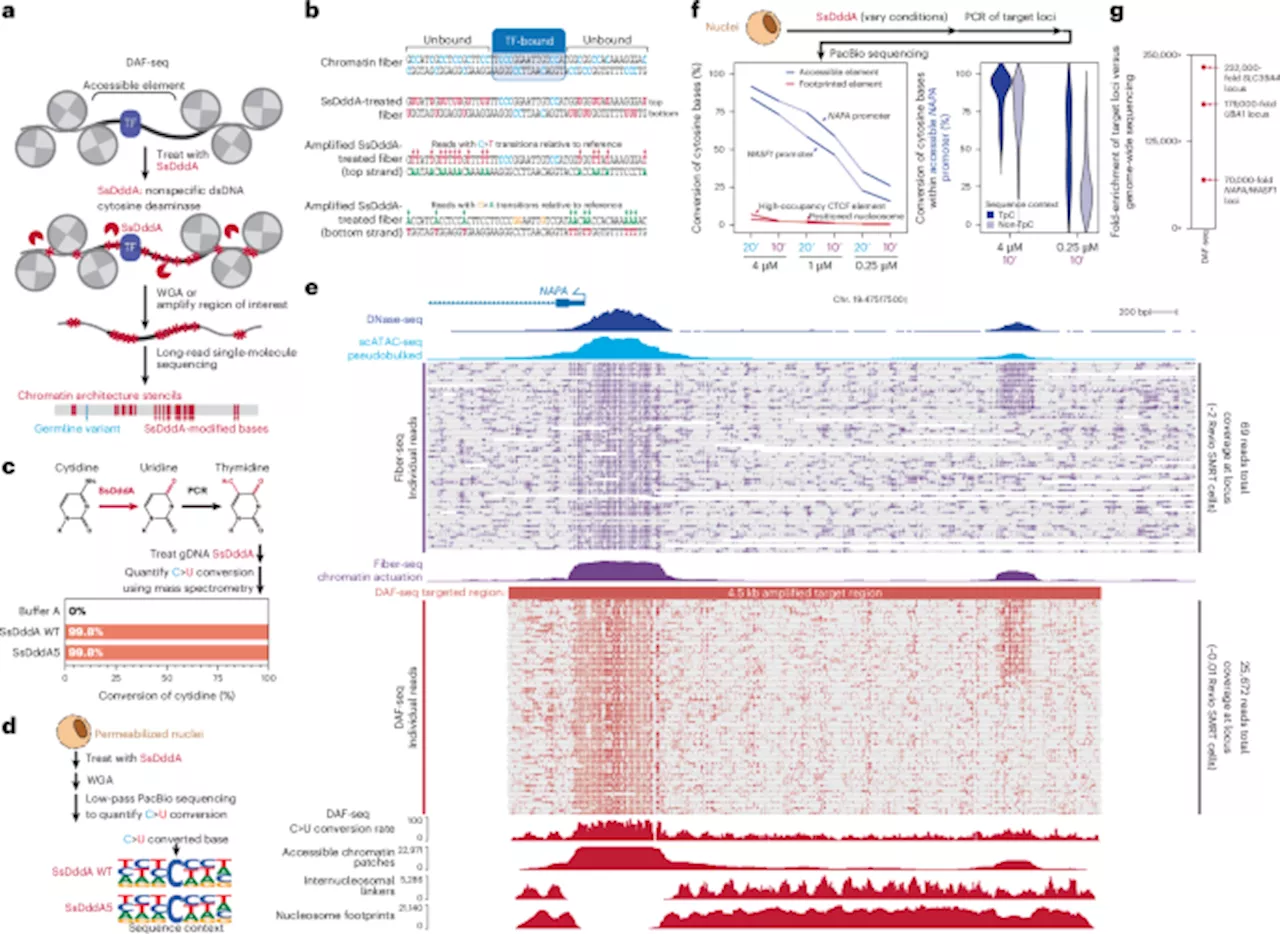
Gene regulation within diploid organisms has taken a significant leap forward with the introduction of a novel technique known as Deaminase-Assisted single-molecule chromatin Fiber sequencing (DAF-seq). This groundbreaking method allows researchers to map single-cell chromatin fiber architectures with near-nucleotide resolution, providing insights into the cooperative binding of proteins along chromosome-length chromatin fibers.
Understanding gene regulation at the single-cell level has been hampered by the complexity and variability of chromatin occupancy across different haplotypes and individual cells. The DAF-seq method addresses this gap, enabling the generation of chromosome-length protein co-occupancy maps that cover approximately 99% of each cell’s mappable genome. This advancement is crucial for elucidating the heterogeneity of chromatin states and the impact of somatic variants and rare chromatin epialleles.
The findings from the application of DAF-seq reveal extensive chromatin plasticity within and between diploid cells. Notably, the study found that chromatin actuation diverges by 61% between haplotypes within a single cell and 63% between different cells. This level of detail underscores the dynamic nature of gene regulation and the complexity of cellular processes that were previously inadequately understood.
DAF-seq demonstrates a distance-dependent pattern of regulatory element co-actuation, which resembles the loops formed by cohesin proteins. This insight highlights the intricate relationships among regulatory elements and their spatial organization within the chromatin structure. The ability to characterize protein occupancy with such precision enables researchers to better understand the functional implications of genetic variations that contribute to health and disease.
The research was conducted by a team from the University of Washington, including lead authors A.B. Stergachis, E.G. Stamatoyannopoulos, and co-investigator Y.M. Miao. The study was supported by several prestigious institutions, including the National Institutes of Health (NIH) and the Chan Zuckerberg Initiative. Funding for this innovative research reflects a growing commitment to advancing genetic studies and understanding the complexities of human health.
In summary, DAF-seq represents a significant advancement in the field of genomics, providing researchers with a powerful tool to investigate chromatin fiber architectures at an unprecedented level of detail. With its ability to map protein occupancy across entire chromosomes, this technique could pave the way for new discoveries in gene regulation and the development of targeted therapies for genetic disorders.

Cosmic Mystery Deepens: Where Are the Universe’s Defects?

Lady Bulldogs Shine in Postseason Awards Following Final Four Run

CALV Hosts Essential Class for Local Real Estate Professionals

Urgent Alert: “Spaving” Surges as Shoppers Overspend Online

Jefferies Initiates Coverage on Insmed with “Buy” Rating

Three Dog Night to Perform with Ambrosia at Mayo Civic Center

Urgent Announcement: Charles M. Payment Passes Away at 78

Houston Education Foundation Donates $4,592 for Student Programs

Beeks Financial Cloud Shares Drop 7% Amid Increased Trading Volume

Foreign Inflows into Japan Stocks Surge to ¥1.34 Trillion

University of Hawaiʻi Joins $25.6M AI Project to Monitor Disasters

Sydney Sweeney Embraces Body Positivity Amid Hollywood Challenges

Hudson Williams Gains Popularity as Breakout Star on Heated Rivalry

Urgent Farewell: Joleen Chaney Leaves Legacy at KFOR

Boeing’s Merger with McDonnell Douglas: A Strategic Move Explained

$1.25M Grant Advances Hawaiʻi’s Real-Time Hazard Monitoring

Derrick Dove and ABAC Band Set for Free Americana Concert

Bodybuilder Eugene Teo Transitions to Mindful Movement for Health
-
Business9 months ago
Foreign Inflows into Japan Stocks Surge to ¥1.34 Trillion
-
Science9 months ago
University of Hawaiʻi Joins $25.6M AI Project to Monitor Disasters
-
 Entertainment9 months ago
Sydney Sweeney Embraces Body Positivity Amid Hollywood Challenges
-
 Entertainment8 months ago
Hudson Williams Gains Popularity as Breakout Star on Heated Rivalry
-
 Top Stories9 months ago
Urgent Farewell: Joleen Chaney Leaves Legacy at KFOR
-
 World9 months ago
Boeing’s Merger with McDonnell Douglas: A Strategic Move Explained
-
 Science8 months ago
$1.25M Grant Advances Hawaiʻi’s Real-Time Hazard Monitoring
-
 Entertainment8 months ago
Derrick Dove and ABAC Band Set for Free Americana Concert
-
 Health6 months ago
Bodybuilder Eugene Teo Transitions to Mindful Movement for Health
-

 Top Stories9 months ago
BOYNEXTDOOR’s Jaehyun Faces Backlash Amid BTS-TWICE Controversy
-

 World7 months ago
San Francisco Airport to Host 16 Nonstop Airlines to Europe in 2026
-

 Top Stories7 months ago
National Coast Guard Museum Set to Open in 2027 After Funding Secured