
Politics
House Passes Bill to Restore Federal Workers’ Bargaining Rights

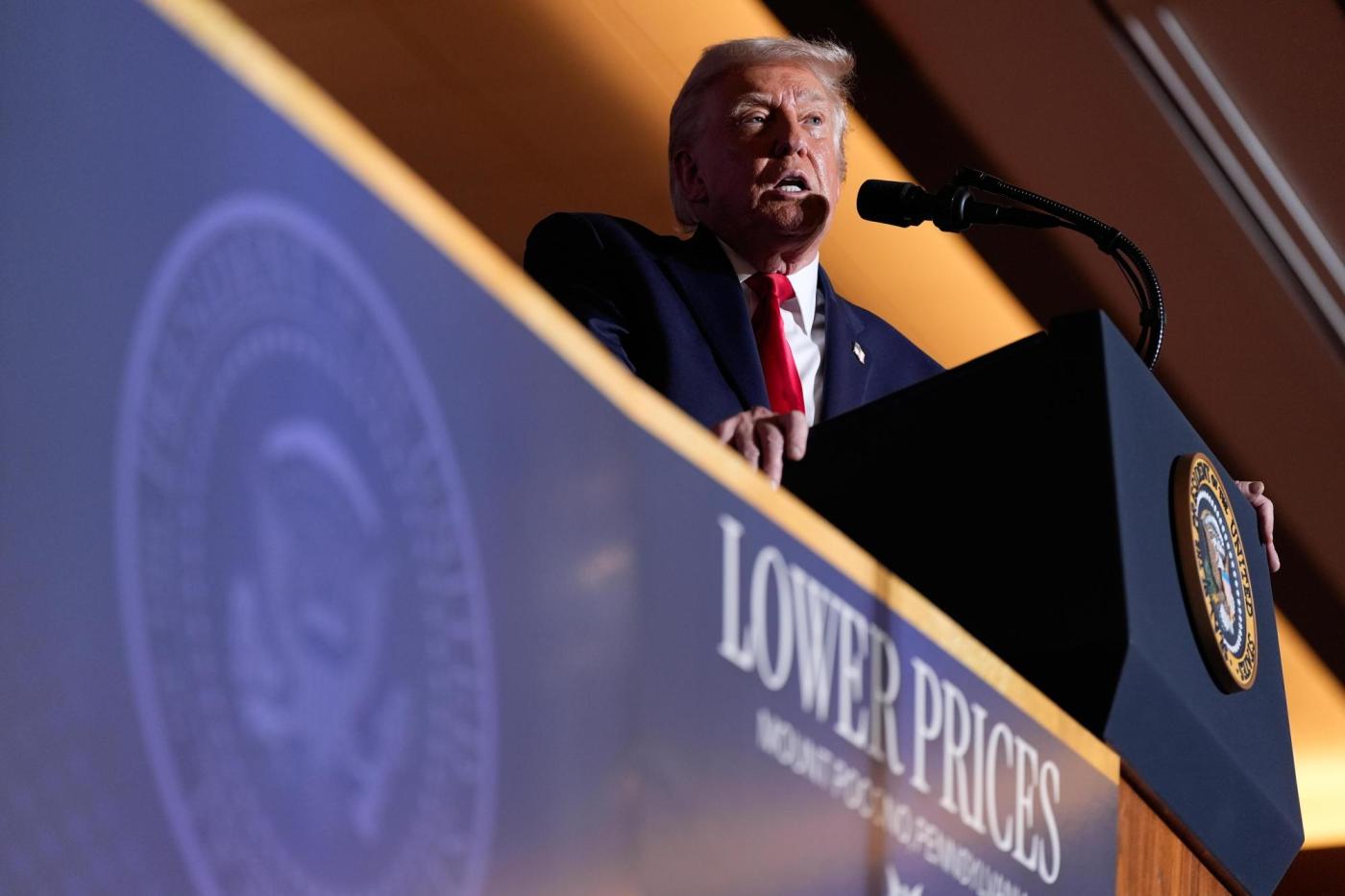
The House of Representatives voted on March 15, 2018, to restore collective bargaining rights for federal employees, a move that overturns an executive order issued by former President Donald Trump. The bill passed with a vote of 231-195, with nearly two dozen Republicans joining Democrats in support. This legislation aims to reinstate negotiation rights for hundreds of thousands of federal workers, particularly those within national security agencies.
The executive order, enacted by Trump earlier in the year, sought to eliminate collective bargaining for employees in agencies like the Department of Veterans Affairs and the Department of Defense. This directive affected around 600,000 of the 800,000 federal workers represented by the American Federation of Government Employees (AFGE). In response, the union has challenged the order in court, asserting that it is illegal and retaliatory.
Details of the Legislative Maneuver
The bill’s passage came through a discharge petition spearheaded by Democratic Representative Jared Golden of Maine. This tactic, increasingly employed in Congress, allows lawmakers to force a vote on legislation if they gather 218 signatures, a majority in the 435-member House. The approval of the bill marks one of the first significant rebukes of Trump’s actions during his second term.
Among those who supported the bill, Republican Representative Brian Fitzpatrick, a co-sponsor, emphasized the importance of treating federal workers with dignity. He stated, “Reinstating these rights is not a concession — it is a commitment. A commitment to treat federal workers with dignity, to reinforce a resilient public service.”
House Democratic Leader Hakeem Jeffries commended the measure, expressing that it would provide much-needed protection for public servants targeted by the Trump administration. Jeffries remarked on the floor, “These federal workers have been targeted viciously since the beginning of his time in office.”
Reactions and Implications
The AFL-CIO, the largest labor federation in the United States, also praised the bill’s approval. President Liz Shuler called it a “seismic victory” for labor rights, commending both Republicans and Democrats who supported the measure. Following the vote, the AFGE expressed gratitude to all members of Congress who voted in favor of the bill.
While the bill has cleared the House, its future in the Senate remains uncertain. Many observers note that the Republican-controlled Senate may struggle to support such a move, given the current political dynamics. Notably, the White House did not respond immediately to requests for comment regarding the House’s decision.
Despite potential risks, 20 Republican lawmakers broke ranks with their party to vote for the legislation. Some of these representatives, like Fitzpatrick, are facing challenging re-election campaigns next year. Their support for the bill indicates a shift among some Republicans towards embracing labor unions, a traditionally Democratic stronghold.
Republican Jeff Van Drew, who switched parties during Trump’s first term, clarified his vote was not a statement against the president but rather a reflection of his commitment to his constituents in New Jersey. He stated, “This is a New Jersey message. I got to take care of my people. And I’ve always been supportive of unions.”
As the situation unfolds, the passage of this bill in the House highlights a significant moment in the ongoing debate over workers’ rights and the role of federal employees in the United States.

Cosmic Mystery Deepens: Where Are the Universe’s Defects?

Lady Bulldogs Shine in Postseason Awards Following Final Four Run

CALV Hosts Essential Class for Local Real Estate Professionals

Urgent Alert: “Spaving” Surges as Shoppers Overspend Online

Jefferies Initiates Coverage on Insmed with “Buy” Rating

Three Dog Night to Perform with Ambrosia at Mayo Civic Center

Urgent Announcement: Charles M. Payment Passes Away at 78

Houston Education Foundation Donates $4,592 for Student Programs

Beeks Financial Cloud Shares Drop 7% Amid Increased Trading Volume

Foreign Inflows into Japan Stocks Surge to ¥1.34 Trillion

University of Hawaiʻi Joins $25.6M AI Project to Monitor Disasters

Sydney Sweeney Embraces Body Positivity Amid Hollywood Challenges

Hudson Williams Gains Popularity as Breakout Star on Heated Rivalry

Urgent Farewell: Joleen Chaney Leaves Legacy at KFOR

Boeing’s Merger with McDonnell Douglas: A Strategic Move Explained

$1.25M Grant Advances Hawaiʻi’s Real-Time Hazard Monitoring

Derrick Dove and ABAC Band Set for Free Americana Concert

BOYNEXTDOOR’s Jaehyun Faces Backlash Amid BTS-TWICE Controversy
-
Business9 months ago
Foreign Inflows into Japan Stocks Surge to ¥1.34 Trillion
-
Science9 months ago
University of Hawaiʻi Joins $25.6M AI Project to Monitor Disasters
-
 Entertainment9 months ago
Sydney Sweeney Embraces Body Positivity Amid Hollywood Challenges
-
 Entertainment8 months ago
Hudson Williams Gains Popularity as Breakout Star on Heated Rivalry
-
 Top Stories9 months ago
Urgent Farewell: Joleen Chaney Leaves Legacy at KFOR
-
 World9 months ago
Boeing’s Merger with McDonnell Douglas: A Strategic Move Explained
-
 Science8 months ago
$1.25M Grant Advances Hawaiʻi’s Real-Time Hazard Monitoring
-
 Entertainment8 months ago
Derrick Dove and ABAC Band Set for Free Americana Concert
-
 Top Stories9 months ago
BOYNEXTDOOR’s Jaehyun Faces Backlash Amid BTS-TWICE Controversy
-

 Health6 months ago
Bodybuilder Eugene Teo Transitions to Mindful Movement for Health
-

 World6 months ago
San Francisco Airport to Host 16 Nonstop Airlines to Europe in 2026
-

 Top Stories7 months ago
National Coast Guard Museum Set to Open in 2027 After Funding Secured