
Sports
Dale Earnhardt Jr. Advocates for NASCAR Track Ownership Amid Legal Uncertainty

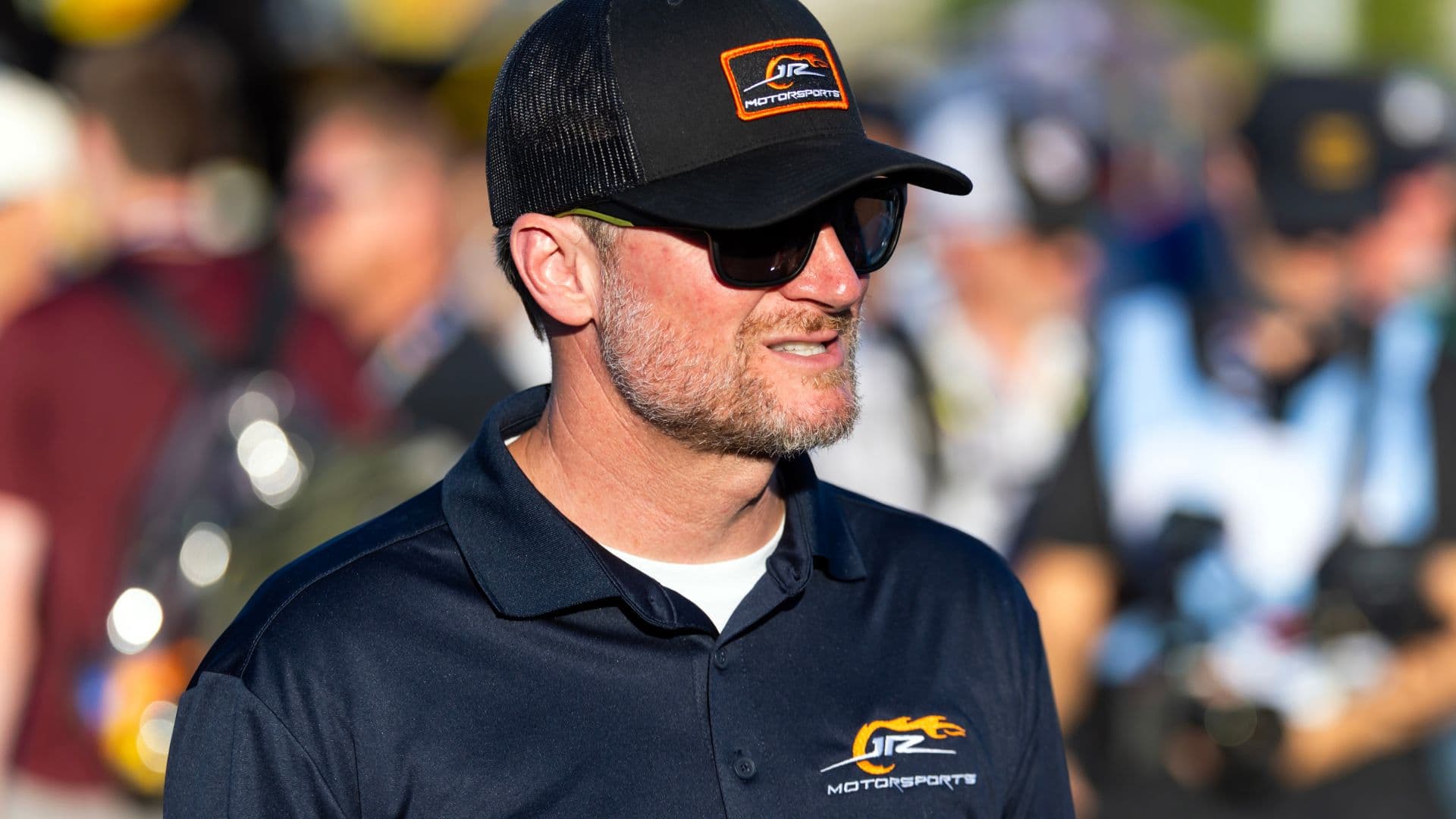
Dale Earnhardt Jr. recently expressed serious concerns about the future of oval racing during a podcast discussion, particularly in the context of an ongoing antitrust lawsuit involving NASCAR, 23XI Racing, and Front Row Motorsports. The lawsuit could potentially lead to NASCAR losing ownership of the racetracks it currently controls. Earnhardt highlighted the significant implications this could have for the sport, including a major decline in the number of oval and short tracks available for racing.
NASCAR, along with Speedway Motorsports Inc., owns the majority of the racetracks that host events in the Cup Series. Without this ownership, Earnhardt fears that many tracks may cease to exist altogether. He stated, “Be careful what you wish for. No one is building race tracks. Running a race track today is not a lucrative operation. If NASCAR and Marcus [Smith] don’t own these race tracks, they are going to turn into developments.”
Earnhardt’s concerns reflect a broader anxiety within the racing community. He believes that if the current ownership structure changes, fans could see a future dominated by street courses rather than traditional ovals. “In ten years, we will be racing in a bunch of street courses. We need NASCAR to run the tracks because it’s a dying sort of business model,” he added.
Kelley Earnhardt, who joined her brother on the podcast, compared the operation of a racetrack to managing a farm. She emphasized the financial challenges associated with running a track, suggesting that large-scale operations are crucial for sustainability. “The land on which these operations take place is far more valuable than the business model itself,” she noted.
Dale Earnhardt Jr. elaborated on the potential consequences of NASCAR selling its racetracks. He warned that if tracks were sold off individually, they would likely disappear, fundamentally altering the landscape of the sport. “We are not gonna have these big ovals and short tracks and all this stuff. This sport would just change incredibly,” he remarked.
The legal proceedings have heightened tensions within the racing community. Judge Kenneth D. Bell, overseeing the case, had previously warned that proceeding to trial could lead to severe ramifications, including the possibility that NASCAR might be compelled to divest its racetrack holdings. As the trial approaches, both NASCAR and the involved teams are fully aware of the stakes at hand.
Should the teams prevail in this legal battle, the likelihood of NASCAR being forced to sell its tracks could increase substantially. The outcome of this case not only affects the organizations involved but could also have lasting implications for the future of oval racing as a whole.
The conversation initiated by Dale Earnhardt Jr. serves as a critical reminder of the fragile state of the racing industry. With the potential for significant changes on the horizon, fans and stakeholders alike are left to consider the future of their beloved sport.

Cosmic Mystery Deepens: Where Are the Universe’s Defects?

Lady Bulldogs Shine in Postseason Awards Following Final Four Run

CALV Hosts Essential Class for Local Real Estate Professionals

Urgent Alert: “Spaving” Surges as Shoppers Overspend Online

Jefferies Initiates Coverage on Insmed with “Buy” Rating

Three Dog Night to Perform with Ambrosia at Mayo Civic Center

Urgent Announcement: Charles M. Payment Passes Away at 78

Houston Education Foundation Donates $4,592 for Student Programs

Beeks Financial Cloud Shares Drop 7% Amid Increased Trading Volume

Foreign Inflows into Japan Stocks Surge to ¥1.34 Trillion

University of Hawaiʻi Joins $25.6M AI Project to Monitor Disasters

Sydney Sweeney Embraces Body Positivity Amid Hollywood Challenges

Hudson Williams Gains Popularity as Breakout Star on Heated Rivalry

Urgent Farewell: Joleen Chaney Leaves Legacy at KFOR

Boeing’s Merger with McDonnell Douglas: A Strategic Move Explained

$1.25M Grant Advances Hawaiʻi’s Real-Time Hazard Monitoring

Derrick Dove and ABAC Band Set for Free Americana Concert

BOYNEXTDOOR’s Jaehyun Faces Backlash Amid BTS-TWICE Controversy
-
Business9 months ago
Foreign Inflows into Japan Stocks Surge to ¥1.34 Trillion
-
Science9 months ago
University of Hawaiʻi Joins $25.6M AI Project to Monitor Disasters
-
 Entertainment9 months ago
Sydney Sweeney Embraces Body Positivity Amid Hollywood Challenges
-
 Entertainment7 months ago
Hudson Williams Gains Popularity as Breakout Star on Heated Rivalry
-
 Top Stories8 months ago
Urgent Farewell: Joleen Chaney Leaves Legacy at KFOR
-
 World9 months ago
Boeing’s Merger with McDonnell Douglas: A Strategic Move Explained
-
 Science7 months ago
$1.25M Grant Advances Hawaiʻi’s Real-Time Hazard Monitoring
-
 Entertainment8 months ago
Derrick Dove and ABAC Band Set for Free Americana Concert
-
 Top Stories9 months ago
BOYNEXTDOOR’s Jaehyun Faces Backlash Amid BTS-TWICE Controversy
-

 Health6 months ago
Bodybuilder Eugene Teo Transitions to Mindful Movement for Health
-

 Top Stories7 months ago
National Coast Guard Museum Set to Open in 2027 After Funding Secured
-

 World6 months ago
San Francisco Airport to Host 16 Nonstop Airlines to Europe in 2026