
Politics
Senate Conservatives Challenge Earmarks in Government Funding Bills

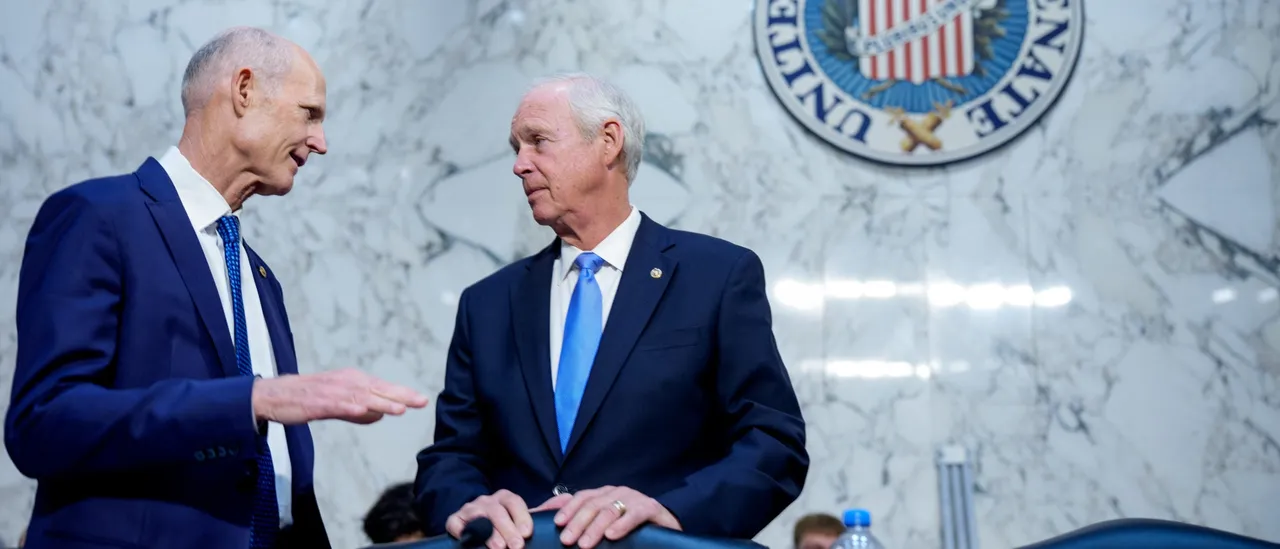
A faction of Senate Republicans is delaying the advancement of five appropriations bills, collectively known as a minibus, primarily due to their objection to numerous earmarks included in the proposed government funding package. Among these earmarks are allocations such as $1 million for renovating elevators at the Metropolitan Opera House in New York City and $7 million for a bike path in Hawaii. Critics have highlighted that these spending decisions divert federal funds toward local pet projects, which some lawmakers deem wasteful.
Conservative senators argue that these earmarks represent a significant breach of fiscal responsibility. Since 2011, there has been a conference resolution against congressionally directed spending, known as earmarks, yet appropriators have continued to include various earmarks in annual funding proposals for fiscal year 2026. The urgency surrounding these discussions is amplified by the approaching deadline of January 30, 2024, for funding the remainder of the federal government, following the passage of three spending bills in November that aimed to prevent a prolonged government shutdown.
Senator Ron Johnson of Wisconsin expressed his concerns in an interview with the Daily Caller News Foundation, stating, “We’ve got a conference resolution against earmarks and here we are in control and we’re at about $5 billion of earmarks. Yeah, I have a problem with that.” Johnson characterized earmarks as a “gateway drug” to escalating budget deficits and inefficient spending.
Democratic senators have also been active in requesting earmarks. For instance, Senators Richard Blumenthal and Chris Murphy from Connecticut jointly sought $250,000 for a historic preservation project in Greenwich, a wealthy suburb near Manhattan. Similarly, Senator Chris Coons of Delaware requested $1 million for two opera houses in his state, while Senator Mazie Hirono from Hawaii secured $500,000 for roofing improvements at the Honolulu Museum of Art.
In addition to cultural projects, some earmarks target social issues. Senators Amy Klobuchar and Tina Smith from Minnesota obtained $835,000 for a nonprofit in Duluth that supports Black business owners and conducts “race awareness workshops” in schools. Another earmark of $1.5 million was designated for a nonprofit serving Latin American youth, which offers “LGBTQ+ ally workshops.” These allocations have drawn criticism from fiscal conservatives who view them as promoting progressive agendas.
Senator Mike Lee of Utah, a vocal opponent of earmarks, has articulated his concerns to Senate Republican leadership. In an interview, he stated, “We need to figure out where we [Republicans] are on this. We banned them as a conference.” Lee also criticized media reports that suggested unnamed GOP senators were frustrated with the party’s stance on earmarks. He questioned their motivations, asserting, “Who are these mysterious, unnamed Republican senators who are ‘fuming’ over Republican objections to $5 billion in earmarks, many of which fund radical, left-wing causes?”
Senator Rick Scott of Florida echoed similar sentiments, particularly targeting the inclusion of earmarks requested by Senate Minority Leader Chuck Schumer, which exceed $100 million. He questioned the prioritization of funding for projects benefiting affluent New Yorkers instead of addressing more pressing financial concerns for American families. In a recent post, Scott asked, “Why should we prioritize elite New Yorkers’ wish lists over cutting spending to make life more affordable for American families?!”
Despite pushback from some Republicans, others defend earmarks as a means for lawmakers to address the unique needs of their states better than federal bureaucracies. However, fiscal conservatives have raised alarms over the implications of such spending in light of the national debt, which currently stands at around $38 trillion. Senator Rand Paul of Kentucky emphasized, “Unfortunately, the norm in Washington is to keep spending money we don’t have and keep incurring deficits. That’s my main objection.”
As the Senate navigates these contentious discussions, the fate of the appropriations bills and the future of earmarks remain uncertain. The outcome may influence not only the upcoming fiscal year but also the broader dialogue on government spending and accountability.

Cosmic Mystery Deepens: Where Are the Universe’s Defects?

Lady Bulldogs Shine in Postseason Awards Following Final Four Run

CALV Hosts Essential Class for Local Real Estate Professionals

Urgent Alert: “Spaving” Surges as Shoppers Overspend Online

Jefferies Initiates Coverage on Insmed with “Buy” Rating

Three Dog Night to Perform with Ambrosia at Mayo Civic Center

Urgent Announcement: Charles M. Payment Passes Away at 78

Houston Education Foundation Donates $4,592 for Student Programs

Beeks Financial Cloud Shares Drop 7% Amid Increased Trading Volume

Foreign Inflows into Japan Stocks Surge to ¥1.34 Trillion

University of Hawaiʻi Joins $25.6M AI Project to Monitor Disasters

Sydney Sweeney Embraces Body Positivity Amid Hollywood Challenges

Hudson Williams Gains Popularity as Breakout Star on Heated Rivalry

Urgent Farewell: Joleen Chaney Leaves Legacy at KFOR

Boeing’s Merger with McDonnell Douglas: A Strategic Move Explained

$1.25M Grant Advances Hawaiʻi’s Real-Time Hazard Monitoring

Derrick Dove and ABAC Band Set for Free Americana Concert

BOYNEXTDOOR’s Jaehyun Faces Backlash Amid BTS-TWICE Controversy
-
Business9 months ago
Foreign Inflows into Japan Stocks Surge to ¥1.34 Trillion
-
Science9 months ago
University of Hawaiʻi Joins $25.6M AI Project to Monitor Disasters
-
 Entertainment9 months ago
Sydney Sweeney Embraces Body Positivity Amid Hollywood Challenges
-
 Entertainment7 months ago
Hudson Williams Gains Popularity as Breakout Star on Heated Rivalry
-
 Top Stories8 months ago
Urgent Farewell: Joleen Chaney Leaves Legacy at KFOR
-
 World9 months ago
Boeing’s Merger with McDonnell Douglas: A Strategic Move Explained
-
 Science7 months ago
$1.25M Grant Advances Hawaiʻi’s Real-Time Hazard Monitoring
-
 Entertainment8 months ago
Derrick Dove and ABAC Band Set for Free Americana Concert
-
 Top Stories9 months ago
BOYNEXTDOOR’s Jaehyun Faces Backlash Amid BTS-TWICE Controversy
-

 Health6 months ago
Bodybuilder Eugene Teo Transitions to Mindful Movement for Health
-

 World6 months ago
San Francisco Airport to Host 16 Nonstop Airlines to Europe in 2026
-

 Top Stories7 months ago
National Coast Guard Museum Set to Open in 2027 After Funding Secured