
Health
NIH Cuts MOSAIC Program, Disrupting Early-Career Research Funding

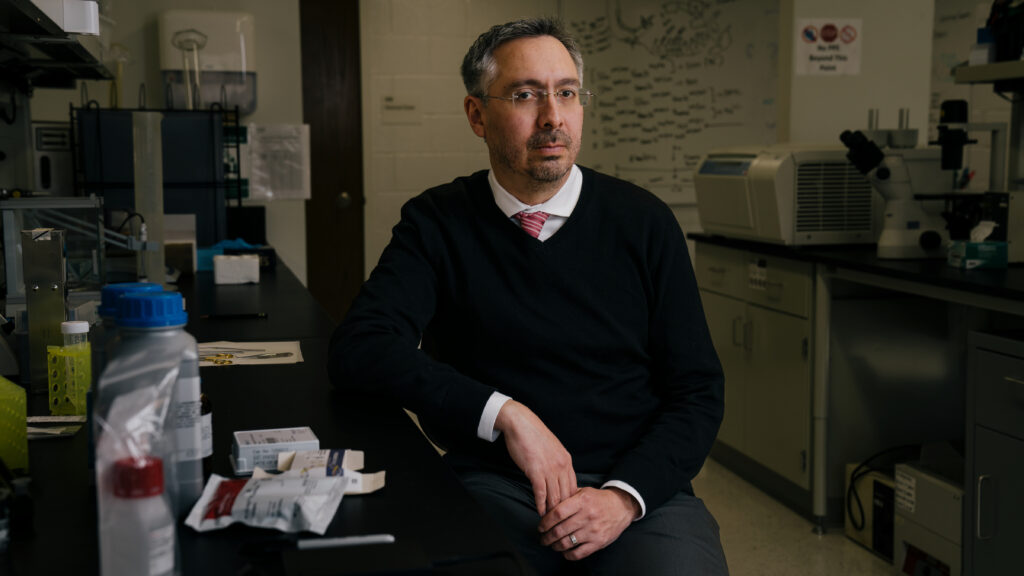
The National Institutes of Health (NIH) has discontinued its MOSAIC program, impacting hundreds of early-career scientists who relied on this funding to establish independent research labs. The move aligns with the Trump administration’s directive to reduce diversity, equity, and inclusion (DEI) initiatives in federal programs. Although the MOSAIC program aimed to support researchers during a critical transition period, its cancellation has left many affected scientists scrambling for alternative funding and job opportunities.
The MOSAIC program, which stands for Maximizing Opportunities for Scientific and Academic Independent Careers, was designed to help postdoctoral researchers become independent lab heads. It provided up to $125,000 annually for two years of postdoctoral research and an additional $249,000 per year for three years as tenure-track professors. The initiative targeted scholars from diverse backgrounds, addressing both the lack of representation in the field and the financial instability of early-career researchers.
Prior to its termination, the program had garnered significant support. Jay Bhattacharya, NIH Director, emphasized the importance of training future biomedical scientists and fostering a diverse scientific community. However, the administration’s actions led to the termination of this and other DEI-focused grants, which affected 104 researchers according to Grant Witness, an independent project tracking NIH funding changes.
Many scientists, including Luis Rodriguez, a molecular biologist at George Washington University, expressed feelings of betrayal as they had been encouraged to seek MOSAIC funding. Rodriguez had planned to use his now-canceled $160,000 grant to advance research on lung disease, specifically idiopathic pulmonary fibrosis (IPF). With the funding gone, he is now forced to scale back his ambitions, limiting his hiring and delaying essential equipment purchases.
The cancellation of the MOSAIC program has sparked concern among advocates for early-career scientists. Tara Schwetz, a former NIH deputy director, highlighted the potential long-term impact on the scientific workforce. “The interest is shifting in the wrong direction,” she noted, warning that the reduced support could jeopardize the pipeline of talent crucial for future scientific advancement.
In the nine months prior to the government shutdown, the NIH awarded 172 fewer transition grants to postdoctoral researchers compared to the previous year, marking a 10% reduction. Overall, the agency funded 896 fewer early-career grants across all categories during this period, the lowest number since 2016.
The NIH has defended its decision, stating that it is “shifting its portfolio to maximize the impact of federal taxpayer dollars.” The agency asserts a commitment to supporting early-career researchers, yet the abrupt cuts have drawn criticism from former program officials. Michael Sesma, who helped establish the MOSAIC program, emphasized the necessity of such initiatives to counteract biases in academia.
The MOSAIC program was aimed at a broad range of disadvantaged backgrounds, not solely focused on race or ethnicity. It included individuals from rural areas, first-generation college students, and those who had faced challenges such as foster care. Despite its intentions, the program has been criticized by some who view diversity initiatives as discriminatory.
As the funding landscape shifts, researchers like Rodriguez and Sarah Vick, a postdoctoral researcher at the Fred Hutchinson Cancer Center, are grappling with increased competition for faculty positions. Vick, who lost her MOSAIC funding while studying immune responses to infections, noted the heightened challenges in securing new opportunities in a tough job market.
The termination of the MOSAIC program raises critical questions about the future of early-career scientific research in the United States. With federal funding becoming increasingly limited, the sustainability of scientific innovation and diversity in the field hangs in the balance. The full ramifications of these policy changes will likely unfold over the coming years, as young researchers adapt to a more uncertain funding environment.

Cosmic Mystery Deepens: Where Are the Universe’s Defects?

Lady Bulldogs Shine in Postseason Awards Following Final Four Run

CALV Hosts Essential Class for Local Real Estate Professionals

Urgent Alert: “Spaving” Surges as Shoppers Overspend Online

Jefferies Initiates Coverage on Insmed with “Buy” Rating

Three Dog Night to Perform with Ambrosia at Mayo Civic Center

Urgent Announcement: Charles M. Payment Passes Away at 78

Houston Education Foundation Donates $4,592 for Student Programs

Beeks Financial Cloud Shares Drop 7% Amid Increased Trading Volume

Foreign Inflows into Japan Stocks Surge to ¥1.34 Trillion

University of Hawaiʻi Joins $25.6M AI Project to Monitor Disasters

Sydney Sweeney Embraces Body Positivity Amid Hollywood Challenges

Hudson Williams Gains Popularity as Breakout Star on Heated Rivalry

Urgent Farewell: Joleen Chaney Leaves Legacy at KFOR

Boeing’s Merger with McDonnell Douglas: A Strategic Move Explained

$1.25M Grant Advances Hawaiʻi’s Real-Time Hazard Monitoring

Derrick Dove and ABAC Band Set for Free Americana Concert

BOYNEXTDOOR’s Jaehyun Faces Backlash Amid BTS-TWICE Controversy
-
Business9 months ago
Foreign Inflows into Japan Stocks Surge to ¥1.34 Trillion
-
Science9 months ago
University of Hawaiʻi Joins $25.6M AI Project to Monitor Disasters
-
 Entertainment9 months ago
Sydney Sweeney Embraces Body Positivity Amid Hollywood Challenges
-
 Entertainment7 months ago
Hudson Williams Gains Popularity as Breakout Star on Heated Rivalry
-
 Top Stories8 months ago
Urgent Farewell: Joleen Chaney Leaves Legacy at KFOR
-
 World9 months ago
Boeing’s Merger with McDonnell Douglas: A Strategic Move Explained
-
 Science7 months ago
$1.25M Grant Advances Hawaiʻi’s Real-Time Hazard Monitoring
-
 Entertainment8 months ago
Derrick Dove and ABAC Band Set for Free Americana Concert
-
 Top Stories9 months ago
BOYNEXTDOOR’s Jaehyun Faces Backlash Amid BTS-TWICE Controversy
-

 Health6 months ago
Bodybuilder Eugene Teo Transitions to Mindful Movement for Health
-

 World6 months ago
San Francisco Airport to Host 16 Nonstop Airlines to Europe in 2026
-

 Top Stories7 months ago
National Coast Guard Museum Set to Open in 2027 After Funding Secured