
Top Stories
Trump Influence Reshapes Congress: Speaker Johnson’s Bold Moves

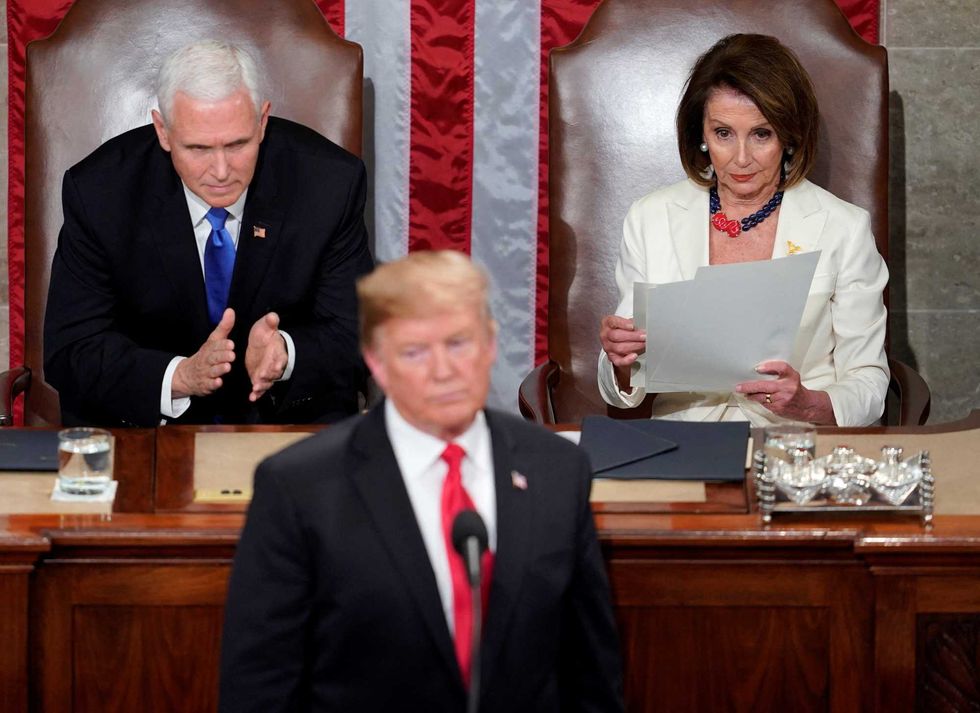
New reports confirm that Speaker of the House Mike Johnson is dramatically reshaping congressional power dynamics, aligning closely with Donald Trump amid a critical government shutdown. This urgent shift has profound implications for the legislative process in the United States, as the House’s traditional role as a balance to executive authority appears to be eroding.
As the government faces a looming crisis, Johnson’s recent decision to keep Congress out of session for a staggering eight weeks has raised alarms among lawmakers and constituents alike. This unprecedented move not only halts all committee meetings but also stifles vital policy debates and oversight—leaving critical decisions in the hands of unelected officials and judges.
The ramifications of this power shift are significant. The House of Representatives, designed as the centerpiece of American democracy with the authority to levy taxes, declare war, and approve treaties, is now witnessing its influence wane as Johnson prioritizes party loyalty over legislative duties.
Historically, the role of Speaker has evolved from a nonpartisan mediator to a potent party leader. In the early 1800s, figures like Henry Clay and Thomas Reed leveraged their positions to push personal agendas. However, Johnson’s leadership style risks further centralizing power within the Speaker’s office, a trend that has escalated since the tenure of Newt Gingrich in the 1990s.
This centralization has become evident as Johnson navigates the complexities of a party deeply tied to Trump’s influence. His approach echoes the tactics of previous speakers who used their authority to manage legislative agendas and party loyalty, but with Johnson at the helm, the stakes are even higher.
The current environment reflects a departure from the framers’ vision of a balanced government. Article I of the U.S. Constitution emphasizes the supremacy of Congress in policymaking, yet Johnson’s handling of the government shutdown exemplifies a shift toward a more executive-centric approach. Critics argue this undermines the legislative branch’s role in protecting the interests of the American people.
Johnson’s leadership, marked by controversial choices, mirrors the challenges faced by his predecessors. For instance, former Speaker John Boehner resigned amid internal party strife after seeking bipartisan solutions, while Kevin McCarthy was ousted for attempting to collaborate with Democrats. Both leaders struggled to balance party loyalty with the responsibilities of the Speaker’s office, a challenge that Johnson now confronts.
As the House remains dormant, the implications for national policy are dire. Without legislative action, critical appropriations bills are stalled, leaving the executive branch with increased power over budgetary decisions. This could lead to significant shifts in domestic and foreign policies, all without the input of elected representatives.
Looking ahead, the pressure is mounting for Johnson to reconvene Congress and reassert its authority. With growing frustration among House members and their constituents, the call for action is clear. The American public is watching closely as the implications of Johnson’s decisions unfold, and the future of congressional power hangs in the balance.
As this story develops, the urgency to address the government’s operational status intensifies. The House of Representatives must reclaim its role as a check on executive power, or risk further diminishing the democratic principles enshrined in the Constitution.
Stay tuned for further updates on this unfolding situation as the impacts of Johnson’s leadership continue to resonate across the nation.

Cosmic Mystery Deepens: Where Are the Universe’s Defects?

Lady Bulldogs Shine in Postseason Awards Following Final Four Run

CALV Hosts Essential Class for Local Real Estate Professionals

Urgent Alert: “Spaving” Surges as Shoppers Overspend Online

Jefferies Initiates Coverage on Insmed with “Buy” Rating

Three Dog Night to Perform with Ambrosia at Mayo Civic Center

Urgent Announcement: Charles M. Payment Passes Away at 78

Houston Education Foundation Donates $4,592 for Student Programs

Beeks Financial Cloud Shares Drop 7% Amid Increased Trading Volume

Foreign Inflows into Japan Stocks Surge to ¥1.34 Trillion

University of Hawaiʻi Joins $25.6M AI Project to Monitor Disasters

Sydney Sweeney Embraces Body Positivity Amid Hollywood Challenges

Hudson Williams Gains Popularity as Breakout Star on Heated Rivalry

Urgent Farewell: Joleen Chaney Leaves Legacy at KFOR

Boeing’s Merger with McDonnell Douglas: A Strategic Move Explained

$1.25M Grant Advances Hawaiʻi’s Real-Time Hazard Monitoring

Derrick Dove and ABAC Band Set for Free Americana Concert

BOYNEXTDOOR’s Jaehyun Faces Backlash Amid BTS-TWICE Controversy
-
Business9 months ago
Foreign Inflows into Japan Stocks Surge to ¥1.34 Trillion
-
Science9 months ago
University of Hawaiʻi Joins $25.6M AI Project to Monitor Disasters
-
 Entertainment9 months ago
Sydney Sweeney Embraces Body Positivity Amid Hollywood Challenges
-
 Entertainment7 months ago
Hudson Williams Gains Popularity as Breakout Star on Heated Rivalry
-
 Top Stories8 months ago
Urgent Farewell: Joleen Chaney Leaves Legacy at KFOR
-
 World9 months ago
Boeing’s Merger with McDonnell Douglas: A Strategic Move Explained
-
 Science7 months ago
$1.25M Grant Advances Hawaiʻi’s Real-Time Hazard Monitoring
-
 Entertainment8 months ago
Derrick Dove and ABAC Band Set for Free Americana Concert
-
 Top Stories9 months ago
BOYNEXTDOOR’s Jaehyun Faces Backlash Amid BTS-TWICE Controversy
-

 Health6 months ago
Bodybuilder Eugene Teo Transitions to Mindful Movement for Health
-

 World6 months ago
San Francisco Airport to Host 16 Nonstop Airlines to Europe in 2026
-

 Top Stories7 months ago
National Coast Guard Museum Set to Open in 2027 After Funding Secured