
Health
New Antibody Therapy Shows Promise in Treating Multiple Myeloma

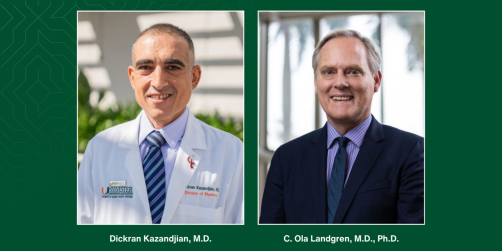
A novel antibody therapy has demonstrated the potential to eliminate residual traces of multiple myeloma, a type of blood cancer, according to interim results from a clinical trial conducted at the Sylvester Comprehensive Cancer Center, which is part of the University of Miami Miller School of Medicine. The findings, set to be presented on December 6, 2025, during the American Society of Hematology (ASH) annual meeting in Orlando, indicate that none of the 18 patients who underwent up to six cycles of treatment with the bispecific antibody linvoseltamab showed detectable disease in highly sensitive tests.
The preliminary success of linvoseltamab suggests that it could provide an alternative to the more invasive treatment options currently available, such as bone marrow transplants that require intensive chemotherapy. This development raises the possibility of improving long-term outcomes for patients with this challenging disease.
Lead researcher Dickran Kazandjian, M.D., who is a physician and professor in the Myeloma Division at the Miller School, collaborated with C. Ola Landgren, M.D., Ph.D., director of the Sylvester Myeloma Institute. Kazandjian emphasized the effectiveness of the therapy, noting, “These patients received modern and effective, up-front treatment that eliminated 90% of their tumor.” Traditionally, patients in similar situations would undergo high-dose chemotherapy followed by a transplant, but linvoseltamab offers a less aggressive alternative.
Landgren described the initial findings as “extremely impressive,” stating that the absence of lingering myeloma cells bodes well for the patients’ futures. He remarked, “Based on my experience, I would predict that after having such a good response after such a short time, the disease most likely could stay away for many years.”
Multiple myeloma originates from plasma cells, which are responsible for producing antibodies. When these cells become cancerous, they proliferate and disrupt the production of normal blood cells. As of 2022, the U.S. National Cancer Institute’s Surveillance, Epidemiology, and End Results Program estimated that over 192,000 Americans were living with multiple myeloma, with approximately 36,000 new cases diagnosed annually.
Currently, most newly diagnosed patients receive a combination of three to four drugs. Although this approach may eradicate myeloma cells, residual traces often remain undetected by standard bone marrow evaluations. To identify these low-level traces, the team at Sylvester utilizes advanced tests that can detect genetic sequences linked to cancer, allowing them to find one cancer cell among a million normal cells. This minimal residual disease (MRD) is a critical factor in predicting patient outcomes.
According to Landgren, patients who test negative for MRD can expect to enjoy significantly longer periods without cancer recurrence compared to those who test positive. Traditionally, those with MRD-positive results after combination therapy have been subjected to high-dose chemotherapy, which can lead to severe side effects. Following this, patients typically undergo a transplant of their own stem cells, a process that Landgren describes as “quite brutal.”
The current phase 2 clinical trial, which has enrolled 25 participants who tested MRD positive after combination therapy, explores the efficacy of linvoseltamab. Patients are receiving four to six cycles of this treatment. Unlike traditional monoclonal antibodies, which target a single molecule, bispecific antibodies like linvoseltamab can bind to two targets. It connects to CD3, a protein on T cells that attack cancer cells, and BCMA, a protein found on multiple myeloma cells. This dual targeting enhances the immune response against the cancer.
While some patients experienced side effects, such as neutropenia and upper respiratory infections, these effects were within an acceptable safety profile, according to Kazandjian. The research team has implemented precautions to prevent serious reactions, such as cytokine release syndrome and immune effector cell-associated neurotoxicity syndrome, which can occur with immunotherapies. So far, no patients in this study have reported these serious side effects.
Following treatment, bone marrow evaluations using two independent tests have shown no detectable traces of disease in any of the patients who completed the therapy. Kazandjian remains hopeful that linvoseltamab could provide more durable responses than traditional transplants, potentially leading to long-term disease control—a concept he refers to as a “functional cure.”
“This is a bold claim, but we need to aim for the stars to move the field forward; that is what we are trying to do,” Kazandjian stated. To further explore this promising avenue, the research team plans to expand enrollment to 50 participants.
For further updates on this groundbreaking research, interested individuals can follow the Sylvester Comprehensive Cancer Center on social media and check their blog for the latest news and developments.

Cosmic Mystery Deepens: Where Are the Universe’s Defects?

Lady Bulldogs Shine in Postseason Awards Following Final Four Run

CALV Hosts Essential Class for Local Real Estate Professionals

Urgent Alert: “Spaving” Surges as Shoppers Overspend Online

Jefferies Initiates Coverage on Insmed with “Buy” Rating

Three Dog Night to Perform with Ambrosia at Mayo Civic Center

Urgent Announcement: Charles M. Payment Passes Away at 78

Houston Education Foundation Donates $4,592 for Student Programs

Beeks Financial Cloud Shares Drop 7% Amid Increased Trading Volume

Foreign Inflows into Japan Stocks Surge to ¥1.34 Trillion

University of Hawaiʻi Joins $25.6M AI Project to Monitor Disasters

Sydney Sweeney Embraces Body Positivity Amid Hollywood Challenges

Hudson Williams Gains Popularity as Breakout Star on Heated Rivalry

Urgent Farewell: Joleen Chaney Leaves Legacy at KFOR

Boeing’s Merger with McDonnell Douglas: A Strategic Move Explained

$1.25M Grant Advances Hawaiʻi’s Real-Time Hazard Monitoring

Derrick Dove and ABAC Band Set for Free Americana Concert

BOYNEXTDOOR’s Jaehyun Faces Backlash Amid BTS-TWICE Controversy
-
Business9 months ago
Foreign Inflows into Japan Stocks Surge to ¥1.34 Trillion
-
Science8 months ago
University of Hawaiʻi Joins $25.6M AI Project to Monitor Disasters
-
 Entertainment9 months ago
Sydney Sweeney Embraces Body Positivity Amid Hollywood Challenges
-
 Entertainment7 months ago
Hudson Williams Gains Popularity as Breakout Star on Heated Rivalry
-
 Top Stories8 months ago
Urgent Farewell: Joleen Chaney Leaves Legacy at KFOR
-
 World9 months ago
Boeing’s Merger with McDonnell Douglas: A Strategic Move Explained
-
 Science7 months ago
$1.25M Grant Advances Hawaiʻi’s Real-Time Hazard Monitoring
-
 Entertainment8 months ago
Derrick Dove and ABAC Band Set for Free Americana Concert
-
 Top Stories9 months ago
BOYNEXTDOOR’s Jaehyun Faces Backlash Amid BTS-TWICE Controversy
-

 Health6 months ago
Bodybuilder Eugene Teo Transitions to Mindful Movement for Health
-

 World6 months ago
San Francisco Airport to Host 16 Nonstop Airlines to Europe in 2026
-

 Top Stories7 months ago
National Coast Guard Museum Set to Open in 2027 After Funding Secured