
World
Trump’s Oil Strategy Faces Lessons from Iraq’s Turbulent Past

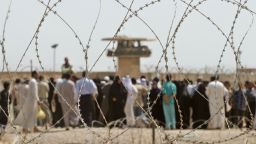
In a bold move, President Donald Trump has outlined a straightforward vision for U.S. operations in Venezuela: seize the oil reserves and begin exporting. This plan, however, encounters significant challenges when compared to the complex realities faced by oil companies in post-invasion Iraq. The U.S. invasion of Iraq in 2003 resulted in the capture of its leader, Saddam Hussein, yet the anticipated economic benefits from the country’s vast oil reserves did not materialize as expected.
As the situation in Venezuela evolves, analysts warn that the path to profitable oil operations will be fraught with difficulties. The absence of direct military involvement in Venezuela distinguishes it from Iraq, where U.S. troops were heavily deployed. Nonetheless, the chaotic aftermath of the Iraq invasion serves as a cautionary tale for oil executives eyeing Venezuela’s resources.
According to industry experts, it may take years before major oil companies commit to significant investments in Venezuela due to anticipated security risks. Bill Farren-Price, a senior research fellow at the Oxford Institute for Energy Studies, noted that “it’s really going to be a very, very difficult mountain to climb.” He emphasized that rebuilding oil industries in nations like Iraq and Venezuela is a lengthy process, often taking years to stabilize.
Challenges Observed in Iraq
In the early days following the U.S. invasion of Iraq, then-Deputy Defense Secretary Paul Wolfowitz claimed that the country’s oil reserves could finance its reconstruction. This assertion quickly proved overly optimistic. Mohamad Bazzi, director of the Center for Near Eastern Studies at New York University, recounted how the Bush administration expected immediate economic benefits from Iraqi oil, which ultimately did not occur.
Iraq’s oil industry had been nationalized and inaccessible to Western companies since the 1970s. Following the invasion, the U.S. dismantled the Iraqi armed forces and removed thousands of members of Hussein’s Baath Party from government roles. This led to U.S. control over key ministries, including the oil ministry, but it wasn’t until around 2009 that contracts began to be offered to foreign oil companies. Even then, the contracts lacked appeal, as explained by Raad Alkadiri, managing partner of 3TEN32 Associates. He noted that these contracts treated foreign firms as contractors rather than granting them ownership rights over oil reserves.
Only recently has the Iraqi government begun to offer more attractive terms to foreign investors. Alkadiri observed that the initial optimism of oil companies was quickly replaced by disappointment as Iraq put its own systems into place.
Security issues also plagued Iraq post-invasion. The situation deteriorated swiftly due to a power vacuum, leading to rampant looting and attacks on oil infrastructure. Bazzi pointed out that the ongoing insurgency and civil war severely hindered oil production efforts.
Potential Implications for Venezuela
The security landscape in Venezuela remains uncertain, presenting different challenges compared to Iraq. Notably, the Trump administration has retained elements of the Maduro regime, unlike the complete overhaul seen in Iraq. Carlos Solar, senior research fellow of Latin American Security at the Royal United Services Institute, highlighted the presence of armed groups in Venezuela that could lead to a chaotic security environment. He remarked that negotiating with the current government may be less controllable than anticipated.
Venezuela is marked by a highly militarized society, featuring four main armed groups: the Venezuelan army, organized criminal gangs, Colombian guerrilla groups, and paramilitary groups known as colectivos, which are loyal to Maduro. In light of these factors, the Trump administration is reportedly considering the use of private military contractors to safeguard oil and energy assets in Venezuela, as opposed to deploying U.S. troops.
During the Iraq War, the U.S. spent billions on security and logistics contractors, although these efforts were often marred by controversies, including civilian casualties. Amy Myers Jaffe, director of the Energy, Climate Justice and Sustainability Lab at New York University, stressed that the current environment in Venezuela is too unpredictable for oil companies to justify significant investments. She posed critical questions: “Is the current government… staying in power? Are they going to have elections? Will those elections be contested?”
Jaffe concluded that the key lesson from Iraq is not merely about the abundance of oil but rather the complexities of the operational landscape. The unfolding situation in Venezuela continues to develop, and the experiences from Iraq may serve as a crucial reference for oil companies contemplating their next steps.

Golden Link Chapter No. 204 Honors Kijahfha Mahoney with Service Award

Gigachad Price Falls to $0.0025 Amid Market Fluctuations

Exploring Bortus: The Complex Alien of ‘The Orville’

Harry Potter Quiz Links Personality Traits to Entrepreneurship

Colorado Voters React to Trump’s Immigration Actions Amid Midterms

Donaldson Capital Management Boosts Stake in UnitedHealth Group

Researchers Establish First Lab Colony of Invasive Beetle in Australia

Jersey City Schools Confirm Controversial Kindergarten Move

NeuroOne Medical Technologies Outperforms Cannlabs in Financial Metrics

University of Hawaiʻi Joins $25.6M AI Project to Monitor Disasters

Foreign Inflows into Japan Stocks Surge to ¥1.34 Trillion

Hudson Williams Gains Popularity as Breakout Star on Heated Rivalry

Boeing’s Merger with McDonnell Douglas: A Strategic Move Explained

$1.25M Grant Advances Hawaiʻi’s Real-Time Hazard Monitoring

Sydney Sweeney Embraces Body Positivity Amid Hollywood Challenges

BOYNEXTDOOR’s Jaehyun Faces Backlash Amid BTS-TWICE Controversy

French Film Explores Group Therapy in ‘Group – The Schopenhauer Project’

Urgent Farewell: Joleen Chaney Leaves Legacy at KFOR
-
Science3 months ago
University of Hawaiʻi Joins $25.6M AI Project to Monitor Disasters
-
Business3 months ago
Foreign Inflows into Japan Stocks Surge to ¥1.34 Trillion
-
 Entertainment2 months ago
Hudson Williams Gains Popularity as Breakout Star on Heated Rivalry
-
 World3 months ago
Boeing’s Merger with McDonnell Douglas: A Strategic Move Explained
-
 Science2 months ago
$1.25M Grant Advances Hawaiʻi’s Real-Time Hazard Monitoring
-
 Entertainment3 months ago
Sydney Sweeney Embraces Body Positivity Amid Hollywood Challenges
-
 Top Stories3 months ago
BOYNEXTDOOR’s Jaehyun Faces Backlash Amid BTS-TWICE Controversy
-
 World3 months ago
French Film Explores Group Therapy in ‘Group – The Schopenhauer Project’
-
 Top Stories3 months ago
Urgent Farewell: Joleen Chaney Leaves Legacy at KFOR
-

 Top Stories3 months ago
Marc Buoniconti’s Legacy: 40 Years Later, Lives Transformed
-

 Lifestyle4 months ago
Kelsea Ballerini Launches ‘Burn the Baggage’ Candle with Ranger Station
-

 Top Stories3 months ago
Carson Wentz Out for Season After Shoulder Surgery: Urgent Update