
World
Trump Challenges Global Leaders at Davos Forum

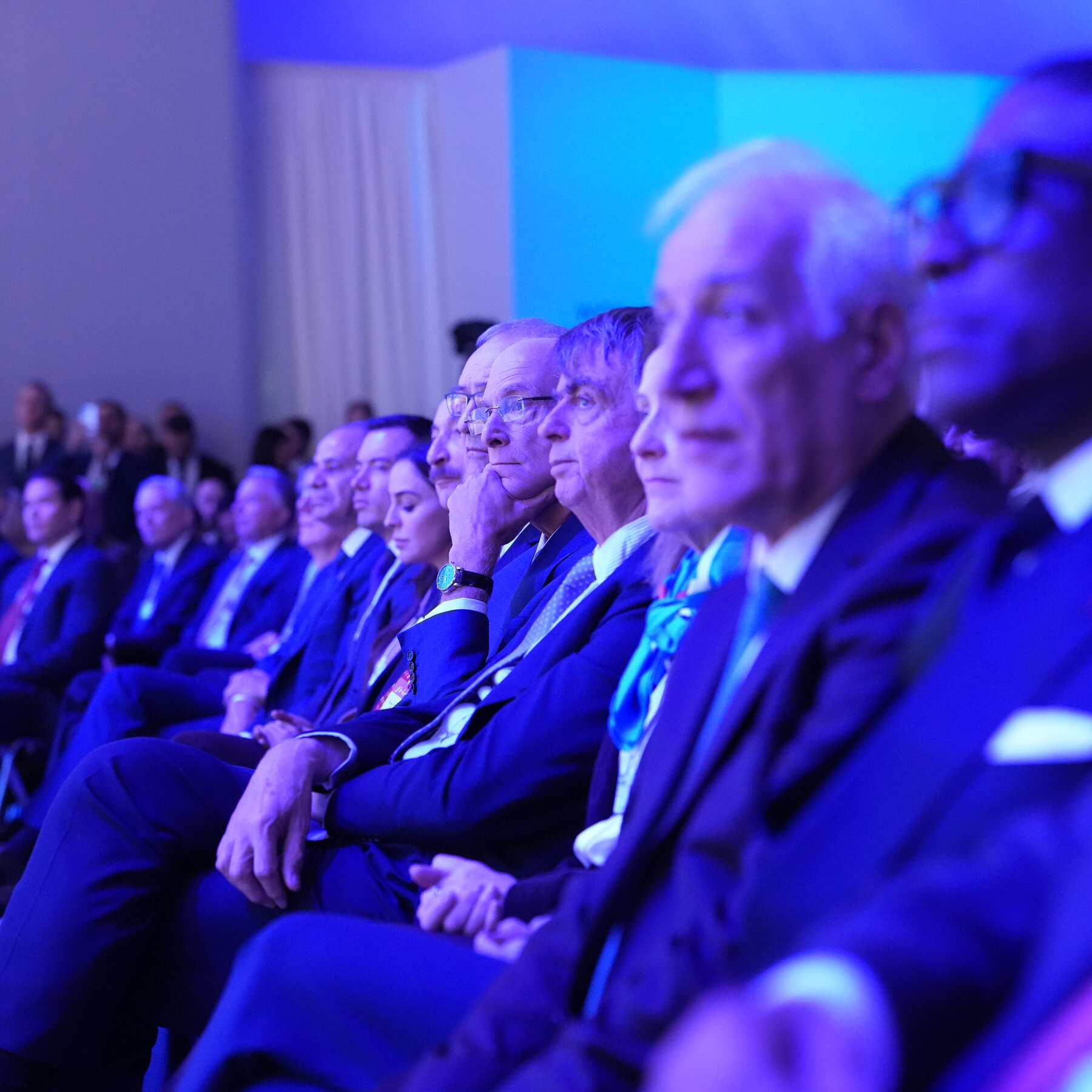
World leaders convened at the annual World Economic Forum in Davos on January 23, 2018, where Donald Trump presented a stark contrast to the prevailing perspectives of global economic governance. The event, which traditionally serves as a platform for fostering international cooperation, was overshadowed by Trump’s assertive stance on nationalism and his administration’s economic policies.
In his keynote address, Trump emphasized the importance of prioritizing American interests in global trade. He stated, “America first does not mean America alone,” highlighting his administration’s commitment to revising trade agreements viewed as unfavorable to the United States. This approach starkly diverges from the collaborative spirit long championed at Davos, where leaders typically discuss shared responsibility for economic stability and sustainable development.
Trump’s remarks elicited mixed reactions from the audience, which included various heads of state and influential business leaders. Many attendees expressed concern over his focus on unilateralism, particularly in the context of global challenges such as climate change and economic inequality. The President’s dismissal of multilateral agreements drew criticism, with some leaders warning that such a stance could undermine international cooperation.
The discussion around climate change was particularly contentious. While Trump reiterated his administration’s withdrawal from the Paris Agreement, other leaders, including French President Emmanuel Macron, reaffirmed their commitment to addressing environmental issues collectively. Macron’s counterpoint was clear: “We are at a turning point in history, and we need to work together to ensure a sustainable future for our planet.”
Trade policies and economic growth were also central themes during the forum. Trump asserted that the U.S. economy is experiencing unprecedented growth, citing a 4.1 percent GDP increase in the second quarter of 2018 as evidence of his administration’s success. This claim resonated with business leaders who support tax cuts and deregulation as means to stimulate investment and job creation.
Despite the enthusiasm for America’s economic performance, international leaders expressed unease about the potential fallout from Trump’s policies. Concerns were raised over increased tariffs and trade barriers, which could lead to retaliatory measures from other nations. The potential for a trade war loomed large over discussions, with many arguing that such conflicts could hinder global economic progress.
The atmosphere at Davos was further charged by the backdrop of protests against Trump’s presence. Activists gathered outside the venue, voicing their opposition to his policies on immigration, healthcare, and environmental regulations. Their presence underscored the deep divisions within global discourse regarding leadership and governance in an interconnected world.
In summary, Trump’s appearance at the World Economic Forum marked a significant departure from the collaborative ethos that has defined the gathering for decades. His focus on America-first policies highlighted the challenges of reconciling national interests with the need for global cooperation. As world leaders returned to their respective countries, the implications of Trump’s rhetoric and policies continued to reverberate through the international community, raising critical questions about the future of global governance.

Golden Link Chapter No. 204 Honors Kijahfha Mahoney with Service Award

Gigachad Price Falls to $0.0025 Amid Market Fluctuations

Exploring Bortus: The Complex Alien of ‘The Orville’

Harry Potter Quiz Links Personality Traits to Entrepreneurship

Colorado Voters React to Trump’s Immigration Actions Amid Midterms

Donaldson Capital Management Boosts Stake in UnitedHealth Group

Researchers Establish First Lab Colony of Invasive Beetle in Australia

Jersey City Schools Confirm Controversial Kindergarten Move

NeuroOne Medical Technologies Outperforms Cannlabs in Financial Metrics

University of Hawaiʻi Joins $25.6M AI Project to Monitor Disasters

Foreign Inflows into Japan Stocks Surge to ¥1.34 Trillion

Hudson Williams Gains Popularity as Breakout Star on Heated Rivalry

Boeing’s Merger with McDonnell Douglas: A Strategic Move Explained

$1.25M Grant Advances Hawaiʻi’s Real-Time Hazard Monitoring

Sydney Sweeney Embraces Body Positivity Amid Hollywood Challenges

BOYNEXTDOOR’s Jaehyun Faces Backlash Amid BTS-TWICE Controversy

French Film Explores Group Therapy in ‘Group – The Schopenhauer Project’

Urgent Farewell: Joleen Chaney Leaves Legacy at KFOR
-
Science3 months ago
University of Hawaiʻi Joins $25.6M AI Project to Monitor Disasters
-
Business3 months ago
Foreign Inflows into Japan Stocks Surge to ¥1.34 Trillion
-
 Entertainment2 months ago
Hudson Williams Gains Popularity as Breakout Star on Heated Rivalry
-
 World3 months ago
Boeing’s Merger with McDonnell Douglas: A Strategic Move Explained
-
 Science2 months ago
$1.25M Grant Advances Hawaiʻi’s Real-Time Hazard Monitoring
-
 Entertainment3 months ago
Sydney Sweeney Embraces Body Positivity Amid Hollywood Challenges
-
 Top Stories3 months ago
BOYNEXTDOOR’s Jaehyun Faces Backlash Amid BTS-TWICE Controversy
-
 World3 months ago
French Film Explores Group Therapy in ‘Group – The Schopenhauer Project’
-
 Top Stories3 months ago
Urgent Farewell: Joleen Chaney Leaves Legacy at KFOR
-

 Top Stories3 months ago
Marc Buoniconti’s Legacy: 40 Years Later, Lives Transformed
-

 Lifestyle4 months ago
Kelsea Ballerini Launches ‘Burn the Baggage’ Candle with Ranger Station
-

 Top Stories3 months ago
Carson Wentz Out for Season After Shoulder Surgery: Urgent Update