
World
Mitch McConnell’s Provision Threatens Hemp Industry’s Future

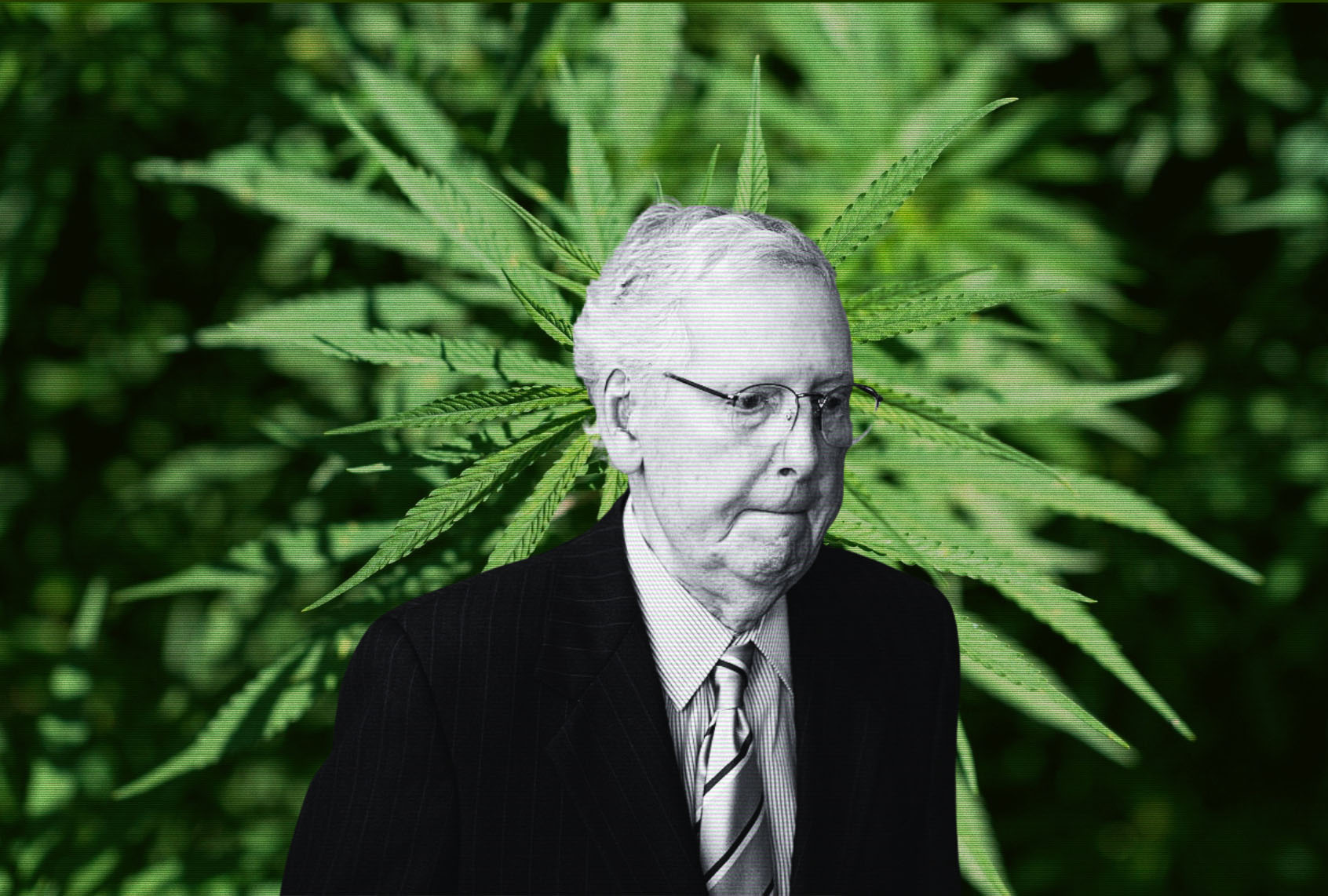
American hemp farmers are facing significant challenges after a new provision was included in a bipartisan deal aimed at reopening the government. This provision effectively bans the sale of intoxicating hemp products, raising concerns among industry leaders about the future viability of their businesses. According to Lukas Gilkey, co-founder and CEO of Hometown Hero, a hemp business based in Austin, Texas, this legislation could be catastrophic for the industry.
Gilkey explained that the law, which is set to take effect next year, introduces a stringent limit of 0.4 milligrams of THC per container. This threshold is drastically lower than the THC levels typically found in adult-use cannabis products, which can contain 20% THC or more. He stated, “That, I think, is what they’re going after. But it’s essentially game over for the entire industry if this actually goes into effect.”
The provision targets psychoactive compounds like delta-8 THC, a variant of delta-9 THC, which is the primary intoxicating compound in cannabis. While both delta-8 and delta-9 occur naturally in the cannabis plant, they are regulated differently. Until now, hemp products were primarily regulated based on their delta-9 THC content, allowing for a diverse market that included various hemp-derived products, such as CBD.
Impact on the Hemp Industry
Historically, hemp and cannabis were banned in the United States. However, the landscape changed in 2018 with the signing of the farm bill by then-President Donald Trump, which legalized hemp cultivation. A loophole allowed companies to create hemp-derived products with high levels of THC, leading to widespread availability of these products in gas stations and online stores.
Senator Mitch McConnell, who played a pivotal role in the legalization of hemp, has now supported this new regulation, arguing that it clarifies the original intent of the 2018 legislation. He stated, “Unfortunately, some companies looking to make a quick buck have been exploiting a loophole in the 2018 Farm Bill… This language merely clarifies the original intent of the 2018 farm bill, rooting out the bad actors and protecting the growing hemp industry.”
Despite McConnell’s assurances, the new law has sent shockwaves through the hemp market, which, according to Whitney Economics, has grown to surpass $28 billion in sales as of 2023, employing approximately 328,000 workers who earn about $13 billion collectively.
Gilkey expressed concern that the new legislation could undermine the progress made in the hemp industry. “We do not believe this will hold. This industry is very large, and there are a lot of well-funded companies that are already putting together strategies to fight this,” he indicated.
Challenges and Optimism Among Farmers
Hemp farmers are caught between competing interests, including the alcohol lobby, which has pushed for stricter regulations on hemp products due to the competition they pose. In contrast, the marijuana industry has largely welcomed these regulations, as marijuana is subject to a different regulatory framework in states where it is legalized.
Ann Guager, who operates Caprock Family Farms in Texas, remains hopeful. She believes that public support can lead to positive change. “We know that speaking up and calling your lawmakers and taking the time to let people know that these products really do help people and change people’s lives,” she said. Many consumers rely on hemp products for recreational use and as alternatives to medical marijuana, preferring not to enter the medical marijuana system.
Legal expert Robert Mikos from Vanderbilt University noted the complexities surrounding the new law. He pointed out that while the provision aims to address concerns about psychoactive hemp products, it may inadvertently harm the broader hemp industry. “I don’t think Congress is trying to destroy the industrial hemp market… I just haven’t seen any basis for that,” Mikos remarked.
Ultimately, the enforcement of the new law will likely remain under state jurisdiction, unless the federal government takes further action. States will determine how to regulate these products moving forward, which may lead to a patchwork of regulations across the country.
As the hemp industry grapples with this new reality, farmers and business owners are mobilizing to advocate for their interests, aiming for a balance that allows for innovation while ensuring consumer safety. The coming months will be crucial in determining the direction of the industry and the future of hemp-derived products in the marketplace.

Urgent Update: Massive Fire Erupts at Oklahoma City Apartments

Elon Musk Claims AI Will Resolve U.S. Debt Crisis in 3 Years

Shai Gilgeous-Alexander Eyes Wilt Chamberlain’s Scoring Record

Knicks Dominate Raptors 116-94, Extend Home Win Streak to 10

Hallmark Premieres ‘Christmas at the Catnip Café’ Tonight!

Millville Woman Arrested After Threatening U-Haul Worker with Baton

Japan’s PM Takaichi Vows to Prioritize Fiscal Management NOW

Long Island Faces Disruptive Winter Weather Tuesday Morning

Urgent: 18-Year-Old Killed in Triple Shooting in Bronzeville

University of Hawaiʻi Joins $25.6M AI Project to Monitor Disasters

Foreign Inflows into Japan Stocks Surge to ¥1.34 Trillion

BOYNEXTDOOR’s Jaehyun Faces Backlash Amid BTS-TWICE Controversy

Carson Wentz Out for Season After Shoulder Surgery: Urgent Update

Marc Buoniconti’s Legacy: 40 Years Later, Lives Transformed

Innovative Surgery Restores Confidence for Breast Cancer Patients

Steve Kerr Supports Jonathan Kuminga After Ejection in Preseason Game

Kelsea Ballerini Launches ‘Burn the Baggage’ Candle with Ranger Station

Chicago’s Viral ‘Rat Hole’ Likely Created by Squirrel, Study Reveals
-
Science4 weeks ago
University of Hawaiʻi Joins $25.6M AI Project to Monitor Disasters
-
Business1 month ago
Foreign Inflows into Japan Stocks Surge to ¥1.34 Trillion
-
 Top Stories1 month ago
BOYNEXTDOOR’s Jaehyun Faces Backlash Amid BTS-TWICE Controversy
-
 Top Stories1 month ago
Carson Wentz Out for Season After Shoulder Surgery: Urgent Update
-
 Top Stories1 month ago
Marc Buoniconti’s Legacy: 40 Years Later, Lives Transformed
-
 Health1 month ago
Innovative Surgery Restores Confidence for Breast Cancer Patients
-
 Sports2 months ago
Steve Kerr Supports Jonathan Kuminga After Ejection in Preseason Game
-
 Lifestyle2 months ago
Kelsea Ballerini Launches ‘Burn the Baggage’ Candle with Ranger Station
-
 Science2 months ago
Chicago’s Viral ‘Rat Hole’ Likely Created by Squirrel, Study Reveals
-

 Entertainment2 months ago
Zoe Saldana Advocates for James Cameron’s Avatar Documentary
-

 Lifestyle2 months ago
Dua Lipa Celebrates Passing GCSE Spanish During World Tour
-

 Business2 months ago
Tyler Technologies Set to Reveal Q3 2025 Earnings on October 22