
World
Minnesota Judges Reject Arrest Warrants for ICE Protesters

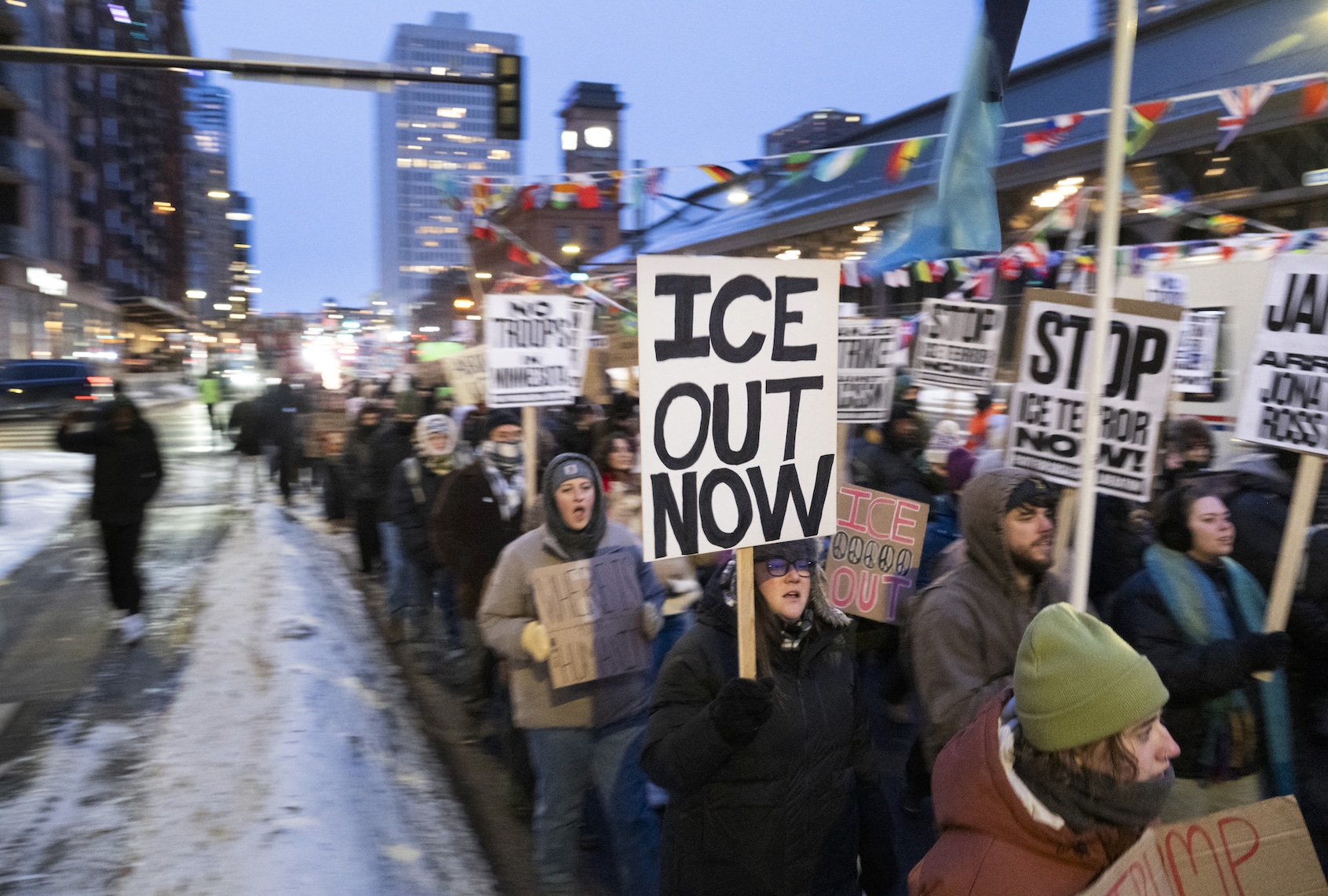
Federal judges in Minnesota are rejecting arrest warrants for individuals protesting the presence of U.S. Immigration and Customs Enforcement (ICE) officers. This trend stems from a perceived lack of substantial evidence presented in the warrants, as reported by MS NOW.
The warrants allege that certain protesters have assaulted law enforcement officers and engaged in other criminal activities during the protests in Minneapolis. Despite these claims, judges are increasingly unwilling to issue warrants when the evidence does not convincingly support the allegations.
In one notable instance, a federal judge declined to issue a warrant against a protester accused of throwing an egg at a law enforcement vehicle. In another case, Magistrate Judge Douglas Micko dismissed a warrant request to arrest Chauntyll Louisa Allen, a St. Paul school board member, who faced federal charges for allegedly threatening individuals attending a church service where an ICE official serves as pastor. Although Judge Micko allowed a conspiracy charge to proceed, he ultimately rejected the more serious allegations against Allen. Similarly, he dismissed a complaint against journalist Don Lemon for following protesters into the church.
Federal Frustration Over Rejected Warrants
The situation has led to frustration among federal authorities. Customs and Border Protection commander Gregory Bovino expressed his disappointment during a Thursday press conference. He stated, “We work very hard with the Department of Justice, with the courts, to gather and obtain those warrants. We’re going to continue to work with judges and the courts to obtain these warrants with those judges.”
The ongoing protests against ICE have drawn significant attention and criticism, particularly regarding their treatment of individuals seeking asylum in the United States. Cases involving ICE have raised concerns about the agency’s tactics and their implications for civil liberties, leading many communities to rally against perceived overreach.
As judges continue to reject these warrants, the landscape for law enforcement and protesters remains tense. The balance between maintaining order and upholding civil rights is at the forefront of this evolving situation in Minnesota. The decisions made by the courts may set precedents for how similar cases are handled in the future, impacting both law enforcement strategies and protest activities nationwide.
This ongoing conflict highlights the significant public discourse surrounding immigration enforcement in the United States, reflecting broader societal debates about justice, accountability, and human rights.

Shark Bites Surge Linked to Climate Change and Ecosystem Shifts

NASCAR Clash Delayed Due to Snow, Rescheduled for Monday

Boeing and Lockheed Martin Battle for Fighter Jet Dominance

Golden Link Chapter No. 204 Honors Kijahfha Mahoney with Service Award

Gigachad Price Falls to $0.0025 Amid Market Fluctuations

Exploring Bortus: The Complex Alien of ‘The Orville’

Harry Potter Quiz Links Personality Traits to Entrepreneurship

Colorado Voters React to Trump’s Immigration Actions Amid Midterms

Donaldson Capital Management Boosts Stake in UnitedHealth Group

University of Hawaiʻi Joins $25.6M AI Project to Monitor Disasters

Foreign Inflows into Japan Stocks Surge to ¥1.34 Trillion

Hudson Williams Gains Popularity as Breakout Star on Heated Rivalry

Boeing’s Merger with McDonnell Douglas: A Strategic Move Explained

$1.25M Grant Advances Hawaiʻi’s Real-Time Hazard Monitoring

Sydney Sweeney Embraces Body Positivity Amid Hollywood Challenges

BOYNEXTDOOR’s Jaehyun Faces Backlash Amid BTS-TWICE Controversy

French Film Explores Group Therapy in ‘Group – The Schopenhauer Project’

Urgent Farewell: Joleen Chaney Leaves Legacy at KFOR
-
Science3 months ago
University of Hawaiʻi Joins $25.6M AI Project to Monitor Disasters
-
Business3 months ago
Foreign Inflows into Japan Stocks Surge to ¥1.34 Trillion
-
 Entertainment2 months ago
Hudson Williams Gains Popularity as Breakout Star on Heated Rivalry
-
 World3 months ago
Boeing’s Merger with McDonnell Douglas: A Strategic Move Explained
-
 Science2 months ago
$1.25M Grant Advances Hawaiʻi’s Real-Time Hazard Monitoring
-
 Entertainment3 months ago
Sydney Sweeney Embraces Body Positivity Amid Hollywood Challenges
-
 Top Stories3 months ago
BOYNEXTDOOR’s Jaehyun Faces Backlash Amid BTS-TWICE Controversy
-
 World3 months ago
French Film Explores Group Therapy in ‘Group – The Schopenhauer Project’
-
 Top Stories3 months ago
Urgent Farewell: Joleen Chaney Leaves Legacy at KFOR
-
 Top Stories3 months ago
Marc Buoniconti’s Legacy: 40 Years Later, Lives Transformed
-

 Lifestyle4 months ago
Kelsea Ballerini Launches ‘Burn the Baggage’ Candle with Ranger Station
-

 Top Stories3 months ago
Carson Wentz Out for Season After Shoulder Surgery: Urgent Update