
World
Iranians Experience Partial Phone Access Amid Protests and Crackdown

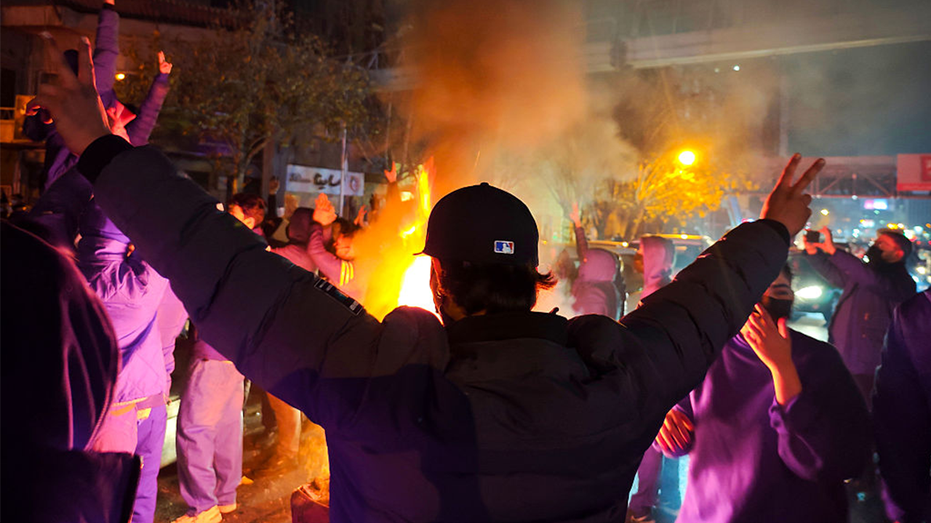
Iranians were able to make some international phone calls on January 8, 2026, marking a rare moment of communication amid a severe government-imposed communications blackout. This development occurred during ongoing protests against the regime, which have intensified due to a worsening economic crisis. Although calls to international numbers were briefly successful, text messaging remained disabled, and internet access was still restricted to government-approved sites, leaving much of the country isolated from global communication.
The partial restoration of phone services comes as security forces maintain a heavy presence in central Tehran. According to local residents, riot police, Revolutionary Guard units, and plainclothes officers have been deployed across key locations to control the unrest. Protests have erupted in response to the Iranian government’s handling of economic issues, with demonstrators increasingly calling for regime change. Activist groups have reported that hundreds have lost their lives during the protests, but the actual toll is difficult to ascertain due to the ongoing communications blackout and strict government control over information.
Government Response and International Tensions
Reports indicate significant damage to some government buildings and financial institutions during the unrest. Local merchants have faced pressure to reopen businesses despite the heavy security presence. Foot traffic in many areas of Tehran remains low, reflecting the tense atmosphere. The protests have drawn considerable international attention, particularly as tensions between Tehran and Washington escalate.
U.S. President Donald Trump stated that Iran is looking to negotiate following his warning of potential military action in response to the protests. “Iran better not start shooting, because we’ll start shooting, too,” he warned on January 6, 2026. In an interview with Al Jazeera, Iranian Foreign Minister Abbas Araghchi confirmed ongoing communication with U.S. envoy Steve Witkoff, stating that discussions have remained active both before and after the protests. Araghchi insisted that Washington’s threats are “incompatible” with Iran’s position, emphasizing that Tehran is “fully prepared for war” in the event of an attack.
White House Press Secretary Karoline Leavitt reiterated that Trump prefers diplomacy but is open to military options if necessary. “He certainly doesn’t want to see people being killed in the streets of Tehran,” she noted, addressing the ongoing violence.
Domestic Reactions and Pro-Government Demonstrations
The situation has led to a counter-movement, with tens of thousands of pro-government supporters taking to the streets in Tehran. These demonstrators have been seen chanting slogans such as “Death to America!” and “Death to Israel!” Iranian state television broadcasted these events, revealing the stark divide within the country.
In a chilling warning, Iran’s attorney general stated that anyone participating in the protests would be labeled an “enemy of God,” a designation that could carry the death penalty. This warning adds to the already oppressive environment for dissent in the country.
In a significant economic response, President Trump announced that countries conducting business with Iran will face a 25% tariff, effective immediately. This measure is aimed at pressuring the Iranian government following its violent crackdown on protests.
The ongoing unrest in Iran is a multifaceted situation, characterized by a struggle for rights and freedoms amid a backdrop of economic hardship and governmental repression. As the world watches, the implications of these events could resonate far beyond Iran’s borders.

Court Ruling Affirms Panama Canal Independence from China

Waldencast PLC Sees 25.7% Drop in Short Interest in January

Selena Gomez Raps Kendrick Lamar’s “Not Like Us” in Viral Clip

Father and Son Reunited in Minnesota After ICE Detention

Top Infrastructure Stocks to Monitor This February

Stars Shine Bright on the Red Carpet at the GRAMMY Awards

URGENT: Flare Injures Goalkeeper Emil Audero in Italian Match

Jane Seymour Celebrates Life at 74, Claims She’s in Her Prime

Mamdani Unveils 50 New Shelter Beds as Cold Weather Claims 14 Lives

University of Hawaiʻi Joins $25.6M AI Project to Monitor Disasters

Foreign Inflows into Japan Stocks Surge to ¥1.34 Trillion

Hudson Williams Gains Popularity as Breakout Star on Heated Rivalry

Boeing’s Merger with McDonnell Douglas: A Strategic Move Explained

$1.25M Grant Advances Hawaiʻi’s Real-Time Hazard Monitoring

Sydney Sweeney Embraces Body Positivity Amid Hollywood Challenges

BOYNEXTDOOR’s Jaehyun Faces Backlash Amid BTS-TWICE Controversy

Urgent Farewell: Joleen Chaney Leaves Legacy at KFOR

French Film Explores Group Therapy in ‘Group – The Schopenhauer Project’
-
Science3 months ago
University of Hawaiʻi Joins $25.6M AI Project to Monitor Disasters
-
Business3 months ago
Foreign Inflows into Japan Stocks Surge to ¥1.34 Trillion
-
 Entertainment2 months ago
Hudson Williams Gains Popularity as Breakout Star on Heated Rivalry
-
 World3 months ago
Boeing’s Merger with McDonnell Douglas: A Strategic Move Explained
-
 Science2 months ago
$1.25M Grant Advances Hawaiʻi’s Real-Time Hazard Monitoring
-
 Entertainment3 months ago
Sydney Sweeney Embraces Body Positivity Amid Hollywood Challenges
-
 Top Stories3 months ago
BOYNEXTDOOR’s Jaehyun Faces Backlash Amid BTS-TWICE Controversy
-
 Top Stories3 months ago
Urgent Farewell: Joleen Chaney Leaves Legacy at KFOR
-
 World3 months ago
French Film Explores Group Therapy in ‘Group – The Schopenhauer Project’
-
 Top Stories3 months ago
Marc Buoniconti’s Legacy: 40 Years Later, Lives Transformed
-

 Lifestyle4 months ago
Kelsea Ballerini Launches ‘Burn the Baggage’ Candle with Ranger Station
-

 Top Stories3 months ago
Carson Wentz Out for Season After Shoulder Surgery: Urgent Update