
World
American Airlines Launches Long-Distance Routes Over 1,400 Miles

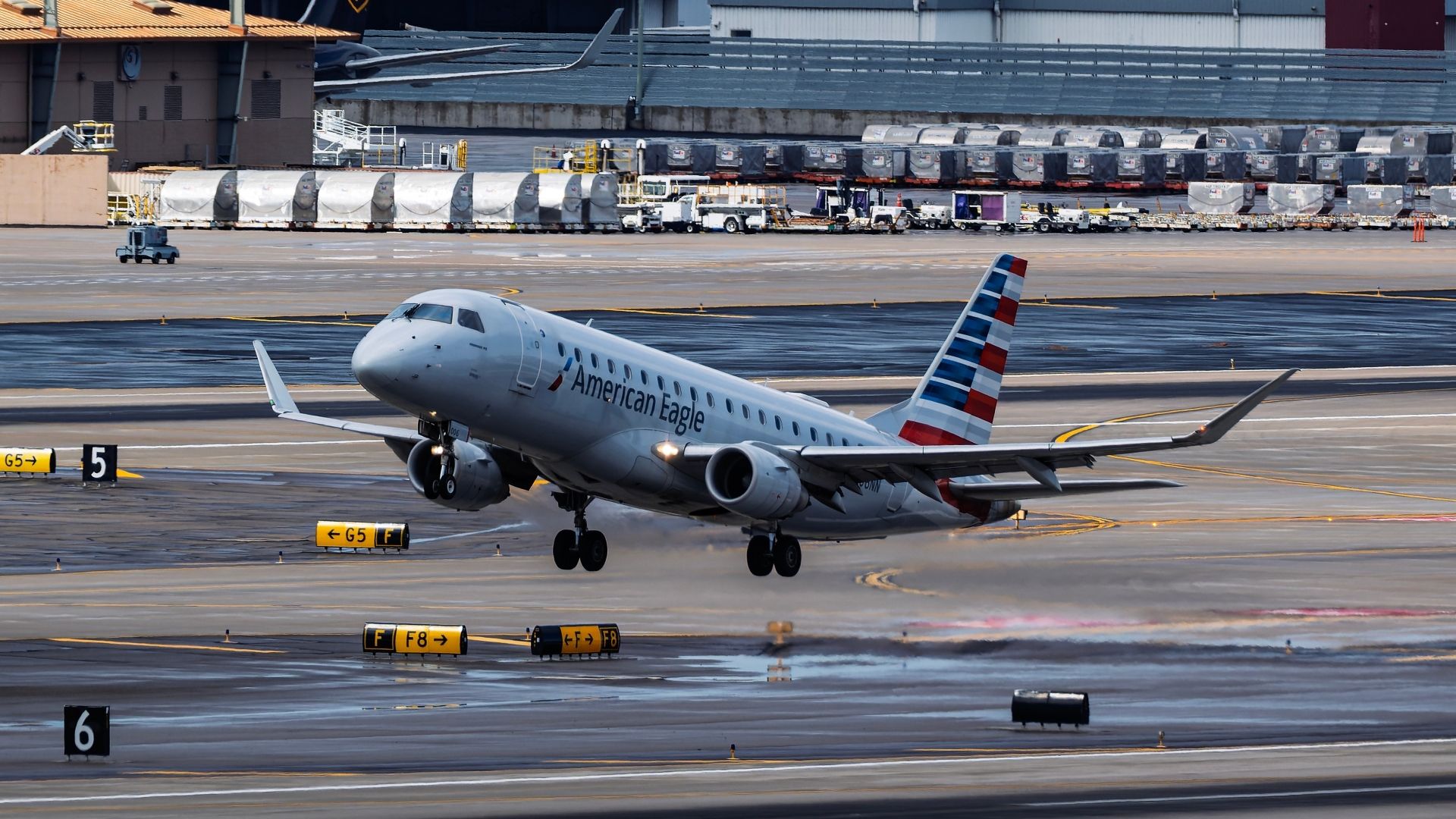
American Airlines has expanded its regional services this November with multiple routes exceeding 1,400 miles, operated under the American Eagle brand. These long-distance flights connect smaller airports to larger hubs, enhancing travel options for passengers across the United States and into Canada. Notably, the longest regional route links Dallas/Fort Worth International Airport (DFW) with Québec City (YQB), covering a distance of **1,655 miles** (2,663.5 km).
While this particular route is only scheduled once this month, the airline offers several regularly serviced routes that also exceed the 1,400-mile mark, providing significant connectivity for travelers.
Key Long-Distance Routes
According to data from Cirium, the longest regularly operated route for American Airlines this November connects **Los Angeles International Airport (LAX)** with **St. Louis Lambert Field (STL)**. This corridor spans **1,592 miles** (2,562 km) and features daily service by **SkyWest Airlines** using Embraer E175 aircraft.
Flight **AA4885** departs St. Louis at **07:00** and arrives in Los Angeles at **09:25** local time, with a flight duration of four hours and 25 minutes. The return flight, **AA6502**, takes off from LAX at **18:17** and reaches St. Louis at **23:42**, with a block time of three hours and 25 minutes. American Airlines is currently refurbishing its regional fleet to ensure a consistent passenger experience, featuring updated cabin designs that mirror the mainline fleet.
Routes Connecting California and Beyond
Given its geographical position, California features prominently in American Airlines’ longest regional routes. The second longest route this month connects DFW to **Charles M Schulz Sonoma County Airport (STS)** in Santa Rosa, covering **1,494 miles** (2,404 km). Operated by Envoy Air’s Embraer E175 aircraft, this route has **27 scheduled flights** in November.
The westbound flight, **AA3977**, takes off from DFW at **09:59** and lands in Santa Rosa at **12:07** after a four-hour and eight-minute journey. Following a brief turnaround, the return flight **AA3393** leaves Santa Rosa at **13:18**, arriving back at DFW at **18:54**, with a total travel time of three hours and 36 minutes.
Additionally, American Eagle operates flights from **Des Moines International Airport (DSM)** in Iowa to Los Angeles. This **1,447-mile** (2,329 km) route is scheduled for over **60 flights** in November, averaging more than daily service. The westbound leg takes approximately four hours and one minute, while the return flight is slightly quicker, lasting three hours and 41 minutes.
American Airlines plans to enhance its regional fleet further with the delivery of new jets starting next year, which will bolster these long-distance services.
Service by Bombardier Aircraft
While the majority of the discussed routes are served by Embraer jets, some American Eagle flights utilize Bombardier’s CRJ series, specifically the CRJ700 and CRJ900 models. The longest route regularly serviced by these aircraft connects **Phoenix, Arizona (PHX)** with **Cedar Rapids (CID)** in Iowa.
This route measures **1,252 miles** (2,015 km) and operates twice daily for most of the month using Bombardier CRJ700 jets, which feature nine first-class and 56 economy seats. Passengers can expect flight times of just over three hours from Phoenix to Cedar Rapids and slightly longer on the return trip.
American Airlines’ strategic push into long-distance regional routes showcases its commitment to expanding travel options and improving connectivity for customers. As the airline continues to modernize its fleet and enhance service, passengers can look forward to more efficient and comfortable travel experiences.

Knicks Dominate Raptors 116-94, Extend Home Win Streak to 10

Hallmark Premieres ‘Christmas at the Catnip Café’ Tonight!

Millville Woman Arrested After Threatening U-Haul Worker with Baton

Japan’s PM Takaichi Vows to Prioritize Fiscal Management NOW

Long Island Faces Disruptive Winter Weather Tuesday Morning

Urgent: 18-Year-Old Killed in Triple Shooting in Bronzeville

Shark Teeth Reveal Urgent Insights to Prevent Extinction

Englewood Church Members Reunite After Thanksgiving Fire

Mayor Names Alan Wong as District 4 Supervisor Amid Controversy

University of Hawaiʻi Joins $25.6M AI Project to Monitor Disasters

Foreign Inflows into Japan Stocks Surge to ¥1.34 Trillion

BOYNEXTDOOR’s Jaehyun Faces Backlash Amid BTS-TWICE Controversy

Carson Wentz Out for Season After Shoulder Surgery: Urgent Update

Marc Buoniconti’s Legacy: 40 Years Later, Lives Transformed

Innovative Surgery Restores Confidence for Breast Cancer Patients

Kelsea Ballerini Launches ‘Burn the Baggage’ Candle with Ranger Station

Steve Kerr Supports Jonathan Kuminga After Ejection in Preseason Game

Chicago’s Viral ‘Rat Hole’ Likely Created by Squirrel, Study Reveals
-
Science4 weeks ago
University of Hawaiʻi Joins $25.6M AI Project to Monitor Disasters
-
Business1 month ago
Foreign Inflows into Japan Stocks Surge to ¥1.34 Trillion
-
 Top Stories1 month ago
BOYNEXTDOOR’s Jaehyun Faces Backlash Amid BTS-TWICE Controversy
-
 Top Stories1 month ago
Carson Wentz Out for Season After Shoulder Surgery: Urgent Update
-
 Top Stories1 month ago
Marc Buoniconti’s Legacy: 40 Years Later, Lives Transformed
-
 Health1 month ago
Innovative Surgery Restores Confidence for Breast Cancer Patients
-
 Lifestyle2 months ago
Kelsea Ballerini Launches ‘Burn the Baggage’ Candle with Ranger Station
-
 Sports2 months ago
Steve Kerr Supports Jonathan Kuminga After Ejection in Preseason Game
-
 Science2 months ago
Chicago’s Viral ‘Rat Hole’ Likely Created by Squirrel, Study Reveals
-

 Lifestyle2 months ago
Dua Lipa Celebrates Passing GCSE Spanish During World Tour
-

 Entertainment2 months ago
Zoe Saldana Advocates for James Cameron’s Avatar Documentary
-

 Business2 months ago
Tyler Technologies Set to Reveal Q3 2025 Earnings on October 22