
Top Stories
Tap-to-Pay Revolution Leaves New Yorkers Struggling for Cash

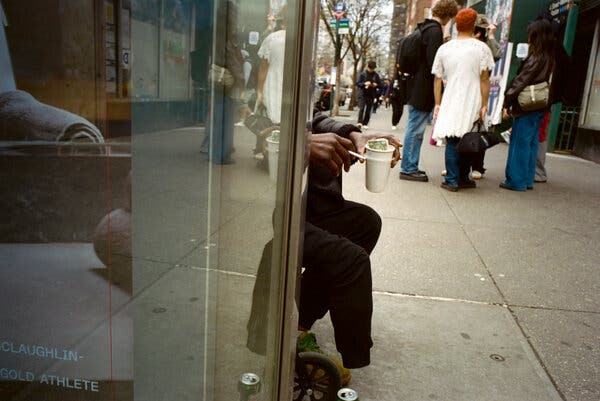
UPDATE: New reports confirm that the rise of tap-to-pay technology is leaving vulnerable New Yorkers behind, as a cashless society thrives while many still depend on physical currency. This urgent situation affects street performers, food vendors, and the homeless, particularly in bustling areas of New York City.
With digital payment methods gaining popularity, affluent Americans are enjoying a more efficient shopping experience. According to a 2022 Pew survey, approximately 60 percent of adults with household incomes over $100,000 report making no cash purchases in a typical week. In stark contrast, only 24 percent of those earning less than $30,000 can say the same.
However, the rapid shift to cashless transactions poses a significant challenge for many in New York. Street performers and vendors who rely on cash donations are seeing a decline in income as consumers opt for digital payment options. Rob Brender, a 55-year-old man who has been panhandling for nearly a decade, finds himself among those impacted. Living in a group home at Creedmoor Psychiatric Center, Brender has posted near stores where foot traffic is heavy, yet he struggles to adapt to the cashless trend.
“I can’t deal with rejection,” Brender explained. Instead of actively soliciting donations, he simply sits with a cup for change, listening to 104.3 and hoping for some contributions. Yet, despite the constant flow of shoppers, his cup remains disappointingly empty.
In a move to modernize his approach, Brender’s friend created a sign displaying a Venmo username, but no one has stopped to utilize it. Compounding the issue, Brender admits he doesn’t even know how to access his Venmo account. “This is how I’ve been getting by,” he shared, highlighting the stark reality for many who remain cash-dependent.
The growing divide between those who can easily navigate a cashless economy and those who cannot raises urgent questions about accessibility and inclusivity in urban settings. As the trend towards digital payments continues to surge, advocates emphasize the need for solutions that ensure everyone can participate in the economy, regardless of income level.
Authorities and community leaders are urged to address this pressing issue. What happens next may determine how New York City adapts to this evolving landscape, and how it supports its most vulnerable residents.
As the digital payment revolution unfolds, the human cost becomes increasingly clear. The city must find a way to bridge this gap, or risk leaving countless individuals behind in a world that is moving forward without them.

Shark Teeth Reveal Urgent Insights to Prevent Extinction

Englewood Church Members Reunite After Thanksgiving Fire

Mayor Names Alan Wong as District 4 Supervisor Amid Controversy

Study Reveals Nitrous Oxide’s Potential in Treating Depression

Walmart Launches Massive Cyber Monday Sales Starting at $5

Rep. Don Bacon Criticizes White House for Lack of Clarity on Ukraine

UK Report Reveals Rise of AI in University Research Evaluation

Florida Hires Jon Sumrall as Head Coach: Implications for FSU Football

Trump Promises to Release MRI Results from October Scan

University of Hawaiʻi Joins $25.6M AI Project to Monitor Disasters

Foreign Inflows into Japan Stocks Surge to ¥1.34 Trillion

BOYNEXTDOOR’s Jaehyun Faces Backlash Amid BTS-TWICE Controversy

Carson Wentz Out for Season After Shoulder Surgery: Urgent Update

Marc Buoniconti’s Legacy: 40 Years Later, Lives Transformed

Innovative Surgery Restores Confidence for Breast Cancer Patients

Kelsea Ballerini Launches ‘Burn the Baggage’ Candle with Ranger Station

Steve Kerr Supports Jonathan Kuminga After Ejection in Preseason Game

Chicago’s Viral ‘Rat Hole’ Likely Created by Squirrel, Study Reveals
-
Science4 weeks ago
University of Hawaiʻi Joins $25.6M AI Project to Monitor Disasters
-
Business1 month ago
Foreign Inflows into Japan Stocks Surge to ¥1.34 Trillion
-
 Top Stories1 month ago
BOYNEXTDOOR’s Jaehyun Faces Backlash Amid BTS-TWICE Controversy
-
 Top Stories1 month ago
Carson Wentz Out for Season After Shoulder Surgery: Urgent Update
-
 Top Stories1 month ago
Marc Buoniconti’s Legacy: 40 Years Later, Lives Transformed
-
 Health1 month ago
Innovative Surgery Restores Confidence for Breast Cancer Patients
-
 Lifestyle2 months ago
Kelsea Ballerini Launches ‘Burn the Baggage’ Candle with Ranger Station
-
 Sports2 months ago
Steve Kerr Supports Jonathan Kuminga After Ejection in Preseason Game
-
 Science2 months ago
Chicago’s Viral ‘Rat Hole’ Likely Created by Squirrel, Study Reveals
-

 Lifestyle2 months ago
Dua Lipa Celebrates Passing GCSE Spanish During World Tour
-

 Entertainment2 months ago
Zoe Saldana Advocates for James Cameron’s Avatar Documentary
-

 Politics2 months ago
Dallin H. Oaks Assumes Leadership of Latter-day Saints Church