
Top Stories
Elon Musk Claims AI Will Resolve U.S. Debt Crisis in 3 Years

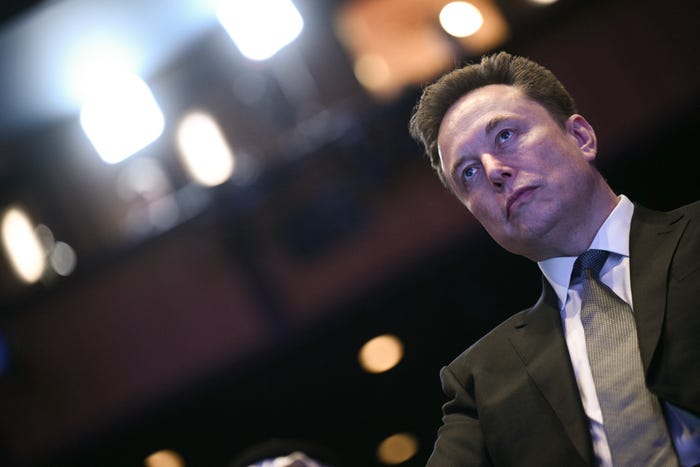
BREAKING: Elon Musk has just announced that artificial intelligence (AI) and robotics are the crucial solutions to America’s escalating debt crisis, predicting a resolution within three years. In a conversation published on Sunday with investor and podcaster Nikhil Kamath, Musk emphasized that without AI-driven productivity, the U.S. faces a dire fiscal future.
With the national debt currently standing at a staggering $38.34 trillion as of November 26, more than double its value from ten years ago, Musk’s remarks come at a critical time. He stated, “That’s pretty much the only thing that’s going to solve for the U.S. debt crisis,” adding that he anticipates significant deflation as a result of these technological advancements.
Musk asserted that within three years or less, the output of goods and services will surpass the rate of inflation, fundamentally altering the economic landscape. He believes advancements in AI and robotics will lead society to a point where “working is optional,” potentially ushering in a future of “universal high income.” This concept suggests that productivity will be so high that individuals will no longer need to work to fulfill their basic needs.
Earlier this month at a Tesla shareholder event, Musk elaborated on the role of the Optimus robot, claiming it could eliminate poverty and the necessity of human labor. “People often talk about eliminating poverty, giving everyone amazing medical care,” Musk stated. “There’s actually only one way to do that, and that’s with the Optimus robot.”
Musk’s vision of the future includes a world where currency may become irrelevant, as he noted at the U.S.-Saudi Investment Forum last month. He explained, “There will still be constraints on power like electricity and mass, but I think at some point currency becomes irrelevant.”
Tech leaders are echoing Musk’s sentiments regarding AI’s potential. Sundar Pichai, CEO of Google, highlighted in a recent BBC interview that while AI offers extraordinary benefits, it also poses risks of societal disruption. He urged for a collective discussion on the need for adaptation in the workforce as AI evolves.
Investor Vinod Khosla further asserted that AI could eventually perform 80% of the work in 80% of jobs, a transformation that might diminish the value of human labor. He cautioned that to prevent rising inequality, governments may need to implement universal basic income.
However, the optimistic outlook on AI is not without dissent. Renowned AI pioneer Geoffrey Hinton warned that while AI could lead to unprecedented profits, the wealth generated may disproportionately benefit a small elite, leaving many in poverty. Hinton stated, “It will make a few people much richer and most people poorer,” predicting significant job losses as a result of AI integration.
As the world watches closely, Musk’s bold claims and the unfolding narrative around AI and economic transformation are set to be pivotal in shaping discussions on fiscal policy and labor dynamics in the coming years. The urgency of these developments cannot be overstated; the future of the U.S. economy and its citizens may very well hinge on the promises and pitfalls of AI technology.
Stay tuned as we continue to follow this developing story and its impact on the global economy.

Elon Musk Claims AI Will Resolve U.S. Debt Crisis in 3 Years

Shai Gilgeous-Alexander Eyes Wilt Chamberlain’s Scoring Record

Knicks Dominate Raptors 116-94, Extend Home Win Streak to 10

Hallmark Premieres ‘Christmas at the Catnip Café’ Tonight!

Millville Woman Arrested After Threatening U-Haul Worker with Baton

Japan’s PM Takaichi Vows to Prioritize Fiscal Management NOW

Long Island Faces Disruptive Winter Weather Tuesday Morning

Urgent: 18-Year-Old Killed in Triple Shooting in Bronzeville

Shark Teeth Reveal Urgent Insights to Prevent Extinction

University of Hawaiʻi Joins $25.6M AI Project to Monitor Disasters

Foreign Inflows into Japan Stocks Surge to ¥1.34 Trillion

BOYNEXTDOOR’s Jaehyun Faces Backlash Amid BTS-TWICE Controversy

Carson Wentz Out for Season After Shoulder Surgery: Urgent Update

Marc Buoniconti’s Legacy: 40 Years Later, Lives Transformed

Innovative Surgery Restores Confidence for Breast Cancer Patients

Kelsea Ballerini Launches ‘Burn the Baggage’ Candle with Ranger Station

Steve Kerr Supports Jonathan Kuminga After Ejection in Preseason Game

Chicago’s Viral ‘Rat Hole’ Likely Created by Squirrel, Study Reveals
-
Science4 weeks ago
University of Hawaiʻi Joins $25.6M AI Project to Monitor Disasters
-
Business1 month ago
Foreign Inflows into Japan Stocks Surge to ¥1.34 Trillion
-
 Top Stories1 month ago
BOYNEXTDOOR’s Jaehyun Faces Backlash Amid BTS-TWICE Controversy
-
 Top Stories1 month ago
Carson Wentz Out for Season After Shoulder Surgery: Urgent Update
-
 Top Stories1 month ago
Marc Buoniconti’s Legacy: 40 Years Later, Lives Transformed
-
 Health1 month ago
Innovative Surgery Restores Confidence for Breast Cancer Patients
-
 Lifestyle2 months ago
Kelsea Ballerini Launches ‘Burn the Baggage’ Candle with Ranger Station
-
 Sports2 months ago
Steve Kerr Supports Jonathan Kuminga After Ejection in Preseason Game
-
 Science2 months ago
Chicago’s Viral ‘Rat Hole’ Likely Created by Squirrel, Study Reveals
-

 Lifestyle2 months ago
Dua Lipa Celebrates Passing GCSE Spanish During World Tour
-

 Entertainment2 months ago
Zoe Saldana Advocates for James Cameron’s Avatar Documentary
-

 Business2 months ago
Tyler Technologies Set to Reveal Q3 2025 Earnings on October 22