
Science
Ancient DNA Reveals True Origins of Beachy Head Woman

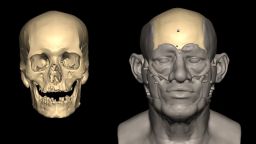
Significant advancements in ancient DNA technology have transformed the narrative surrounding the origins of the individual known as Beachy Head Woman. Originally believed to be the first known Black Briton from sub-Saharan Africa, recent research indicates that she actually had fairer skin and was born in southern England. This revelation comes from a study published in the Journal of Archaeological Science on March 15, 2024.
The remains of Beachy Head Woman were discovered in 2012 within the collections at Eastbourne Town Hall. Radiocarbon dating placed her death between 129 and 311 AD, during the Roman occupation of Britain. Initial assessments in 2013 suggested her ancestry was linked to sub-Saharan Africa based on skull measurements, a method traditionally used for ancestry estimation. However, a subsequent analysis in 2017 proposed that she had Mediterranean roots.
With advancements in DNA sequencing technology, researchers have now been able to extract high-quality genetic material from her remains, leading to the conclusion that she was indeed a local individual from Roman-era Britain. According to William Marsh, a population geneticist at the Natural History Museum in London, “By using state-of-the-art DNA techniques, we were able to resolve the origins of this individual.”
New Insights from Advanced Techniques
Combining genetic data with a 3D scan of her skull, the research team generated a visual representation of what Beachy Head Woman likely looked like, depicting her with fair hair, light skin, and blue eyes. Her skeletal analysis suggests she stood just under 5 feet (1.52 meters) tall and was between 18 and 25 years old at the time of her death. Notably, a healed wound on her leg indicates she experienced a serious, yet non-fatal injury during her life.
The isotopic analysis of her bones further revealed a diet rich in seafood, highlighting aspects of her lifestyle. Senior study author Selina Brace, a principal researcher in ancient DNA at the museum, emphasized the importance of technological evolution in understanding historical narratives. “Our scientific knowledge and understanding is constantly evolving, and as scientists, it’s our job to keep pushing for answers,” she stated.
The Role of Technological Advances in Research
Experts in the field have acknowledged the significance of these findings. Pontus Skoglund, who leads the Ancient Genomics laboratory at the Francis Crick Institute, commended the study for its rigorous analysis. He noted that while cranial measurements were a common method in the past, the techniques available at that time were limited.
Bioarchaeologist Thomas Booth, also from the Francis Crick Institute, highlighted the broader implications of this research on the methodologies used in ancestry studies. “This is an excellent transparent example of science self-correcting,” he remarked, acknowledging that the original researchers utilized the best techniques available at the time. Booth raised concerns about the continued reliance on craniometric analysis, which has faced scrutiny due to its historical context in establishing racial hierarchies.
As scientific understanding continues to progress, this case serves as a pivotal moment for re-evaluating research methodologies in anthropology. It reinforces the necessity for ongoing advancements in technology and research practices to ensure accurate interpretations of the past. The new findings about Beachy Head Woman not only reshape our understanding of her origins but also illustrate a broader commitment within the scientific community to continually refine and improve historical narratives.

Paramount Unveils Y: Marshals Photos; Kayce Dutton’s New Role

Big Ten vs. Big 12: College Basketball Power Rankings Shift

MLB’s New Ball/Strike Challenge System: Major Changes Ahead!

RFK Jr. Challenges Childhood Vaccine Schedule in U.S. Health Policy

New Moon in Sagittarius on December 19 Sparks Reflection and Growth

Trump Enacts Law Revoking Sanctions Against Syria’s Assad Regime

Trump Signs Law Ending Syria Sanctions, Shocking Global Response

Ancient DNA Reveals True Origins of Beachy Head Woman

Pirates Seek Offensive Boost with Free Agent Targets O’Hearn and Suárez

University of Hawaiʻi Joins $25.6M AI Project to Monitor Disasters

Foreign Inflows into Japan Stocks Surge to ¥1.34 Trillion

BOYNEXTDOOR’s Jaehyun Faces Backlash Amid BTS-TWICE Controversy

Boeing’s Merger with McDonnell Douglas: A Strategic Move Explained

Carson Wentz Out for Season After Shoulder Surgery: Urgent Update

Marc Buoniconti’s Legacy: 40 Years Later, Lives Transformed

Sydney Sweeney Embraces Body Positivity Amid Hollywood Challenges

Kelsea Ballerini Launches ‘Burn the Baggage’ Candle with Ranger Station

Innovative Surgery Restores Confidence for Breast Cancer Patients
-
Science2 months ago
University of Hawaiʻi Joins $25.6M AI Project to Monitor Disasters
-
Business2 months ago
Foreign Inflows into Japan Stocks Surge to ¥1.34 Trillion
-
 Top Stories2 months ago
BOYNEXTDOOR’s Jaehyun Faces Backlash Amid BTS-TWICE Controversy
-
 World2 months ago
Boeing’s Merger with McDonnell Douglas: A Strategic Move Explained
-
 Top Stories2 months ago
Carson Wentz Out for Season After Shoulder Surgery: Urgent Update
-
 Top Stories2 months ago
Marc Buoniconti’s Legacy: 40 Years Later, Lives Transformed
-
 Entertainment2 months ago
Sydney Sweeney Embraces Body Positivity Amid Hollywood Challenges
-
 Lifestyle2 months ago
Kelsea Ballerini Launches ‘Burn the Baggage’ Candle with Ranger Station
-
 Health2 months ago
Innovative Surgery Restores Confidence for Breast Cancer Patients
-

 Sports2 months ago
Steve Kerr Supports Jonathan Kuminga After Ejection in Preseason Game
-

 Entertainment2 months ago
Zoe Saldana Advocates for James Cameron’s Avatar Documentary
-

 Science2 months ago
Chicago’s Viral ‘Rat Hole’ Likely Created by Squirrel, Study Reveals