
Science
Scientists Uncover Clue to Universe’s Most Fundamental Puzzle

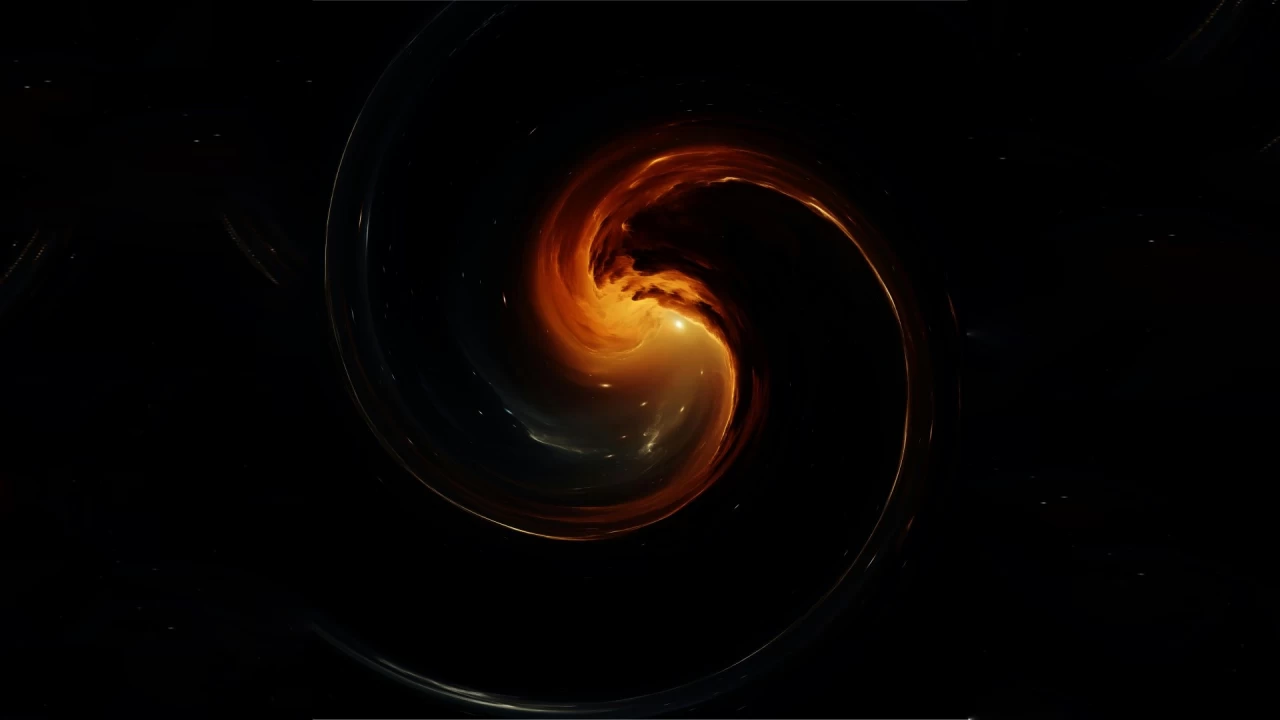
Researchers have made significant strides in understanding one of the universe’s most enduring mysteries: the nature of dark matter and dark energy. A team of scientists from various institutions, including the National Aeronautics and Space Administration (NASA) and the European Space Agency (ESA), has uncovered critical clues that may help unravel this cosmic enigma.
The findings, published in a paper on October 1, 2023, reveal new insights into how dark matter interacts with visible matter. This research could potentially reshape current theories in quantum physics and cosmology. The team utilized advanced observational techniques to analyze cosmic background radiation, providing a clearer picture of the universe’s composition.
Understanding Dark Matter and Dark Energy
Dark matter and dark energy together account for approximately 95% of the universe, yet their exact nature remains largely unknown. Dark matter, which does not emit or absorb light, is believed to influence the motion of galaxies. On the other hand, dark energy is thought to drive the accelerated expansion of the universe.
The researchers’ approach involved a detailed examination of gravitational waves and their interactions with dark matter. By analyzing data from various space telescopes and ground-based observatories, they were able to identify patterns that suggest a more complex relationship between these cosmic forces. According to the lead author, Dr. Emily Carter, “Our findings indicate that dark matter may have properties we previously overlooked, opening up new avenues for exploration.”
Implications for Future Research
The implications of this research extend beyond theoretical physics. Understanding the characteristics of dark matter and dark energy could lead to advancements in technology and even influence our understanding of fundamental physics. The research team anticipates that further studies will focus on the potential applications of these findings, particularly in fields such as astrophysics and quantum computing.
In addition to its scientific significance, this discovery may inspire a new generation of researchers. As Dr. Carter stated, “Our work is just the beginning. We hope it will encourage more scientists to explore these fundamental questions about the universe.”
The global scientific community is now looking ahead to upcoming missions and experiments that could further investigate these findings. Both NASA and ESA are planning future projects aimed at deepening our understanding of dark matter and dark energy. The next decade promises to be an exciting time for astrophysics as researchers continue to peel back the layers of the universe’s mysteries.
As scientists work collaboratively across borders, the potential for groundbreaking discoveries increases, highlighting the importance of international cooperation in addressing the universe’s most profound puzzles.

Gigachad Price Falls to $0.0025 Amid Market Fluctuations

Exploring Bortus: The Complex Alien of ‘The Orville’

Harry Potter Quiz Links Personality Traits to Entrepreneurship

Colorado Voters React to Trump’s Immigration Actions Amid Midterms

Donaldson Capital Management Boosts Stake in UnitedHealth Group

Researchers Establish First Lab Colony of Invasive Beetle in Australia

Jersey City Schools Confirm Controversial Kindergarten Move

NeuroOne Medical Technologies Outperforms Cannlabs in Financial Metrics

Nevada Bankers Prepare for 2026 Challenges Amid Changing Landscape

University of Hawaiʻi Joins $25.6M AI Project to Monitor Disasters

Foreign Inflows into Japan Stocks Surge to ¥1.34 Trillion

Hudson Williams Gains Popularity as Breakout Star on Heated Rivalry

Boeing’s Merger with McDonnell Douglas: A Strategic Move Explained

$1.25M Grant Advances Hawaiʻi’s Real-Time Hazard Monitoring

Sydney Sweeney Embraces Body Positivity Amid Hollywood Challenges

BOYNEXTDOOR’s Jaehyun Faces Backlash Amid BTS-TWICE Controversy

French Film Explores Group Therapy in ‘Group – The Schopenhauer Project’

Urgent Farewell: Joleen Chaney Leaves Legacy at KFOR
-
Science3 months ago
University of Hawaiʻi Joins $25.6M AI Project to Monitor Disasters
-
Business3 months ago
Foreign Inflows into Japan Stocks Surge to ¥1.34 Trillion
-
 Entertainment2 months ago
Hudson Williams Gains Popularity as Breakout Star on Heated Rivalry
-
 World3 months ago
Boeing’s Merger with McDonnell Douglas: A Strategic Move Explained
-
 Science2 months ago
$1.25M Grant Advances Hawaiʻi’s Real-Time Hazard Monitoring
-
 Entertainment3 months ago
Sydney Sweeney Embraces Body Positivity Amid Hollywood Challenges
-
 Top Stories3 months ago
BOYNEXTDOOR’s Jaehyun Faces Backlash Amid BTS-TWICE Controversy
-
 World3 months ago
French Film Explores Group Therapy in ‘Group – The Schopenhauer Project’
-
 Top Stories3 months ago
Urgent Farewell: Joleen Chaney Leaves Legacy at KFOR
-

 Top Stories3 months ago
Marc Buoniconti’s Legacy: 40 Years Later, Lives Transformed
-

 Lifestyle4 months ago
Kelsea Ballerini Launches ‘Burn the Baggage’ Candle with Ranger Station
-

 Top Stories3 months ago
Carson Wentz Out for Season After Shoulder Surgery: Urgent Update